Underground utility locating is often misunderstood as an exact science, as if modern technology can simply peer into the ground and present perfect measurements on command. But the reality is far more complex, and anyone working in the construction, engineering, drilling, or excavation industries deserves to know how depth readings are actually calculated—and how dangerously misleading they can be when treated as hard numbers instead of approximations.
Whether using electromagnetic locating equipment (EM locators), ground penetrating radar (GPR), or a combination of instruments, the so-called “depth” displayed on the screen is not a precise measurement. It is a calculated estimate that relies on environmental assumptions, operator technique, soil composition, and the behavior of the buried utility itself. And when conflicts arise, the most trustworthy, reliable, legally defensible data doesn’t come from a calculated depth at all—it comes from physically exposing the utility through ASCE 38-22-compliant air vacuum excavation to obtain Quality Level A data.
The Myth of Depth Readings: What EM Locators Really Tell You

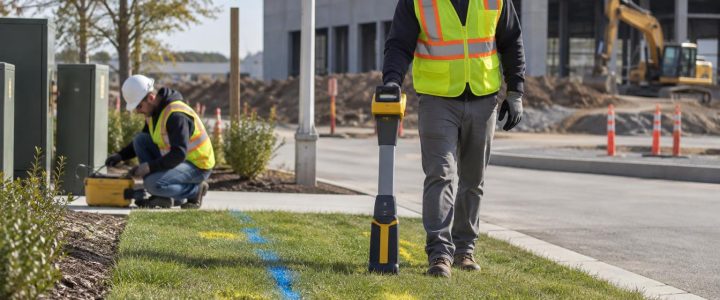
Electromagnetic locating equipment is one of the most widely used tools in subsurface utility locating, but what many people don’t realize is how these instruments actually determine the depth of a buried line. An EM locator does not measure depth directly; instead, it calculates depth using the strength of the electromagnetic field emitted or carried by a conductive utility. This calculation relies on an inverse-square relationship between field strength and distance from the signal source. If soil conditions are variable, the signal is distorted, or the utility is not perfectly horizontal, these calculations become significantly skewed. Even small variations in the environment—including moisture, mineral content, jointed pipes, bends, or interference from adjacent utilities—can introduce drastic inaccuracies. This is why an EM locator may read a utility at four feet deep, when in reality it may be five, six, or even more than seven feet below grade.
What compounds the confusion is that EM depth calculations depend entirely on the assumption that the transmitter signal is inducing perfectly into the utility and propagating uniformly along its length. That assumption is wrong more often than one might believe. If a conductor is damaged, coated, corroded, or poorly bonded, the signal can bleed off or dissipate unpredictably. Plastic, PVC, HDPE, or other non-conductive pipes require tracer wires or conductive duct rodders, and if those wires are broken, kinked, weakly bonded, or insufficiently energized, depth calculations become even more unreliable. The average technician sees a clean digital depth reading and assumes it’s a precise measurement with no means to validate (or ground truth) the information, and in reality it’s only an approximation—and sometimes a wildly incorrect one. EM locators are powerful tools, but believing that their depth estimates are exact is a dangerous misconception that can lead to damages, delays, or safety hazards on a jobsite.
GPR “Depths” Aren’t Measurements Either

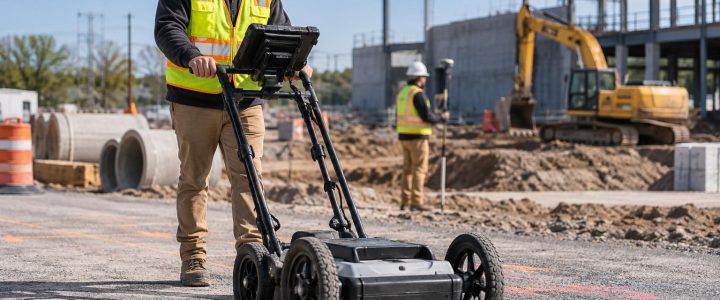
Ground penetrating radar is often marketed and discussed as if it is an underground X-ray machine capable of producing exact images and precise depth information. In reality, GPR depth values are built on mathematical modeling of how long it takes for a radar signal to travel into the ground, reflect off an object, and return to the antenna. The key factor in this calculation is the dielectric constant of the soil—a value that varies drastically depending on moisture, compaction, temperature, clay content, and the type of material being detected. If the assumed dielectric value is incorrect, the depth calculation is incorrect, sometimes by large margins. A single GPR pass might show a utility at 3.5 feet deep, while adjusting the dielectric to match the real soil conditions could shift that same target to five feet or more.
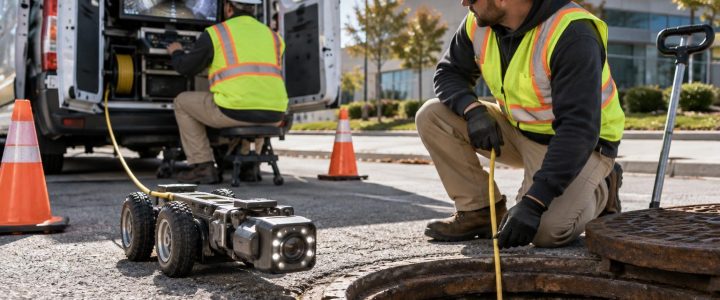
Adding to the complexity, GPR responses differ dramatically depending on pipe material, diameter, voids, backfill type, and surrounding soil stratigraphy. A large, metallic utility may produce a pronounced hyperbola on a GPR scan, while a small plastic pipe may barely create a detectable signature at all. Depth calculations become even less reliable in wet clay soils, highly conductive soils, or areas with rebar, dense rock, or subsurface clutter. Interpreting GPR data requires training, experience, and a deep understanding of how radar behaves in the specific environment. Even then, the depth displayed on the screen is merely an estimate. It should never be used as a substitute for physical verification. GPR is invaluable for locating utilities that EM cannot detect, particularly non-conductive lines, but its depth values should always be treated as approximations—not measurements.
Why EM and GPR Cannot Reveal Pipe Size

Another widespread misconception is the belief that EM locators or GPR can identify the size of a buried utility. This misunderstanding stems from the assumption that if an instrument can detect where a utility is, it should also be able to determine how big it is. But that is simply not how these technologies work. Electromagnetic locators detect the signal being carried or induced along a conductor—they do not see the pipe itself. Whether the conductor is inside a half-inch conduit or a 48-inch storm sewer, the EM locator only follows the electromagnetic field, not the physical diameter of the utility. For plastic utilities that require tracer wire or duct rodders, the locator is only tracing the wire, which might be positioned anywhere within the trench, not necessarily centered on the pipe. That means even if the locator displays a depth or alignment, it provides zero information about pipe diameter.
Ground penetrating radar, while capable of showing changes in soil structure, voids, or reflective surfaces, cannot reliably determine the size of a pipe either. The hyperbola displayed on a GPR screen is influenced by antenna frequency, soil composition, signal scattering, and the shape of the object. A large hyperbola does not necessarily indicate a large pipe, and a small hyperbola does not necessarily mean a small pipe. The geometry of radar reflections is too complex, and the unknown variables too numerous, to make pipe sizing feasible. Without vacuum excavation or other physical exposure methods, the true diameter of a utility remains unknown. For engineers, contractors, and designers, this distinction is critical; relying on instrumentation to determine size can lead to design conflicts, miscalculations, and field discrepancies that only become apparent when construction begins. Only Quality Level A data—obtained through physical exposure—provides accurate pipe sizing.
The Dangerous Consequences of Believing Depth Calculations Are Exact
Every year, excavation accidents occur because depth readings from EM locators or GPR were assumed to be precise when they were not. A depth estimate that is off by even a few inches can result in hitting a pressurized gas line, severing a critical fiber circuit, or damaging an underground electrical feeder. In many cases, crews dig confidently based on a locator’s depth estimate, believing that technology provides an infallible measurement. But when the ground is opened, the utility is often deeper, shallower, offset from its expected alignment, or running at a slope or elevation change that the locator could not account for. These surprises create safety hazards, increase jobsite liability, and can lead to costly emergency repairs, project shutdowns, and delays.
The problem is not the technology—it is the misuse and misinterpretation of the technology. EM and GPR are excellent for identifying the probable location of a utility, generating conflict awareness, and guiding excavation efforts. But they were never intended to provide final, legally binding depth information. Instruments do not produce guaranteed data; they produce interpretations. ASCE 38-22 makes this distinction abundantly clear by categorizing data obtained from EM and GPR as Quality Level B or C—not the highest standard. When project stakeholders treat estimated depth values as exact measurements, they are misusing the data, violating industry standards, and placing personnel, infrastructure, and budgets at unnecessary risk.
Quality Level A Is the Only True Measurement
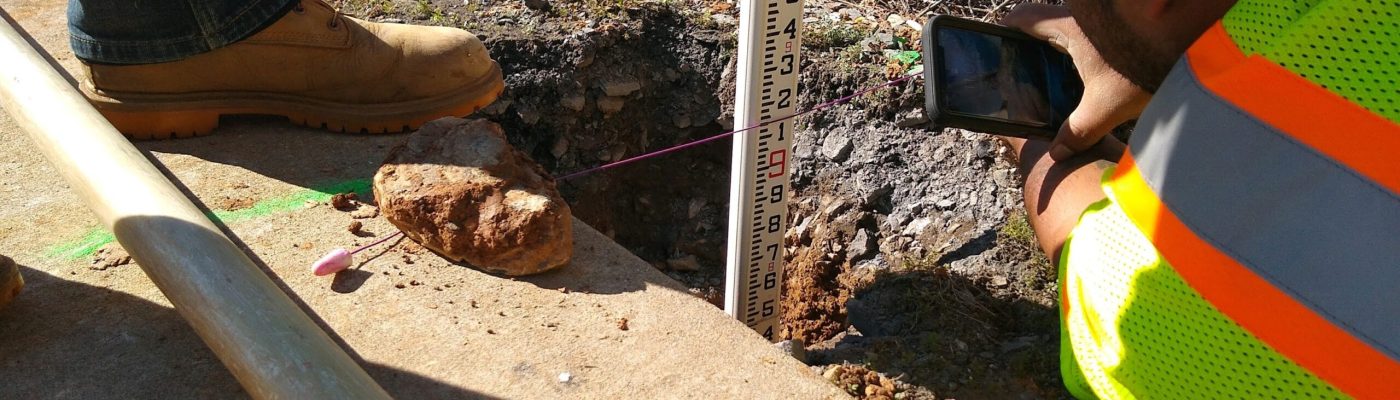
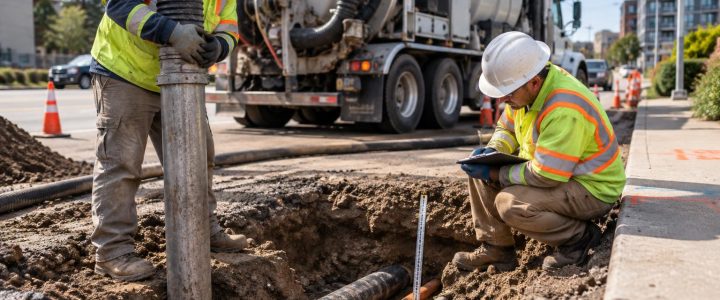
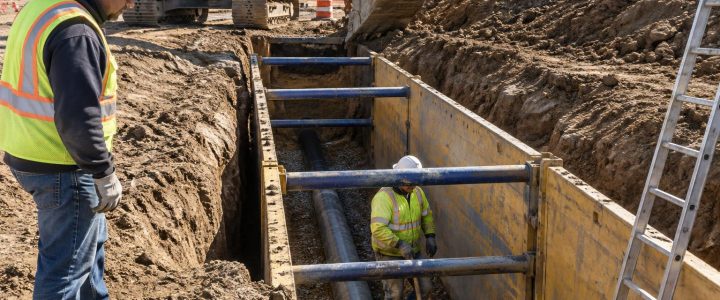
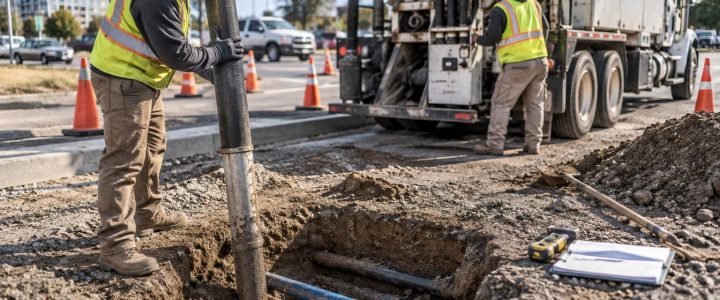
To obtain definitive information about a utility’s depth, material, diameter, condition, and exact horizontal and vertical location, there is only one accepted method in the subsurface utility engineering world: exposure through vacuum excavation. ASCE 38-22 defines Quality Level A as the highest level of accuracy, and it is the only standard that provides precise, defensible, survey-grade data. Air vacuum excavation uses compressed air to safely remove soil around a utility without damaging the infrastructure. Once the utility is exposed, highly accurate elevation measurements can be taken with survey equipment, giving engineers and contractors exact vertical and horizontal data. This removes the guesswork entirely and eliminates the risk of relying on mathematical depth estimations from EM or GPR.
Vacuum excavation also provides the ability to document pipe diameter, pipe material, joint configuration, structural condition, and any adjacent conflicts or crossings. No electromagnetic locator, GPR antenna, or digital mapping software can provide this level of detail. In many construction and design projects, vacuum excavation is the only method that prevents change orders, eliminates unexpected utility conflicts, and ensures accurate design elevations for final engineering plans. While it requires coordination and cost, it is far more economical than the consequences of relying on inaccurate depth estimates—especially on critical infrastructure projects involving deep utilities, aging assets, or complex underground corridors. When accuracy matters, vacuum excavation is the only data source that meets the highest standard of certainty.
When It Comes to Depth, Precision Isn’t Optional—It’s Everything

The underground environment is unpredictable, and while electromagnetic locators and ground penetrating radar are powerful tools, they were never designed to provide precise depth measurements. Their depth calculations are estimates—useful but limited. Treating them as exact values introduces unnecessary risk, especially when working near critical or high-risk utilities. Only ASCE 38-22 Quality Level A data, obtained through vacuum excavation, gives engineers, project managers, field crews, and designers the reliable information needed to build safely and accurately. When the stakes involve safety, budget, schedule, and infrastructure integrity, the only truly dependable depth measurement is the one you can see with your own eyes.