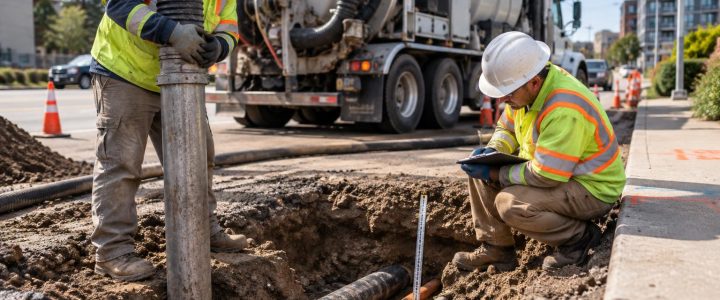
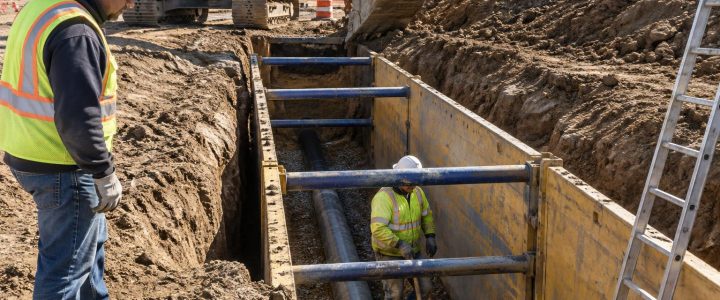
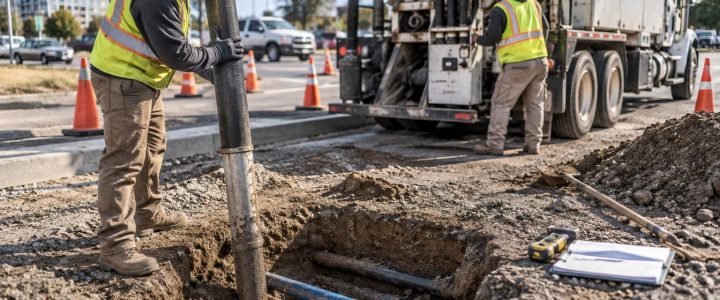
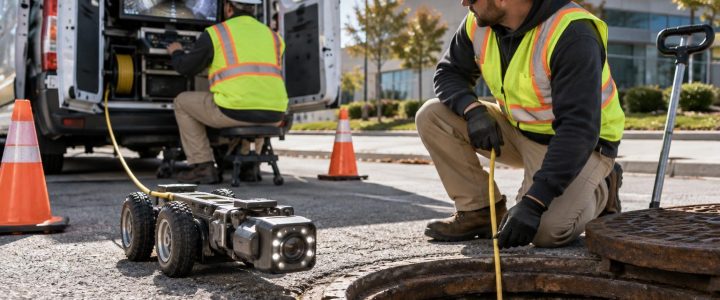
Buried beneath our feet lies a complex web of critical infrastructure—water mains, gas pipelines, telecommunication lines—all vital to modern life. But among these, plastic utility lines such as PVC and HDPE are some of the most elusive. These modern materials, praised for their durability and cost-efficiency, come with a double-edged sword: they are notoriously difficult to locate once underground. Unlike their metallic predecessors, plastic utility lines do not respond to traditional electromagnetic locating methods, rendering them virtually invisible to many standard detection tools. This creates an invisible minefield for construction crews and utility engineers alike.
The challenge starts with the very properties that make these plastics popular. PVC and HDPE are non-conductive, meaning they do not carry electrical signals that standard pipe locators rely on. In older infrastructure systems, metal pipes could be easily traced using electromagnetic induction. However, plastic lacks the ability to carry a signal unless it has been fitted with a tracer wire—something that, in practice, is not always done or may deteriorate over time. In many cases, the tracer wires themselves are broken, corroded, or poorly mapped, making them unreliable or entirely useless.
Compounding the problem is the explosion of urban development and utility installations over the past few decades. Many plastic lines were hastily installed during housing booms or infrastructure expansions, often with little documentation. When excavation teams break ground for new construction or repairs, the lack of accurate utility maps for these plastic lines becomes a dangerous liability. Utility strikes can lead to costly delays, service interruptions, and even injuries—each incident a stark reminder that what we can’t see can definitely hurt us.
The Plastic Problem That Keeps Utility Locators Awake at Night

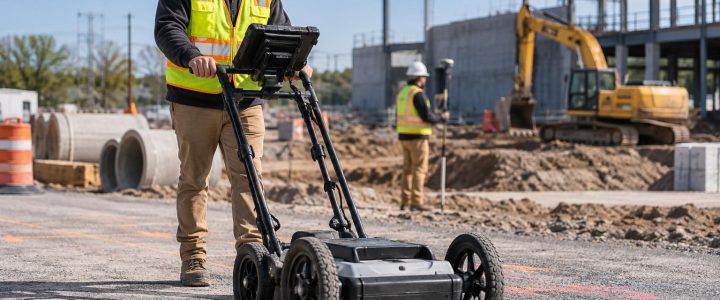
While metal lines practically scream their presence through detection gear, plastic pipes whisper—if they make any sound at all. For utility locators, this low detectability means every job becomes a puzzle with missing pieces. Even with advanced technology, detecting plastic lines is not as straightforward as it should be. Ground-penetrating radar (GPR), acoustic sensors, and low-frequency electromagnetic induction offer some hope, but each has significant limitations when it comes to plastic materials. GPR, for example, depends on the surrounding soil conditions and the depth of the line, and can easily miss shallow or narrow pipes. Moreover, dense urban environments with layers of concrete and rebar create signal interference that further clouds the picture.
Even when equipment theoretically supports plastic detection, operator experience plays a huge role in the outcome. Interpreting GPR readouts is not unlike reading a sonogram—it’s part science, part art. Without the right training and a deep understanding of the subsurface environment, technicians might misinterpret the data, leading to false positives or missed utilities. As a result, there’s a growing need for highly skilled personnel—yet another cost and complication for construction firms and utility companies.
There’s also the issue of depth variability. Plastic lines are often installed at inconsistent depths due to varying installation standards, terrain irregularities, or past excavation work. A gas line might be buried at 18 inches in one area and three feet in another, while a water main could zigzag due to natural obstacles underground. The unpredictable nature of plastic line installation creates uncertainty even when a pipe is known to exist. For crews trying to avoid utility damage or make a safe bore path, this variability turns into a nightmare scenario.
False Confidence: The Risk of Relying on Incomplete or Inaccurate Records
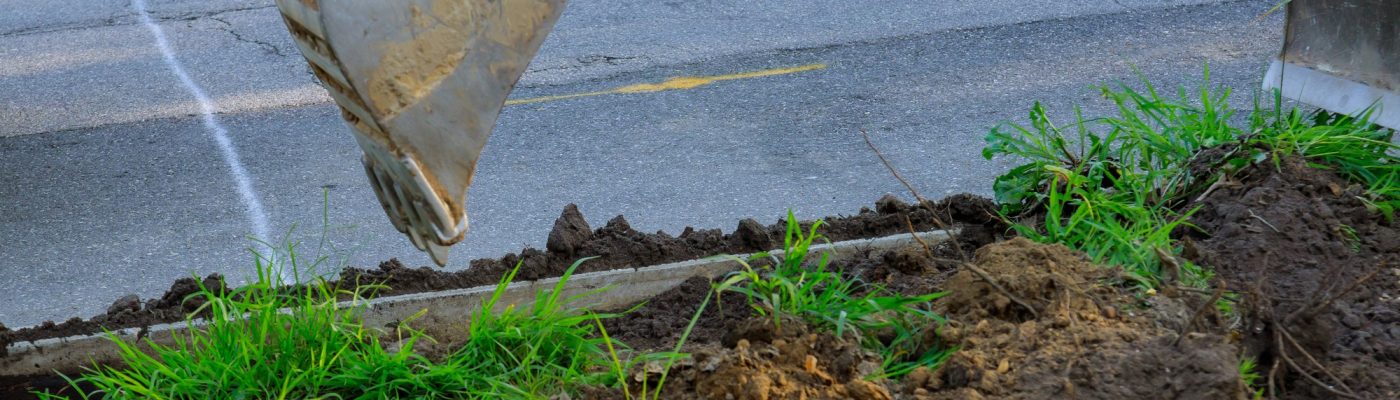
One of the most dangerous aspects of locating plastic utility lines is the false sense of security that comes from utility records. As-built drawings and utility maps are often the starting point for planning any excavation, but these documents are frequently outdated, incorrect, or missing altogether. Especially for plastic pipes installed in the last 30 years, recordkeeping has been haphazard at best. Utility owners may not have documented installations thoroughly, especially if subcontractors did the work or if the pipes were laid during emergencies or rushed projects.
Even when maps are available, they often don’t specify material types or indicate the presence (or absence) of tracer wires. This leaves locators guessing whether a line can be detected using electromagnetic methods or whether they must resort to other means. In many cases, the absence of a detectable signal is interpreted as the absence of a line—a dangerous assumption when dealing with plastic. Many underground utility strikes happen simply because crews trusted records without verifying conditions on the ground.
The implications of these recordkeeping failures extend beyond just missed detections. Project timelines can be thrown off by unexpected discoveries, requiring redesigns or emergency mitigation plans. Costs balloon not only from delays but from the added need for exploratory digging, utility verification crews, and third-party locators. Worse yet, liability issues arise when damage occurs due to reliance on flawed documentation. In an industry where trust and safety go hand in hand, unreliable records are a ticking time bomb.
Innovation vs. Reality: Why New Tech Isn’t Always the Magic Fix

It’s tempting to think that the latest locating technologies would solve the plastic pipe conundrum. Tools like advanced GPR systems, RFID-tagged utility markers, acoustic detection arrays, and inertial mapping robots have emerged as promising solutions. However, each comes with its own limitations, and none offer a universal fix. RFID markers, for instance, must be installed during pipe placement—a step that’s often skipped unless mandated by regulation or funding. Even when installed, these markers can shift, degrade, or fail over time, leaving future locators in the dark.
Acoustic and vibro-acoustic detection methods, which rely on sound waves to trace pipe paths, work well in theory but require ideal conditions. Soft soil, water saturation, nearby noise sources, and pipe wall thickness can all affect performance. Similarly, inertial mapping systems—while extremely accurate—are prohibitively expensive and require special access points to function. They are better suited for large-scale projects than routine utility detection on a city street or private property.
Additionally, even the most cutting-edge tools must contend with the variability of human error and environmental complexity. A high-tech locator in the hands of an undertrained technician is no more effective than an analog tool. Furthermore, regulatory bodies and municipalities are slow to adopt new standards, which means contractors often have to balance innovation with compliance—sometimes sacrificing better detection in favor of what’s approved and familiar. The technology gap isn’t just a matter of development—it’s a matter of implementation, policy, and education.
The High Stakes of Getting It Wrong: Consequences That Go Beyond the Jobsite

Failing to locate plastic utility lines isn’t just an inconvenience—it’s a serious safety risk with wide-reaching implications. Striking a plastic gas line, for example, can lead to deadly explosions, fires, and forced evacuations. Unlike steel pipes, which tend to dent or deform before failing, plastic lines can rupture suddenly and catastrophically when compromised. Water lines, too, can cause significant flooding and erosion if punctured, especially under roads or near foundations. The damage isn’t just physical—it’s reputational and financial.
For contractors, the costs of a strike include downtime, emergency repairs, fines, and litigation. These incidents can also delay neighboring projects, strain relationships with municipal authorities, and increase insurance premiums. In some regions, a single utility hit can trigger mandatory safety audits or blacklisting from future bids. It’s a cascading effect where one misstep—often involving a mislocated plastic line—leads to a chain reaction of consequences. It’s no exaggeration to say that avoiding these lines is a matter of company survival.
The public also pays a price. Utility disruptions can affect thousands of customers, halt traffic, close businesses, and endanger lives. The hidden nature of plastic lines means that many of these incidents are preventable with better practices and awareness. But without stronger industry standards, better data sharing, and more rigorous locator training, these issues will persist. It’s not enough to hope that a line won’t be hit—we must ensure it’s accurately located in the first place.