When most people think about locating underground utilities, they imagine a process similar to taking an X-ray of the ground—a quick scan that magically reveals everything hidden beneath the surface. While that’s a convenient mental image, it’s far from reality. The truth is that performing an underground utility investigation is a highly technical process that relies on physics, field experience, and accessible connection points and it is not just a “see-through” view of the subsurface.
The X-Ray Misconception
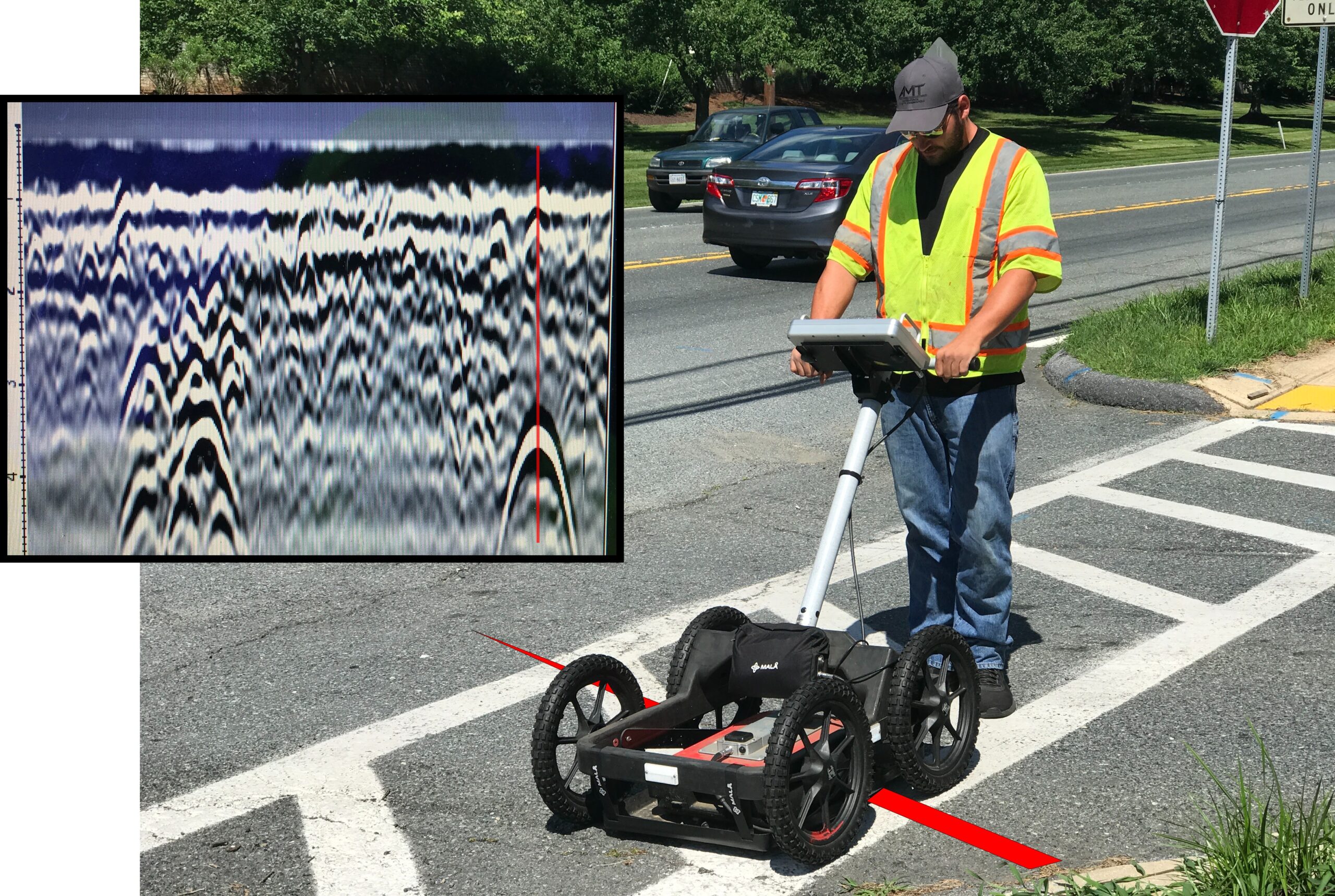
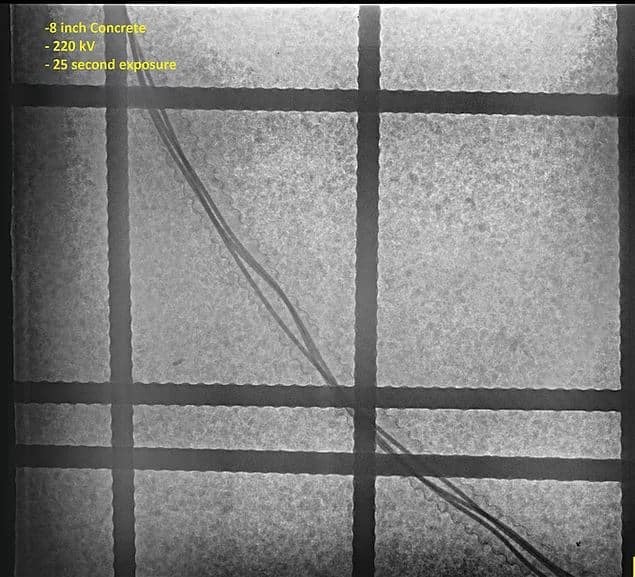
It’s easy to understand why the X-ray analogy persists. Instruments like ground penetrating radar (GPR) and electromagnetic (EM) utility locators do send signals into the ground, and the data collected is then interpreted to find buried lines. But unlike an X-ray that produces a direct image, these instruments don’t show a literal picture of what’s underground.
Instead, the equipment detects electromagnetic responses or reflected radar signals that technicians interpret based on signal patterns, shapes, and field context. These responses must then be correlated with known utility maps, visible surface features, and accessible utility structures such as valves, manholes, meters, or tracer wires. Without access to these points, even the most advanced locating equipment may only detect partial or ambiguous information—if anything at all.
In other words, there’s no “underground camera” that sees every pipe or conduit in the dirt. Utility locating is part science, part skilled interpretation, and entirely dependent on the conditions of the site and the accessibility of the utilities themselves.

Access Points Are the Key to Reliable Detection
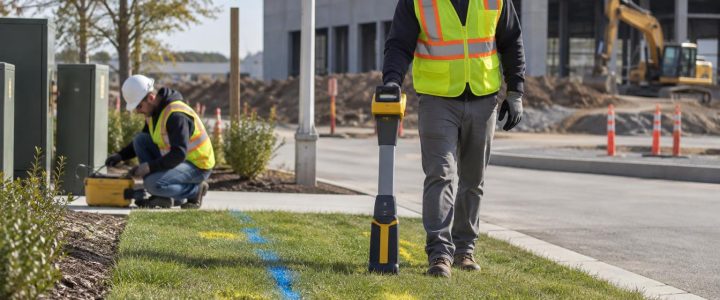
Most utilities are detectable because a technician can physically connect to an access point—a metal pipe, tracer wire, valve, meter, or test station—that allows an electromagnetic signal to be transmitted along the line. That signal then allows the utility locator to trace the path and depth of the utility with accuracy.
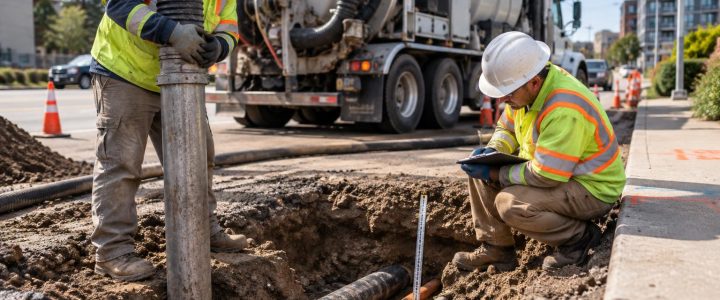
If no access point exists, however, the locating instrument has nothing to connect to. Plastic, PVC, or HDPE pipes without tracer wires are especially challenging because they are non-conductive and cannot carry an EM signal. In these cases, technicians must use indirect methods such as inserting a traceable duct rod or using acoustic detection techniques—but these methods still require physical entry into the system.
Access points are more than just convenient—they’re critical. They allow the technician to induce or apply a signal that travels the path of the utility, making it traceable. Without that connection, the investigation becomes more of an educated survey rather than a definitive map.
The Role of Ground Penetrating Radar (GPR)—and Its Limitations
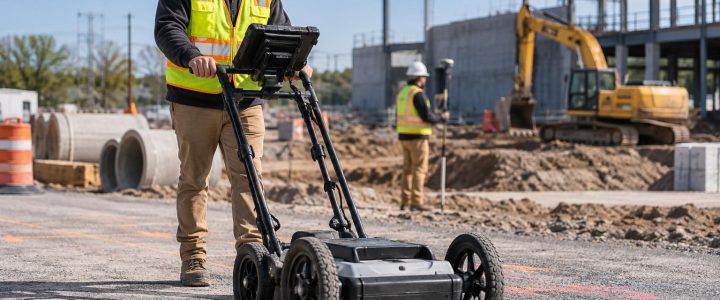
Ground penetrating radar is often thought of as the “magic wand” of underground investigations. It works by sending radar pulses into the ground and recording reflections from subsurface objects. While it’s extremely useful for detecting certain features like concrete structures, voids, or large metallic pipes, GPR has its limitations.
Soil conditions, moisture content, and the composition of buried materials can dramatically affect GPR’s effectiveness. For example, wet clay soils can absorb radar energy and obscure the signal, while dry sandy soils provide clearer readings. GPR also struggles to distinguish between different types of utilities and cannot directly identify whether a detected object is a power line, water pipe, or abandoned conduit.
This is why experienced technicians combine GPR results with EM locating methods and field verification to build a complete and accurate utility picture.
Utility Locating Is an Interpretive Science
Every successful underground utility investigation depends on the skill and judgment of the locator. The process involves combining signal readings, record drawings, visible indicators, and known utility access points to make informed conclusions about what exists below.
Technicians are trained to interpret anomalies in signal strength, field interference from nearby utilities, and environmental factors that can affect accuracy. They also document their findings using GPS, sketches, and photographs to produce a clear, defensible record of what was identified and where.
This interpretive process is why experience matters. A seasoned locator understands how to adapt when conditions aren’t ideal—whether it’s finding creative ways to connect to inaccessible lines or recognizing false positives caused by stray current or rebar.
If no access point exists, however, the locating instrument has nothing to connect to. Plastic, PVC, or HDPE pipes without tracer wires are especially challenging because they are non-conductive and cannot carry an EM signal. In these cases, technicians must use indirect methods such as inserting a traceable duct rod or using acoustic detection techniques—but these methods still require physical entry into the system.
Access points are more than just convenient—they’re critical. They allow the technician to induce or apply a signal that travels the path of the utility, making it traceable. Without that connection, the investigation becomes more of an educated survey rather than a definitive map.
Conclusion: No X-Ray Vision—Just Proven Methods and Expertise
Performing an underground utility investigation is not like looking through the ground with X-ray vision—it’s a systematic process that depends on connecting to known access points, interpreting complex data, and verifying results through multiple technologies.
At Visionary Subsurface Solutions, we rely on proven electromagnetic and radar-based methods, combined with field-tested expertise, to locate and map utilities accurately. We understand the limitations of each technology and the importance of proper access and verification.
When the safety of your excavation or design project depends on knowing what’s underground, don’t trust the myth of “see-through” technology—trust the professionals who know how to uncover the truth beneath the surface.