Unknown storm sewer connections can delay design, complicate excavation, and leave teams guessing about why a drainage system is not performing as expected. A catch basin may accept water but discharge to an unknown point. A pipe shown on old plans may not match field conditions. A newly discovered inlet may connect to a different system than expected.
Professional video pipe inspection can help investigate these questions from inside an accessible pipe. A camera can document pipe features, visible connections, changes in direction, obstructions, and defects. When used with aboveground pipe locating, survey, and other field methods as needed, it can help establish a more reliable understanding of an underground drainage system.
The important distinction is this: CCTV inspection shows what is visible inside a pipe, while pipe locating helps identify the route from the surface. Neither service automatically creates a complete, survey-grade utility map on its own. The best investigation method depends on the access available, the project decision at stake, and the condition of the system.
Why unknown storm sewer connections create project risk
Stormwater systems on commercial, municipal, industrial, and institutional properties often change over time. Pavement may be replaced, buildings expanded, inlets added, or drainage rerouted. Record drawings can be incomplete, based on design rather than as-built conditions, or missing entirely.
Before work begins, contractors and engineers may need to answer practical questions such as:
- Where does this catch basin outlet go?
- Do several inlets connect to the same trunk line?
- Is there an unrecorded lateral crossing the proposed trench or building area?
- Does a suspected pipe actually connect to the pond, outfall, culvert, or municipal system?
- Is a drainage problem caused by a blockage, a damaged pipe, poor slope, a failed connection, or a downstream restriction?
- Can an existing storm pipe remain in service during construction?
A storm drain inspection does not eliminate every unknown, but it can replace assumptions with observations. That information can support utility coordination, maintenance planning, repair scoping, construction sequencing, and design decisions.
What CCTV pipe inspection can reveal
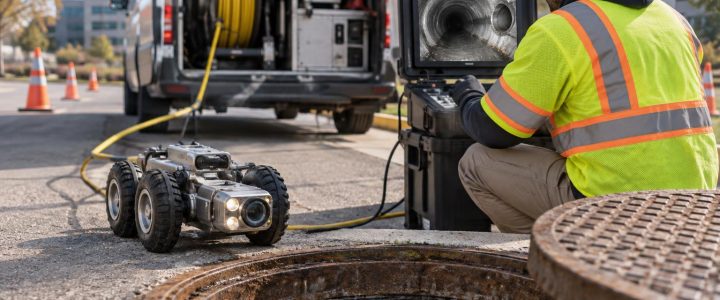
During a video pipe inspection, a trained operator introduces a camera through a suitable access point, such as a manhole, catch basin, cleanout, or other opening. Depending on pipe size, configuration, and access, the work may use a push camera, tractor-mounted crawler, or robotic pipe inspection equipment.
The resulting video may help document the visible interior of an accessible storm sewer, drainage pipe, sanitary sewer, culvert, or conduit. Useful observations can include:
- Pipe diameter and apparent material, when visible and identifiable
- Direction changes, bends, and transitions between pipe segments
- Inlet, outlet, lateral, and branch connections visible from the camera path
- Open, offset, separated, or visibly defective joints
- Cracks, fractures, holes, deformation, displaced pipe, or collapse
- Sediment, trash, construction debris, roots, grease, or other obstructions
- Standing water, evidence of surcharge, or deposits that may affect flow
- Visible infiltration, staining, corrosion, or other conditions requiring further review
- Connections that appear abandoned, plugged, or improperly installed
Video is particularly useful when an issue is inside the pipe and cannot be confirmed from surface features alone. For example, a camera may show that a catch basin outlet is blocked by sediment at the first downstream joint, or that a pipe serving a proposed work area turns toward an unmarked structure.
However, a camera observation is not automatically a diagnosis of the defect’s cause or structural significance. A visible crack may warrant engineering review, but video alone may not establish the loading condition, remaining structural capacity, soil support, or cause of movement. Similarly, water entering a pipe may be visible, but determining whether it is infiltration, a connection, or another source can require further investigation.
How pipe locating supports an inspection
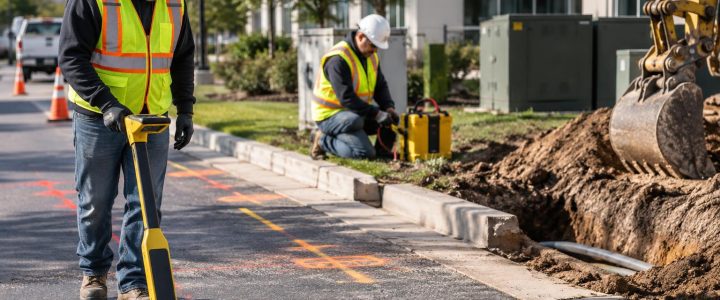
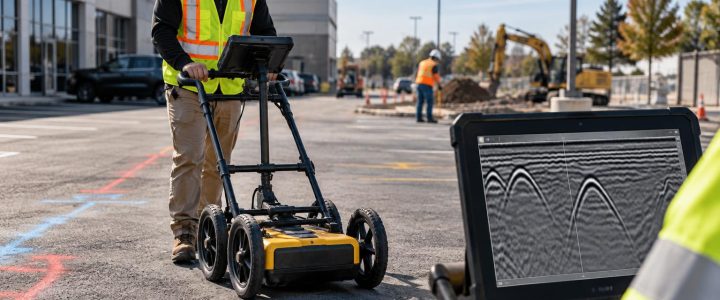
When the goal is to locate underground drainage pipes, a camera inspection is often paired with electronic locating. In suitable conditions, a transmitter associated with the camera equipment can be traced from the surface as the camera moves through the pipe. Surface marks can then show an approximate alignment and identify key points such as a connection, blockage, or termination.
This approach can be valuable for tracing a pipe from a known catch basin toward a suspected downstream structure. It can also help a project team identify where a visible internal feature falls relative to a proposed excavation, pavement repair, utility crossing, or building addition.
What locating data can and cannot establish
Surface locating can provide useful field information, but results should be matched to the intended use. Signal quality, access, soil conditions, depth, congestion, pipe configuration, and interference can affect the result. A camera-based sonde or transmitter may not be practical in every pipe, especially where the line is deeply buried, heavily obstructed, inaccessible, or beyond the equipment’s range.
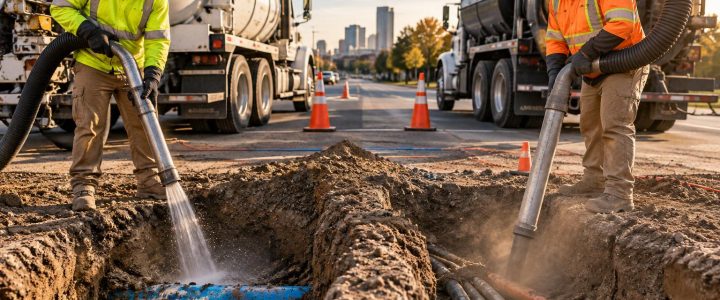
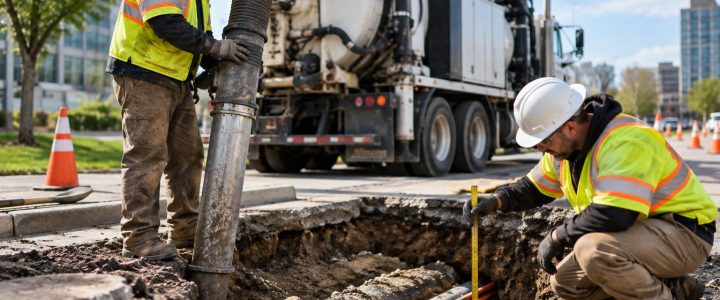
For design, conflict resolution, or excavation decisions where horizontal position and elevation must be established with greater confidence, additional steps may be appropriate. These can include survey control, structure measurements, review of accessible inverts, targeted private utility locating, and vacuum excavation at selected conflict points.
In short, CCTV can help trace the internal path of an accessible pipe. Locating can help relate that path to the ground surface. Surveying and test holes may be needed when a project requires verified coordinates, elevations, or physical confirmation.
A practical workflow for tracing an unknown drainage system
A focused investigation starts with a defined question. “Inspect every pipe” is not always the most efficient scope. A better starting point may be: “Determine whether these three inlets connect to the same storm trunk,” or “Trace the outlet route from this catch basin before excavating along the proposed utility alignment.”
- Gather available records and field observations. Review utility plans, drainage plans, as-builts, maintenance records, complaint history, and photographs if available. Identify visible structures, such as catch basins, manholes, outfalls, headwalls, cleanouts, and roof drain connections.
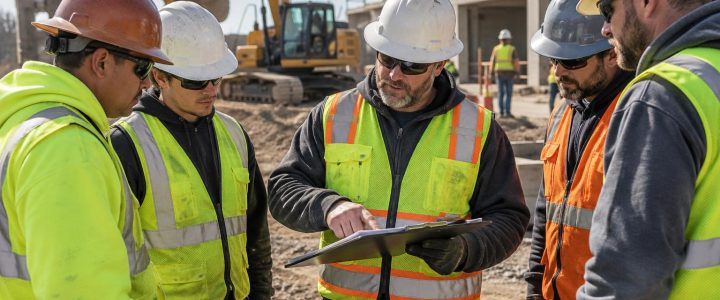
- Walk the site and confirm access. A field review identifies accessible entry points and may reveal structures omitted from plans. The inspection team should also consider traffic control, confined-space hazards, water flow, and safe equipment setup.
- Determine whether cleaning is needed. Heavy sediment, debris, roots, grease, or standing water can prevent a meaningful camera view. Cleaning may be needed before, during, or after the inspection, depending on the project objective and observed conditions.
- Inspect from known structures. Starting at an identified catch basin, manhole, or cleanout helps establish a logical route. The operator documents direction, distance traveled, connections, defects, and conditions that limit the inspection.
- Locate significant points where feasible. The team may locate the camera at selected connections, changes in direction, apparent defects, or obstructions. These field marks can be coordinated with site features and design work.
- Review results against the project question. The inspection should identify what was observed, what could not be inspected, and what follow-up is warranted. A blocked line, inaccessible branch, or suspected crossing may require targeted cleaning, additional access, locating, test holes, or engineering review.
When video inspection is especially useful
Stormwater pipe inspection is often most valuable before a decision becomes costly. Common situations include the following.
Before site redevelopment or utility installation
Existing storm sewer systems may cross proposed building pads, parking areas, retaining walls, or utility routes. CCTV and pipe locating can help identify pipe paths and visible connections before crews encounter them during excavation.
When a storm drain is not draining
A drainage complaint may involve a blocked outlet, sediment-filled pipe, broken segment, root intrusion, collapsed section, or downstream capacity issue. The camera can show whether the line is visibly obstructed and where accessible conditions change. It cannot, by itself, prove the hydraulic capacity of the entire system.
After construction activity near existing drainage
Heavy equipment, grading, trenching, paving, and utility installation can affect buried pipe systems. A comparison inspection may document visible pipe condition after nearby work, particularly when there is concern about debris, displaced joints, crushing, or damage at crossings.
For maintenance and repair planning
Facilities and municipalities may use CCTV sewer inspection data to separate pipes needing immediate attention from pipes that can be monitored or scheduled for later maintenance. The video record can also help crews plan access, cleaning, repair methods, and traffic-control needs.
Condition assessment: observation versus engineering judgment
A professional report should clearly distinguish observed conditions from conclusions that require additional analysis. For example, an operator may document a fracture, a displaced joint, sediment accumulation, or an active inflow. The report can identify the location along the inspected run and include video evidence.
But a decision to repair, rehabilitate, replace, or leave a pipe in service should consider more than a camera image. Pipe material, diameter, age, depth, loads, soil conditions, maintenance history, drainage function, downstream system conditions, and the consequences of failure may all matter.
For projects requiring standardized sewer condition data, owners may request inspections coded under the National Association of Sewer Service Companies’ Pipeline Assessment and Certification Program (PACP). PACP provides a standardized framework for recording pipeline observations; the related Lateral Assessment and Certification Program (LACP) applies to laterals. A PACP- or LACP-coded inspection should be specifically scoped and performed by appropriately qualified personnel. A standard video alone should not be described as a certified condition assessment unless those requirements are actually met.
Standardized coding can help owners compare inspected assets and support asset-management workflows. The value depends on complete field information, consistent coding, and an inspection scope that fits the system being evaluated. NASSCO and the U.S. Environmental Protection Agency both describe the importance of consistent condition information and asset-management practices for planning wastewater infrastructure maintenance and rehabilitation.
For more information, see NASSCO’s PACP resources and the EPA’s water and wastewater asset-management resources.
What to request in a professional pipe inspection deliverable
Before scheduling pipe inspection services, clarify the information your team needs. A useful deliverable may include:
- Inspection video labeled by structure, line segment, or project area
- Inspection direction and access-point identification
- Distance measurements from the entry point, subject to field conditions
- Observed connections, branches, defects, obstructions, and inspection limitations
- Still images of significant features
- Surface marks or field notes for located points, when locating is included
- A summary of runs that were completed, partially completed, or inaccessible
- Recommendations for appropriate follow-up, such as cleaning, additional locating, test holes, or engineering review
For complex sites, coordinate the inspection scope with the civil engineer, surveyor, utility coordinator, and construction manager. That helps ensure the field work produces information that can be used in plans, risk reviews, maintenance decisions, or construction sequencing.
FAQ: Tracing underground drainage pipes with CCTV
Can a sewer camera locate an underground storm pipe?
It can help trace the route of an accessible pipe, especially when paired with a locatable transmitter and surface locating equipment. It does not automatically provide a precise surveyed alignment or elevation, and some field conditions can limit locating performance.
Can CCTV identify every pipe connection?
No. The camera can document connections visible from the inspected path. Connections may be obscured by sediment, water, debris, pipe damage, viewing angle, or inaccessible sections. Additional access or investigation may be needed.
Can a camera inspect a completely blocked or collapsed storm sewer?
Not through the blocked or collapsed section. The inspection may document the point where progress stops, which can still help plan cleaning, excavation, repair, or a different investigation method.
Is pipe cleaning required before a storm sewer inspection?
Not always, but cleaning is often needed when sediment, debris, roots, grease, or other material prevents the camera from seeing the pipe wall, joints, or connections. The required preparation depends on the pipe condition and the purpose of the inspection.
Turn unknown drainage information into a field-based plan
When a storm sewer route, connection, or condition is uncertain, a well-planned video pipe inspection can provide a practical starting point. It helps teams see accessible internal conditions, identify the limits of what is known, and decide where locating, cleaning, surveying, test holes, or engineering analysis should follow.
Visionary Subsurface Solutions provides video pipe inspection for stormwater, sanitary sewer, drainage, and other accessible piping systems throughout Pennsylvania, New Jersey, Delaware, Maryland, New York, and the Washington, D.C. to New York City corridor. Contact our team to discuss your project access, inspection objectives, and the information needed for the next decision.