When a storm sewer, culvert, or site drainage line is not carrying water as expected, the visible problem is often only the starting point. A flooded inlet, pavement settlement, washout, or slow-draining basin may be related to sediment, a failed joint, root intrusion, a crushed section, an unknown connection, or an outlet issue farther along the system.
A professional storm sewer CCTV inspection gives contractors, engineers, and facility teams a direct view inside an accessible pipe. It can help document the pipe route, observe connections and visible defects, identify obstructions, and establish whether the system can be cleaned, repaired, rehabilitated, or needs further investigation. It is especially useful before drainage repairs, roadway work, site redevelopment, maintenance planning, and culvert rehabilitation.
Video inspection is not a substitute for surveying, excavation, or engineering analysis. It is a field investigation tool that provides visual evidence. Used with the right preparation and follow-up work, it can reduce uncertainty before crews commit to a repair plan.
What a storm sewer CCTV inspection can show
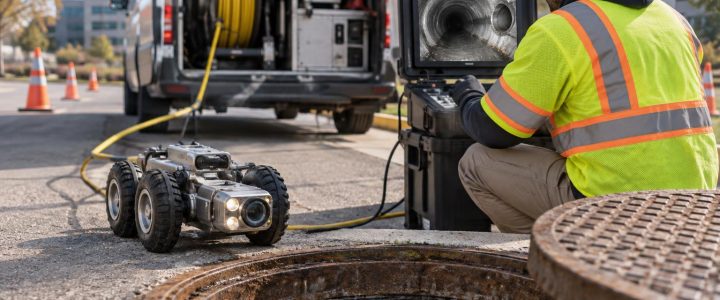
Most storm drain inspections use a camera mounted on a crawler or other inspection platform that travels through the pipe from an available access point. The operator records video and observations while tracking distance along the inspected run. Push cameras may also be useful for smaller lines or shorter accessible sections. The right equipment depends on pipe size, access, flow, bends, material, and project goals.
For accessible and sufficiently clean pipe, a CCTV inspection may help reveal:
- Standing water, sediment, debris, and construction material that restricts flow
- Cracks, fractures, holes, and visible wall loss
- Open, offset, separated, or defective joints
- Deformation, sagging indications, or collapse that limits passage
- Root intrusion at joints or damaged pipe sections
- Intruding taps, laterals, and branch connections
- Pipe material transitions and changes in diameter
- Visible inlet, manhole, headwall, and outfall connections
- Evidence consistent with infiltration, such as water entering through joints or defects during the inspection
- Potential sources of blockage or recurring drainage problems
The video provides observations, not automatic answers. For example, a camera may show a crack, but it cannot by itself determine whether the crack is superficial, whether surrounding soil has voided, or whether the pipe has enough structural capacity for future loads. Those questions may require engineering review, cleaning, flow testing, surface investigation, 3D structure data, or targeted excavation.
Why inspect culverts and drainage pipes before choosing a repair
Stormwater repairs are often planned under schedule pressure. A contractor may be asked to clear a blocked run, repair a sinkhole, or replace a damaged culvert before the next rainfall event. Starting with a clear picture of the interior condition can help limit unnecessary work and identify conditions that simple cleaning will not solve.
Determine whether maintenance is enough
Cleaning may restore capacity where sediment, leaves, debris, or isolated roots are the primary problem. However, cleaning alone may not address a displaced joint, a separated connection, a deformed section, or a pipe with repeated sediment entry. CCTV inspection before and, when appropriate, after cleaning helps distinguish a one-time obstruction from a condition that needs repair or monitoring.
Define the limits of a repair area
A visible surface failure does not always sit directly above the only damaged section. A camera inspection can document conditions upstream and downstream of the apparent problem, subject to access and pipe passability. This helps project teams avoid defining the repair solely from surface symptoms.
Support rehabilitation scoping
Before lining, spot repair, grouting, or replacement is selected, the owner and design team need to know whether the pipe is a feasible candidate. Pipe geometry, active flow, defects, lateral connections, sediment level, access, and the severity of visible damage can all affect the available options. A pre-rehabilitation inspection creates a baseline for that decision.
Document existing conditions before adjacent construction
Heavy equipment, grading, utility installation, pavement replacement, and dewatering activity can affect older drainage systems. Pre-construction video can document accessible pipe conditions before work begins. A follow-up inspection may then help identify whether observable conditions changed. This documentation does not prove causation on its own, but it gives the project team a dated visual record.
Pipe inspection, pipe locating, and condition assessment are different tasks
These services work well together, but they produce different types of information.
- Video pipe inspection looks inside an accessible pipe to document route clues, connections, blockages, and visible condition.
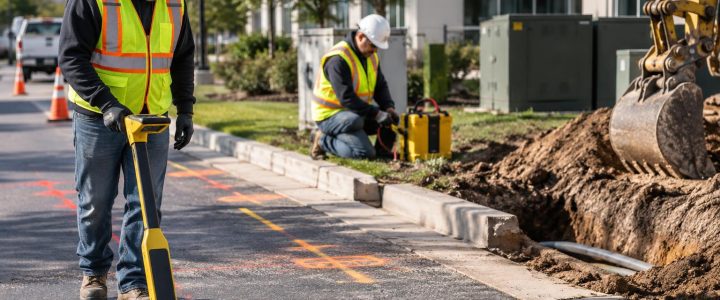
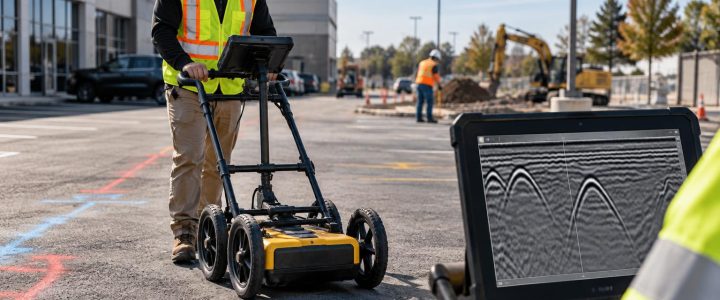
- Pipe locating traces a pipe or sonde signal from the surface when field conditions allow. It can help estimate the horizontal route of a camera head or accessible line.
- Surveying establishes coordinates and elevations within a defined survey control framework.
- Condition assessment organizes observations into a useful decision framework. It may include standardized coding, engineering interpretation, maintenance priorities, or rehabilitation recommendations, depending on scope.
A CCTV camera does not automatically create a precise surveyed utility map. Camera distance can be affected by bends, slack, wheel slip, obstructions, and pipe alignment. Similarly, a locating signal can be distorted by congestion, depth, soil conditions, or nearby conductive utilities. Where design-grade position or elevation is important, coordinate the video work with qualified pipe locating, survey control, and, if needed, physical verification.
Visionary Subsurface Solutions can combine video findings with private utility locating when a project needs more than an interior view of an accessible line.
Field conditions that affect a CCTV storm sewer inspection
A meaningful inspection starts before the camera enters the pipe. Storm systems are exposed to sediment, runoff, leaves, trash, and seasonal flow, so access and preparation matter.
Access points and pipe geometry
Inspectors need suitable access through manholes, inlets, cleanouts, headwalls, or other openings. Pipe diameter, length, slope, bends, offsets, and transitions determine whether a crawler, push camera, or another approach is practical. A small line with multiple tight bends may not accept the same equipment used in a larger municipal storm sewer.
Water, sediment, and debris
Standing water can obscure the lower portion of the pipe. Heavy sediment, grease, roots, or debris can block camera travel and hide defects. Cleaning or jetting may be appropriate before inspection, particularly when the goal is construction acceptance or a detailed condition assessment. If the system cannot be adequately cleaned or passed, the inspection report should clearly identify the uninspected limits and the reason.
Active flow and safe work planning
Flow conditions can change quickly in storm systems. Work planning should consider weather, upstream drainage area, bypass needs where applicable, traffic control, access hazards, and confined-space requirements. A camera inspection does not remove the need for a site-specific safety plan.
What to request in a professional stormwater pipe inspection scope
A well-defined scope helps ensure the inspection data answers the project question. Before mobilization, provide available plans, known structures, suspected problem areas, pipe sizes, access information, and the purpose of the investigation.
For construction, engineering, or municipal work, consider requesting the following:
- Clear inspection limits: Identify the structure-to-structure runs, inlets, laterals, culverts, or outfalls to be evaluated.
- Cleaning expectations: Decide whether cleaning is included, supplied by another contractor, or performed only as conditions require.
- Video and still-image deliverables: Request labeled video files and images tied to the inspected run and direction of travel.
- Observation logs: Ask for footage distance, access structure identifiers, pipe size and material when known or visually supportable, connections, and observed defects.
- Location coordination: If route information is needed, define whether surface locating and survey support are part of the work.
- Reporting standard: For projects requiring a standardized sewer condition assessment, specify that requirement in advance. NASSCO’s Pipeline Assessment Certification Program, commonly called PACP, provides a standardized coding framework for pipeline observations. LACP is a related standard for laterals. Not every camera inspection is a PACP or LACP-coded inspection, and the requested scope should state whether qualified coding is required.
- Decision needs: State whether the report will support maintenance, design, construction acceptance, rehabilitation planning, or documentation of existing conditions.
Common findings and the right next question
Video inspection is most useful when each observation leads to a practical next step rather than an immediate assumption.
Sediment buildup
Ask whether sediment is isolated or recurring. Repeated deposits may point to inadequate slope, low-flow conditions, upstream erosion, damaged joints, or poor inlet maintenance. Cleaning restores visibility and may restore flow, but it may not address the source.
Open or offset joints
Ask whether the observed joint is allowing soil, water, or roots to enter and whether it is associated with settlement or pavement distress. Targeted excavation, survey data, or engineering review may be needed before selecting a repair.
Cracks or fractures
Ask about the extent, location, pipe material, and whether the defect appears isolated or repeated. The structural significance cannot always be determined from video alone, especially when the exterior pipe zone cannot be observed.
Deformation or an impassable section
Ask whether the camera can safely pass and whether there is evidence of collapse, displacement, or a severe obstruction. If the pipe is inaccessible, options may include cleaning, access from another point, surface locating, targeted test holes, or replacement planning. No inspection method should imply complete visual coverage where the camera cannot travel.
Unknown connections
Ask where the branch enters, whether it is active, and whether it corresponds with plans or surface structures. A camera can identify a visible connection; locating and survey support may be required to establish its route and position with the precision needed for design.
Frequently asked questions
Can CCTV locate underground drainage pipes?
It can help establish the route of an accessible pipe by documenting its travel from known structures and, in some cases, supporting a surface locating effort with a transmitter or sonde. CCTV alone does not guarantee a precise horizontal or vertical location. Complex alignments, blocked pipes, depth, congestion, and field conditions can limit results.
Can a camera inspection prove a pipe is structurally sound?
No. A camera can document visible defects and conditions that may warrant concern. Determining structural capacity, remaining service life, or the cause of settlement may require engineering analysis and other investigation methods.
Should a new storm sewer be inspected before project acceptance?
Many owners, contractors, and engineers use post-installation CCTV inspection as a quality-control and documentation step. It can identify debris, visible damage, joint issues, connection concerns, and access limitations before final acceptance. The required standard, timing, cleaning level, and acceptance criteria should be established in the project specifications.
What if the pipe is blocked or full of sediment?
The inspection may be limited until cleaning is performed. The initial attempt can still document the point of obstruction and accessible conditions, but a complete condition assessment may require cleaning, jetting, or another planned investigation method.
Use video evidence to make the next field decision
Storm sewer CCTV inspection is not just a maintenance tool. It is a practical way to reduce uncertainty about accessible drainage infrastructure before a crew excavates, a designer selects a repair, or an owner accepts installed work. The strongest results come from matching the inspection scope to the decision at hand and recognizing where additional locating, surveying, cleaning, vacuum excavation, or engineering review is needed.
Visionary Subsurface Solutions provides professional video pipe inspection for accessible stormwater, sanitary sewer, drainage, and other underground piping systems throughout Pennsylvania, New Jersey, Delaware, Maryland, New York, and the Washington, D.C. to New York City corridor. Contact our team to discuss access, pipe conditions, required deliverables, and the next practical step for your project.