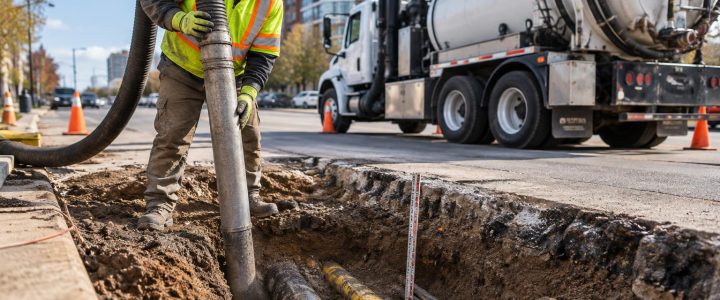
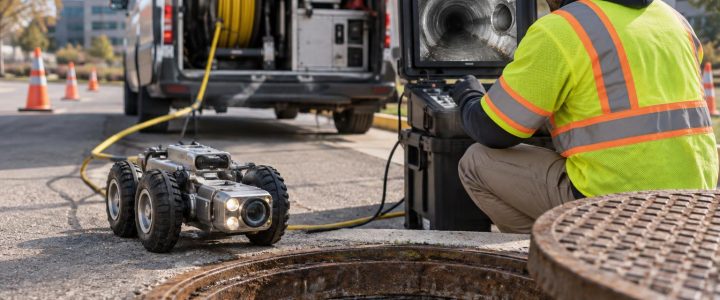
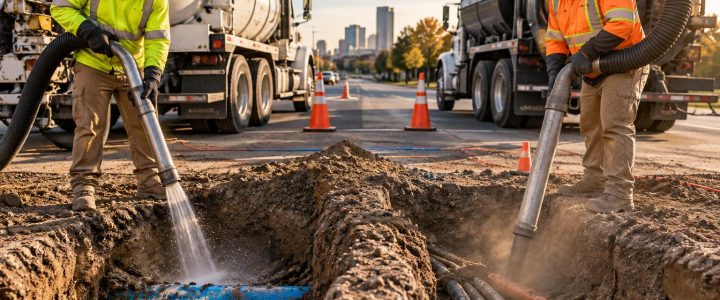
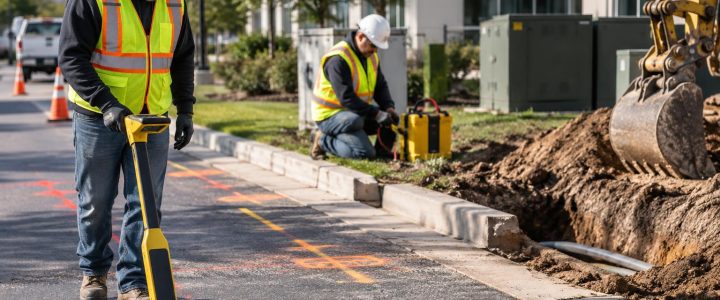
A video pipe inspection can answer important questions about an underground storm sewer, sanitary sewer, culvert, or drainage line. It may show whether the pipe is accessible, where visible connections occur, whether debris is limiting flow, and whether there are observable defects such as open joints, fractures, root intrusion, or deformation.
For a contractor or engineer, however, the video alone is rarely the complete deliverable. A professional pipe inspection report organizes field observations so they can support a practical next step: cleaning, additional investigation, repair design, acceptance review, maintenance planning, or coordination with other site information.
The most useful reports make a clear distinction between what the camera observed, what can reasonably be inferred from those observations, and what requires further locating, surveying, excavation, testing, or engineering analysis.
What a pipe inspection report is designed to provide
A professional CCTV pipe inspection report creates a record of the accessible portion of a pipe system as observed on the inspection date. Depending on the project scope and field conditions, it can help a project team understand:
- Which structures and pipe segments were inspected
- The direction of travel and the available access points
- Pipe size, shape, and material when these can be identified or are provided in project records
- Visible connections, laterals, branches, inlets, manholes, and other features
- Observable defects, obstructions, deposits, and signs of damage
- The relative position of observations along an inspected run
- Whether the camera reached the planned endpoint or was stopped by a field condition
- Recommended next steps based on the inspection objective
This information is useful for stormwater pipe inspection, sewer pipe inspection, post-installation quality control, and investigation of unknown underground infrastructure. It is also valuable when a team needs to establish existing conditions before nearby excavation, paving, rehabilitation, or redevelopment work.
Core elements of a useful CCTV pipe inspection report
Project and inspection scope
The report should first establish what was requested and what was actually inspected. This includes the project location, client or project reference, inspection date, pipe system type, and the purpose of the work.
For example, a scope may be limited to checking a newly installed storm sewer for construction debris and visible joint issues. Another assignment may involve investigating recurring backups in an existing sanitary sewer. The purpose affects how the findings should be read and what follow-up work may be appropriate.
The report should also identify meaningful limitations. If a line could not be entered because an inlet was buried, if the camera was stopped by heavy sediment, or if high flow obscured the pipe wall, that should be documented rather than overlooked.
Asset identification and access information
Every inspected run should be tied to identifiable access points whenever possible. These may include manholes, cleanouts, catch basins, inlets, headwalls, vaults, or other structures. A report may identify a segment by an upstream and downstream structure reference, an asset ID supplied by the owner, or a project-specific naming convention.
This is especially important on sites with multiple storm drain branches or parallel sanitary sewer lines. A video showing a defect has limited value if the project team cannot confidently associate it with the correct pipe run.
Inspection direction should be stated as well. A run recorded from downstream to upstream may reveal different details than a run recorded in the opposite direction, particularly at laterals, joints, and connections.
Video, still images, and observation logs
A complete deliverable commonly includes the video file or files, a written observation log, and still images of significant features. The video provides context. The log makes the findings easier to review, sort, and reference during meetings or design work.
At a minimum, an observation entry should indicate the relative distance along the inspected run, a description of what was seen, and a reference to the applicable image or video segment. Useful entries might document:
- Root intrusion at a joint
- Sediment reducing the visible flow area
- Construction debris in a new pipe
- A displaced, open, or defective joint
- A visible crack, hole, fracture, or damaged section
- Standing water or an obstruction that prevents further progress
- A branch connection, lateral, or unknown incoming line
- A change in pipe material, shape, or apparent diameter
Descriptions should be specific but measured. For instance, video may show a longitudinal crack or a visibly offset joint. It does not by itself establish the cause of the defect, remaining structural capacity, soil conditions outside the pipe, or the exact repair needed.
Distance reference and measurement context
CCTV equipment generally records the travel distance of the camera from the access point. This distance helps place observed features in sequence along a pipe run. It is valuable for planning cleaning, repair, or targeted verification.
Camera distance is not the same as a surveyed coordinate. Slack in the cable, bends, changes in route, and field setup can affect how a distance reading relates to a point on a site plan. Likewise, the camera view does not automatically provide an exact pipe depth or horizontal alignment.
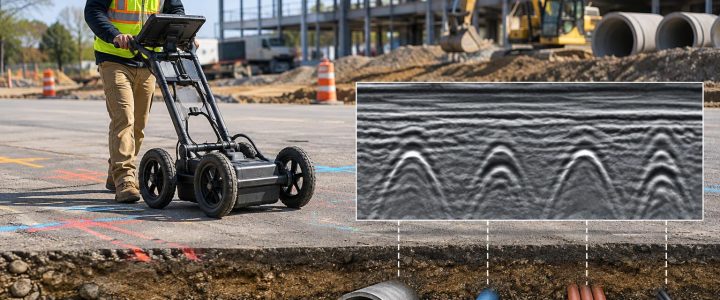
When a project requires a defensible location for a connection, obstruction, or defect, the team may need pipe locating, survey control, surface measurements, or other investigation. A sonde used during a camera inspection can sometimes assist with tracing an accessible pipe route, but the result should be interpreted within the limitations of the equipment and site conditions.
Condition observations are not the same as an engineering conclusion
One of the most important qualities of a responsible underground pipe inspection report is a clear separation between observation and interpretation.
Video inspection can document visible conditions inside an accessible pipe. It may reveal deposits, intruding roots, defective joints, visible wall damage, deformation, infiltration entering through a joint, or a blockage. These observations can guide the next decision.
They do not automatically establish why the condition exists or how serious it is structurally. A recurring separation at a joint may relate to installation, settlement, movement, material condition, or another factor that cannot be confirmed from the inside view alone. A visibly deformed pipe may warrant engineering review, excavation, cleaning, additional measurement, or other verification before selecting a repair approach.
This distinction helps project teams avoid two common mistakes: dismissing a visible issue without follow-up and treating a camera finding as a final engineering diagnosis.
How PACP and LACP concepts may improve consistency
For municipal, utility, and asset-management work, standardized inspection methods can make condition data easier to compare across a system. NASSCO’s Pipeline Assessment Certification Program, commonly called PACP, provides a standardized approach for coding observations in gravity sewer and stormwater pipelines. Lateral Assessment Certification Program, or LACP, concepts address laterals and related connections.
A report that uses PACP or LACP terminology should state the method used and the qualifications relevant to that work. Not every CCTV sewer inspection is a PACP- or LACP-coded assessment, and a general video inspection report should not be represented as one unless that scope was specifically performed.
When standardized coding is appropriate, it can help owners organize condition information, compare observations over time, and prioritize review. Even then, coding supports decision-making; it does not replace project-specific engineering judgment.
What to look for after new pipe installation
Post-installation pipe inspection gives contractors, engineers, and owners a chance to document the interior condition of newly installed storm and sanitary sewer systems before closeout. It can be particularly useful after backfill, paving, utility crossings, or other activities that may affect a pipe.
For a new sewer inspection or new storm sewer inspection, the report should clearly identify the installed runs and record whether the inspection reached the intended structures. The team may look for:
- Loose soil, rock, grout, trash, or other construction debris
- Visible damage to the pipe wall
- Misaligned, open, or visibly displaced joints
- Connections that appear incomplete, blocked, or improperly finished
- Standing water, sags, or flow restrictions that may need further evaluation
- Intruding service laterals or branch connections
- Pipe sections that could not be inspected because of obstruction, water level, access, or configuration
Inspection timing matters. If cleaning is planned before final acceptance, the project team may choose to inspect after cleaning so sediment and debris do not obscure the pipe wall. If the goal is to identify construction debris before cleaning, an initial inspection may be useful as part of quality-control documentation. The right sequence depends on the contract requirements and the questions the team needs answered.
When pipe locating or other services should be added
Video inspection, pipe locating, and condition assessment overlap, but they are not interchangeable services.
A camera inspection can help trace the route of an accessible pipe by documenting its travel from known structures and identifying turns, branches, or connections. A sonde may support surface tracing in suitable conditions. However, video inspection alone does not always establish a precise surveyed route, invert elevation, or depth.
Additional work may be appropriate when a project needs to:
- Map a pipe route accurately for design or conflict avoidance
- Confirm the position of a buried connection or obstruction
- Verify depth or elevation at a critical crossing
- Expose a pipe to assess outside conditions or confirm a repair area
- Integrate pipe findings with surveyed site features and utility mapping
- Evaluate the structural significance of observed damage
Visionary Subsurface Solutions can coordinate video findings with private utility locating when a project needs more context on underground routes. Where manhole geometry and interior asset information are important, 3D manhole LiDAR scanning may also support a more complete record.
Questions to ask before requesting a report
Clear instructions at the start help produce a report that serves the project rather than simply generating video files. Before scheduling pipe inspection services, consider these questions:
- What decision must this inspection support: acceptance, repair planning, maintenance, redevelopment, or damage investigation?
- Which pipe runs, structures, or suspected problem areas are in scope?
- Are plans, asset maps, prior videos, or structure IDs available?
- Has the line been cleaned enough for meaningful visual inspection?
- Do water levels, active flow, access restrictions, or traffic control affect the work?
- Is standardized PACP or LACP coding required, or is a documented visual inspection sufficient?
- Will the findings need to be tied to survey control, utility mapping, or an engineering drawing?
FAQ: professional underground pipe inspection reports
Can a CCTV report confirm pipe depth?
Not reliably by video alone. Camera travel distance and visible features can provide useful context, but exact depth typically requires survey information, verified locating, or physical investigation.
Can a camera inspection find every defect?
No. The camera can only document the accessible, visible portion of the pipe. Heavy sediment, grease, roots, standing water, obstructions, collapsed sections, difficult bends, and limited access can prevent a complete inspection.
Does a visible crack mean the pipe must be replaced?
Not necessarily. The report should document the observation and location context. The repair decision depends on the defect type, extent, pipe function, surrounding conditions, project requirements, and engineering evaluation where needed.
Should video inspection be completed before a pipe is accepted?
Many project teams use post-installation CCTV inspection as part of quality control or acceptance documentation, particularly for storm sewer and sanitary sewer work. The applicable contract documents, owner requirements, and project specifications should determine the required process.
Use the report as a decision tool
The best pipe inspection report is not just a collection of screenshots. It is a clear field record that lets contractors, engineers, and owners understand what was inspected, what was observed, what could not be confirmed, and what follow-up may be warranted.
For projects in Pennsylvania, New Jersey, Delaware, Maryland, New York, or the Washington, D.C. to New York City corridor, contact Visionary Subsurface Solutions to discuss professional video pipe inspection and the reporting approach that fits your construction, maintenance, or infrastructure investigation needs.