New storm sewer and sanitary sewer systems can look complete from the surface while important questions remain underground. Are the pipes clear of construction debris? Are joints aligned? Did laterals and structures connect as intended? Has equipment traffic or backfill work damaged a line?
A post-installation CCTV pipe inspection gives contractors, engineers, and owners a documented view inside accessible piping before final acceptance, turnover, paving, or closeout. It can identify visible installation issues early, when repair access may be less disruptive and project records are still current.
For commercial developments, municipal work, utility projects, and site construction, a camera inspection is most useful when it is planned as part of quality control rather than treated as a last-minute response to a drainage failure.
What a post-installation CCTV pipe inspection can show
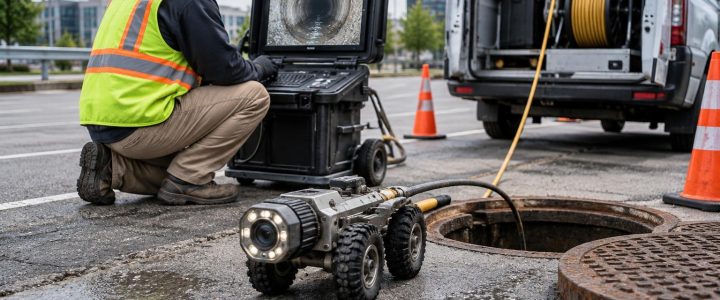
Video pipe inspection uses a camera system introduced through a suitable access point, such as a manhole, cleanout, catch basin, inlet, or structure. Depending on pipe size, configuration, and access, the equipment may be a push camera, crawler, or robotic pipe inspection system.
The live video and recorded inspection can help document observable features inside an accessible line, including:
- Pipe route indications between known access structures
- Visible connections, laterals, taps, and junctions
- Construction debris, sediment, grout, concrete, or other obstructions
- Open, offset, displaced, or visibly defective joints
- Cracks, fractures, holes, breaks, and surface damage
- Deformation, standing water, or areas where flow may be restricted
- Root intrusion in existing or newly connected systems
- Visible infiltration at joints or defects when water is present
- Installation-related concerns, such as protruding service connections or poor alignment
The result is not simply a video file. A professional inspection should tie observations to the pipe segment and direction of travel, identify relevant access points, and provide usable notes for the contractor, engineer, owner, or inspector.
Why inspect new pipe before project acceptance?
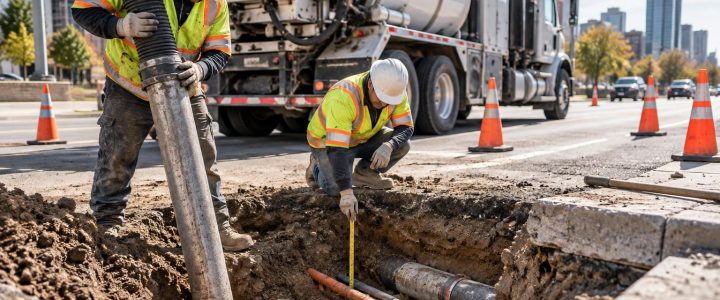
New pipe is not automatically defect-free. Damage can occur during unloading, handling, installation, compaction, structure work, or later construction activity. Debris may also enter an open system before final cleaning and restoration.
A new sewer inspection or new storm sewer inspection can support several practical project goals:
- Quality control: Find visible deficiencies before demobilization or final surface restoration.
- Acceptance documentation: Provide a record that supports review under the project specifications and acceptance process.
- Connection verification: Confirm that accessible laterals, branch lines, and structures appear to connect as expected.
- Baseline condition records: Establish the observed condition at turnover for future maintenance or warranty discussions.
- Targeted correction: Help focus excavation, cleaning, testing, or repair on the segment that needs further investigation.
For stormwater systems, this work is often scheduled after installation and cleaning but before final paving makes future access more costly. For sanitary sewer systems, it may be coordinated with other required testing and the owner’s closeout requirements.
Video inspection is one part of construction acceptance
CCTV pipe inspection is valuable, but it does not replace every required test or review. Project documents may call for separate leak testing, deflection testing, mandrel testing, air testing, low-pressure testing, compaction testing, survey work, or engineering review. The applicable requirements depend on the pipe material, system type, owner standards, and contract documents.
Camera video is especially strong at documenting what is visible inside the pipe. It may show a displaced joint, a protruding connection, or debris at a low point. It cannot, by itself, establish why that condition occurred, whether the surrounding bedding is adequate, or whether a visible defect has a particular structural consequence. Those questions may require additional testing, records review, excavation, or engineering evaluation.
Pipe inspection, pipe locating, and condition assessment are different tasks
These related services are often grouped together, but they answer different questions.
- Pipe inspection documents the internal, visible condition and accessible features of a pipe.
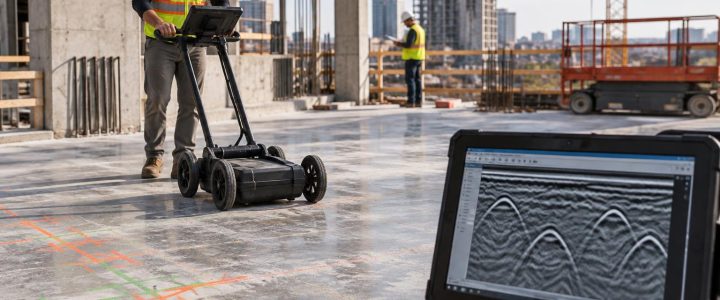
- Pipe locating helps establish a pipe’s approximate route from the surface or trace a camera transmitter where field conditions allow.
- Condition assessment organizes inspection observations so an owner or engineer can evaluate maintenance, repair, rehabilitation, or further investigation needs.
A camera inspection may help establish the route of an accessible pipe between known structures. When a camera sonde or transmitter can be tracked, it can also support field marking. However, CCTV alone does not always provide a precise surveyed horizontal alignment or invert elevation. Depth, bends, signal interference, access limitations, soil conditions, and equipment configuration can affect the result.
Where design-grade horizontal and vertical information is needed, the work may need to be paired with private utility locating, survey control, manhole measurements, test holes, or other appropriate field methods.
A practical post-installation inspection workflow
Good results begin before the camera enters the pipe. The inspection team, contractor, and project manager should agree on pipe segments, access points, reporting needs, and jobsite conditions.
1. Define the inspection limits
Identify the structures or access points that define each run. Provide available plans, pipe schedules, structure identifiers, and known connection information. This helps the inspection report use the same naming system as the project drawings and closeout records.
2. Confirm safe, usable access
Access structures should be available and safe to work around. Traffic control, confined-space procedures, bypass needs, and site-specific safety requirements should be addressed before work begins. A pipe may be installed but not yet accessible for a complete camera run.
3. Clean and prepare the line when needed
Camera inspection does not remove obstructions. Heavy sediment, grease, trash, roots, construction debris, or high water can block the camera view and prevent a meaningful inspection. Cleaning, flushing, or other preparation may be needed first.
Preparation is particularly important after construction. A line with mortar, stone, wood, silt, or packaging debris may require cleaning before the team can determine whether the pipe itself is clear and visibly intact.
4. Inspect, record, and identify observations by location
The operator records video and field observations while moving through the accessible segment. Distance counter information can help reference a feature from the inspection entry point, but it should be interpreted carefully. Equipment calibration, movement through bends, slack, and inaccessible sections can affect distance references.
5. Review findings against project requirements
The inspection provider can document observations. The contractor, engineer, owner, or designated inspector then determines whether those observations meet the project’s acceptance criteria and what corrective action, if any, is appropriate.
Common findings in newly installed storm and sanitary sewer pipe
Post-installation pipe inspection often finds relatively simple issues that are easier to correct before final closeout. Common examples include:
- Debris and sediment: Material left in the pipe can reduce flow area and conceal other concerns.
- Joint concerns: A camera may show separation, offset, gasket visibility, or misalignment. The cause and acceptance significance should be evaluated under the project requirements.
- Protruding taps or laterals: A service connection extending into the barrel can catch debris or restrict maintenance equipment.
- Cracked or damaged pipe: Visible damage may have occurred during handling, installation, or subsequent work over the line.
- Improperly connected branches: Video may reveal an unexpected connection, blind end, or branch that does not appear to enter the expected structure.
- Deformation or obstruction: A distorted pipe shape or reduced opening may warrant further review and testing.
- Water entry: Water visible at a joint or defect can be documented, but determining the source and significance may require additional investigation.
Using standardized coding when the project requires it
For owners managing larger sewer and stormwater inventories, consistent inspection data matters as much as video. The National Association of Sewer Service Companies publishes the Pipeline Assessment Certification Program (PACP) and the Lateral Assessment Certification Program (LACP), which provide standardized terminology and coding frameworks for condition assessment.
A PACP- or LACP-based deliverable can help organize observations for asset management and rehabilitation planning. It can also make inspection records more consistent across different pipe segments and future inspection cycles. However, not every CCTV sewer inspection is a PACP or LACP assessment. Confirm the requested methodology, coding level, report format, and operator qualifications before the work is scheduled.
For more information on those frameworks, see NASSCO’s PACP resources and NASSCO’s LACP resources.
What engineers and project managers should request in the report
A useful construction pipe inspection report should be easy to compare with plans, field records, and acceptance requirements. Request the format your team needs before mobilization. Common deliverables include:
- Project name, date, and inspection limits
- Pipe segment identifiers and upstream/downstream structure references
- Pipe diameter and material when provided by project records or confirmed in the field
- Direction of inspection and access point used
- Video files labeled to match the inspected segment
- Observation logs with distance references and descriptions
- Still images of notable observations where practical
- Locating marks or location information when that service is requested and feasible
- Recommendations for further investigation when visibility or access was limited
If manholes or structures need accurate geometric documentation for design or asset records, 3D manhole LiDAR scanning may complement pipe video by capturing detailed internal structure geometry. It is a separate service with a different purpose than a camera run through pipe.
FAQ: Post-installation video pipe inspection
Can CCTV prove a new sewer line was installed correctly?
It can document visible internal conditions and accessible connections, but it cannot prove every aspect of installation quality. Contract-required testing, survey verification, and engineering review may still be needed.
Can a sewer camera locate the exact depth of a pipe?
Not by itself in every situation. A traceable sonde can support surface locating where conditions allow, but surveyed location and elevation may require additional locating, survey work, or other investigation.
What if the camera cannot get through the pipe?
The report should identify the point reached and the apparent limitation when it can be observed. Cleaning, obstruction removal, access from another structure, or targeted excavation may be needed before a complete inspection is possible.
Should storm sewer be cleaned before CCTV inspection?
Often, yes. Cleaning can improve visibility and help distinguish pipe defects from loose debris or sediment. The right preparation depends on the pipe’s condition, flow, access, and project requirements.
Plan the inspection before closeout
A post-installation CCTV pipe inspection is most effective when it is scheduled early enough to allow cleaning, correction, reinspection, and documentation before final acceptance. It gives the project team a practical view of the work that cannot be seen from the surface and creates records that remain useful after turnover.
Visionary Subsurface Solutions provides professional video pipe inspection for accessible stormwater, sanitary sewer, drainage, and other underground piping systems throughout Pennsylvania, New Jersey, Delaware, Maryland, New York, and the Washington, D.C. to New York City corridor. Contact our team to discuss your project access, reporting needs, and post-installation inspection plan.