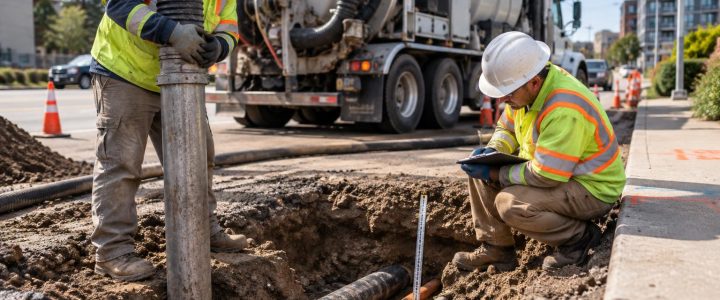
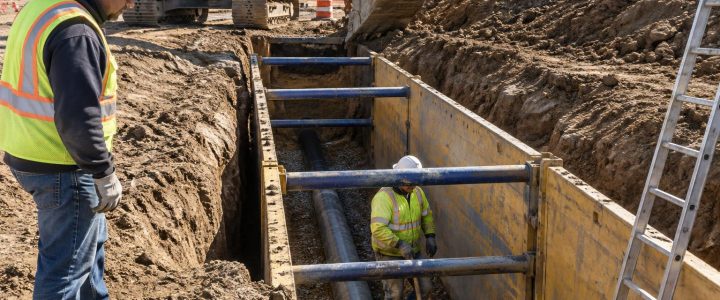
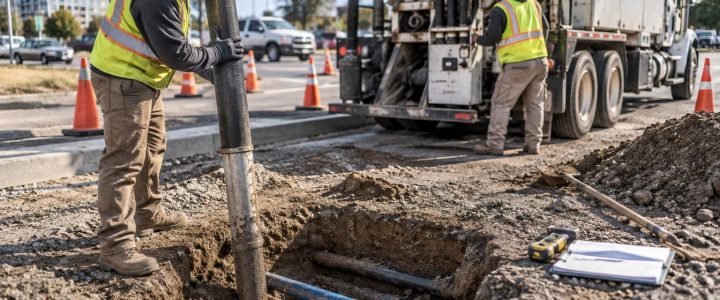
New storm sewer, sanitary sewer, and site drainage pipe may be buried quickly, covered by pavement, or placed beneath finished landscaping. Once that happens, investigating a suspected problem can require disruptive excavation. A post-installation CCTV pipe inspection gives the project team a visual record of accessible pipe interiors before final acceptance or turnover.
For contractors and engineers, the purpose is practical: identify visible construction debris, damaged pipe, joint issues, connection concerns, or other conditions while corrective work may still be more manageable. The inspection can also document the pipe route, structures accessed, and observed features for closeout records. It is not a substitute for design review, required testing, survey, or engineering judgment, but it can be a valuable quality-control tool when used with those activities.
What a post-installation video pipe inspection can show
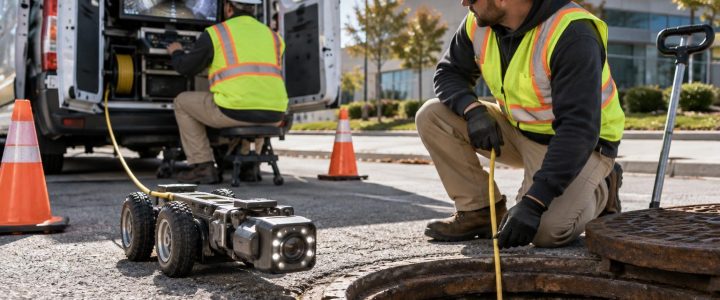
A professional video pipe inspection uses a camera system introduced through an available access point, such as a manhole, inlet, cleanout, or other suitable structure. The camera records the pipe interior as the operator advances through the line. For larger pipes or complex systems, a robotic camera crawler may be used. Smaller lines may require a push camera or another appropriate system.
When access and pipe conditions allow, CCTV inspection can help document:
- Pipe segments that were inspected and the direction of travel
- Accessible manholes, inlets, cleanouts, and other structures
- Visible connections, laterals, branches, and tie-ins
- Construction debris, sediment, grout, rocks, or other obstructions
- Visible cracks, fractures, holes, breaks, or damaged sections
- Open, displaced, or visibly defective joints
- Deformation, sags, offsets, or possible alignment concerns
- Root intrusion, infiltration, standing water, or deposits where present
- The general location of observed features along the inspected run
The word visible matters. A camera records observed interior conditions. It may show that a joint is open or a pipe is deformed, but video alone does not necessarily establish why that condition occurred, whether it affects structural capacity, or what repair is appropriate. Those questions may require review by the engineer of record, cleaning, testing, additional measurements, excavation, or other investigation.
Why inspect new storm and sanitary sewer before acceptance?
Post-installation inspection is often ordered after pipe installation and before final acceptance, paving, or project turnover. It creates a chance to find correctable issues before responsibility shifts among the contractor, owner, developer, municipality, or facility team.
Verify that the installed system is clean and passable
New pipe is not always clean pipe. Soil can enter through open ends during installation. Concrete, grout, stone, plastic, timber, packaging, and other construction materials can also be left in a line. Even limited debris may restrict flow or prevent a later camera, cleaning tool, or maintenance equipment from passing.
A CCTV sewer inspection can identify visible deposits and obstructions. If cleaning is needed, it is generally more useful to clean first and then perform a follow-up inspection that provides a clearer view of the pipe wall and joints.
Document connections and installed features
Plans show the intended system. Inspection provides a record of what was observable in the installed system. A camera may confirm that an accessible lateral, branch connection, inlet lead, or tie-in is visible at the expected point in the run. This can help the team investigate missing connections, unexpected entries, or questionable workmanship.
Still, a video inspection should not be treated as a precise as-built survey by itself. Camera distance is typically measured from the entry point and can be affected by bends, slack, wheel movement, debris, and other field conditions. When horizontal coordinates, rim and invert elevations, or precise connection locations are needed, the project may also need survey control, pipe locating, structure measurements, or other as-built work.
Find visible installation damage before it becomes a later dispute
Pipe can be damaged by handling, compaction activity, equipment loads, rock contact, improper connection work, or later construction near the installed line. A post-installation underground pipe inspection can reveal conditions that may otherwise remain unknown until there is a blockage, surface settlement, infiltration concern, or drainage failure.
Examples of visible concerns include cracked pipe walls, broken sections, displaced joints, intruding gaskets, excessive debris, crushed areas, and sections that appear deformed. The appropriate response depends on pipe material, design requirements, the observed condition, and project specifications. The inspection record helps the responsible project professionals decide what should be reviewed further.
Storm sewer inspection and sanitary sewer inspection have different priorities
The inspection method may look similar, but the project questions are often different.
New storm sewer and drainage pipe
For stormwater systems, the primary concern is usually dependable drainage. Contractors and engineers may request a storm drain inspection to look for sediment, stone, construction debris, blocked inlet leads, pipe damage, poor visible connections, or an unknown tie-in.
Storm systems can collect sediment rapidly during site work. Inspecting after major earthwork and stabilization activities, or after cleaning, can produce a more useful record than inspecting too early while runoff continues to carry material into open structures. Culverts and larger drainage pipes may also require a crawler, remote camera, or another method suited to their diameter and access conditions.
New sanitary sewer systems
For sanitary systems, inspection often focuses on clean pipe interiors, visible joints and connections, service laterals, and conditions that could contribute to blockage or unwanted water entry. A CCTV sewer inspection can provide useful documentation before the system is placed into service or accepted.
However, camera footage is not a complete leak test. An observed drip, stain, or flow entering a pipe may warrant further review, but the absence of visible water does not prove that the system is watertight. If specifications call for air testing, mandrel testing, low-pressure testing, deflection testing, or other acceptance procedures, those requirements should be addressed separately by the responsible parties.
Pipe inspection, pipe locating, and condition assessment are related but different
Project teams often use these terms interchangeably, but they answer different questions.
- Video pipe inspection: Records observable interior conditions in an accessible pipe. It can show features, connections, obstructions, and defects that the camera can reach and see.
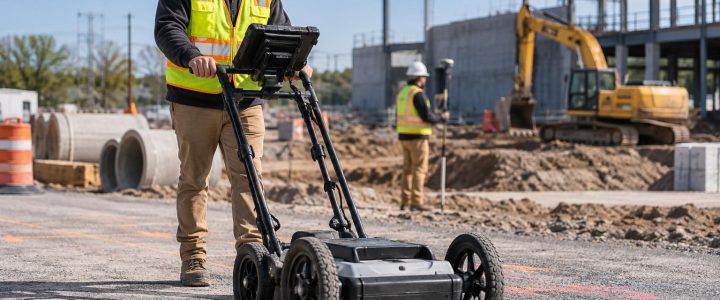
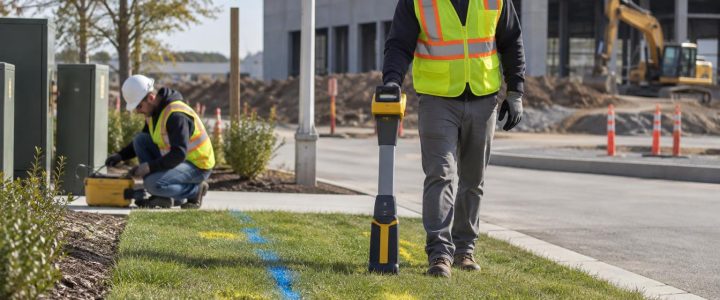
- Pipe locating: Helps establish the surface position of a traceable pipe or camera transmitter, where conditions and equipment permit. It may be used to support a route investigation, but it is not the same as a surveyed as-built.
- Condition assessment: Organizes inspection observations so the owner and engineer can understand defect type, location, severity, and priority. Determining the cause or structural significance of a finding may require engineering evaluation.
For example, a camera may show an apparent offset at a joint. Locating can help relate that feature to surface improvements or planned work. Surveying may be needed if exact coordinates and elevations are required. If the concern could affect capacity or structural performance, the engineer may need additional information before selecting a repair or accepting the work.
On projects with uncertain pipe routes, a combined approach may be appropriate. Visionary Subsurface Solutions can coordinate video findings with Private Utility Locating when a traceable signal, access, and site conditions support that work.
When to schedule the inspection
The best timing depends on the project sequence and acceptance requirements. In many cases, the most useful inspection occurs after installation is complete, structures are accessible, and the line has been cleaned, but before final paving, landscaping, or turnover makes corrective work harder.
Consider scheduling a post-installation pipe inspection when:
- A new storm sewer, sanitary sewer, drainage system, or culvert is ready for quality-control review
- Project specifications require video documentation or the owner requests it
- There is concern about debris, damaged pipe, or a questionable connection
- A line was exposed to heavy construction traffic or nearby excavation
- Drainage is not performing as expected during construction
- The team needs existing-condition documentation before rehabilitation, paving, or tie-in work
- An owner, municipality, or facility manager needs records to support maintenance planning
Prepare the pipe so the camera can provide meaningful results
A camera cannot see through heavy sediment, grease, turbid water, dense roots, or a complete blockage. It also may not pass sharp bends, collapsed sections, severe offsets, or inaccessible pipe runs. Planning around these limitations protects the schedule and improves the value of the inspection.
Before the field visit, confirm the basics
- Identify available access points, including manholes, inlets, cleanouts, and pipe ends.
- Provide plans or sketches when available, while recognizing that field conditions may differ from records.
- Confirm approximate pipe diameters, materials, and expected run lengths if known.
- Clean the line when sediment, construction debris, grease, roots, or other material could obstruct the view.
- Coordinate traffic control, structure access, confined-space procedures, and site safety responsibilities as applicable.
- Identify the acceptance question: cleaning verification, connection review, defect documentation, route investigation, or another defined purpose.
If the camera cannot advance past an obstruction, that result is still important information. It identifies a limit of access and a location for further investigation. It does not, by itself, reveal the full condition beyond the obstruction.
What a professional inspection report should include
Deliverables should be matched to the project purpose. At a minimum, the project team should be able to understand what was inspected, what was observed, and where limits occurred.
A useful report commonly includes:
- Project and inspection date information
- Pipe run identification and accessed structures
- Pipe size and material when known or reliably identified
- Inspection direction and measured distance references
- Observation logs with time or distance references
- Still images and video files or accessible video links
- Notes regarding obstructions, incomplete runs, and other inspection limits
- Condition coding when a standardized inspection method is specifically requested and performed
For municipal and asset-management work, NASSCO’s Pipeline Assessment and Certification Program (PACP) and Lateral Assessment and Certification Program (LACP) provide standardized terminology and coding frameworks for sewer and lateral observations. A video recording does not automatically constitute a PACP or LACP inspection. If standardized coding, certified personnel, or a particular owner format is required, establish that requirement before mobilization.
Standardized coding can help owners compare observations across a larger inventory. It does not eliminate the need for professional interpretation. A condition code records an observed feature according to a defined method; decisions about repair, replacement, capacity, or structural risk should account for the full project context.
FAQ: post-installation video pipe inspection
Can CCTV inspection prove that a new pipe was installed at the correct elevation?
Not by itself. Camera footage and distance readings can help document observed pipe features, but precise elevations generally require survey data, structure measurements, or other project-specific verification methods.
Can a sewer camera locate underground pipe?
In suitable conditions, a camera sonde or related locating method may help establish the approximate surface position of an accessible pipe feature or camera head. Results depend on pipe material, depth, access, interference, soil conditions, equipment, and site layout. Precise location requirements may call for additional locating and survey work.
Does a clear camera video mean the pipe has no problems?
No. A clear video can document that accessible portions appeared free of visible obstructions or defects at the time of inspection. It cannot rule out hidden exterior damage, conditions beyond the camera’s reach, leaks that were not visible, or defects obscured by water, deposits, or viewing limitations.
Should a pipe be cleaned before a CCTV inspection?
Often, yes. Cleaning may be necessary when debris, sediment, grease, roots, or other material prevents camera passage or blocks a meaningful view of the interior. The needed preparation depends on the pipe and the purpose of the inspection.
Build a stronger record before turnover
Post-installation CCTV pipe inspection is most valuable when it is planned as part of quality control rather than used only after a failure. It can help contractors document completed work, help engineers review visible conditions, and help owners receive clearer information about the accessible portions of their new underground infrastructure.
Visionary Subsurface Solutions provides Video Pipe Inspection for stormwater, sanitary sewer, drainage, and other accessible piping systems throughout Pennsylvania, New Jersey, Delaware, Maryland, New York, and the Washington, D.C. to New York City corridor. Contact our team to discuss access, pipe conditions, reporting needs, and the inspection approach that fits your project.