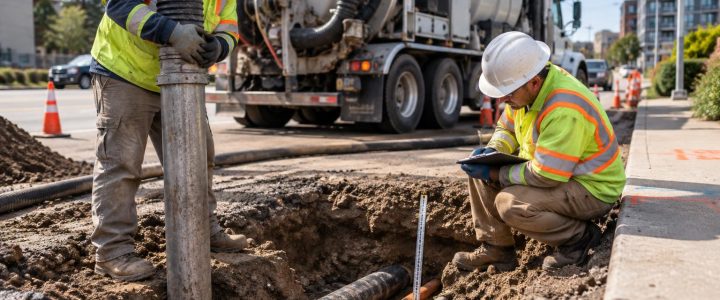
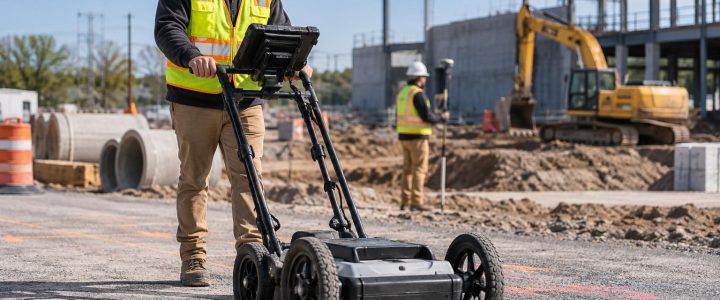
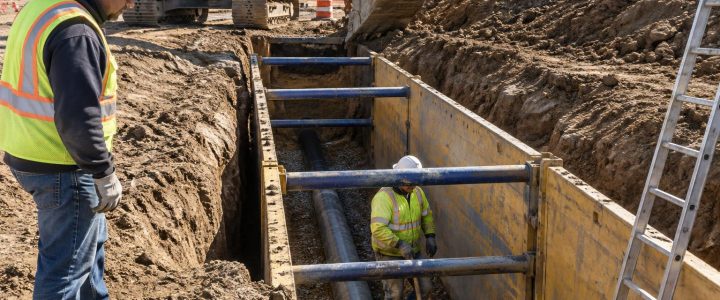
A storm drain that repeatedly backs up, ponds, or drains slowly is rarely solved by guesswork. Cleaning may restore flow for a short time, but the underlying issue can remain: sediment entering from an upstream area, roots at a joint, a crushed pipe section, a failed connection, a pipe with poor alignment, or an unknown change in the drainage route.
A professional storm drain CCTV inspection helps a project team see accessible sections of the system and document what is actually present. For contractors, engineers, municipalities, and property managers, that information can support a better decision about cleaning, repair, rehabilitation, replacement, further locating, or engineering review.
The key is to treat video inspection as one part of a practical investigation. A camera can show visible conditions inside a pipe. It does not, by itself, prove the cause of every drainage problem, establish an exact surveyed pipe location, or determine the structural capacity of a damaged line.
Why recurring storm drain problems need a structured investigation
Recurring drainage complaints commonly appear as ponding in parking areas, flooded loading zones, overflowing inlets, washouts near pavement, or repeated maintenance calls after major rain. These symptoms can be caused by more than one issue, and the visible surface problem may be well away from the actual pipe defect.
Before authorizing a major repair, it is useful to establish what is known and what still needs to be verified. A stormwater pipe inspection can help answer practical questions such as:
- Is there sediment, debris, roots, or construction material restricting flow?
- Does the pipe appear cracked, fractured, deformed, displaced, or partially collapsed?
- Are joints open, offset, or allowing soil to enter the line?
- Do laterals, inlet leads, or other connections enter where expected?
- Is there a blockage at a bend, connection, outfall, or change in pipe size?
- Can the camera reach the suspected problem area from available access points?
- Is the visible condition consistent with cleaning, repair, or a need for more investigation?
This process is especially valuable when project records are incomplete, the system has been modified over time, or multiple parties need clear documentation before approving work.
What CCTV inspection can reveal inside a storm sewer
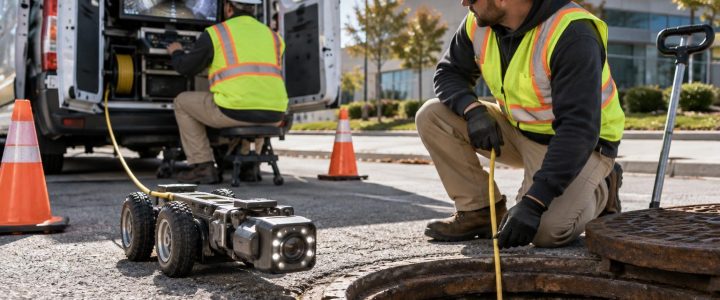
Video pipe inspection uses a camera system introduced through a manhole, inlet, cleanout, or other suitable access point. Depending on pipe diameter, access, bends, and the inspection objective, a push camera or robotic crawler may be used. The operator records the video and observations as the system is inspected.
For accessible pipe sections with adequate visibility, a storm sewer inspection may document:
- Sediment accumulation, debris, trash, or other flow restrictions
- Root intrusion at joints or defects
- Cracks, fractures, holes, and visible breaks
- Open, offset, separated, or defective joints
- Pipe deformation, sagging indications, or apparent collapse
- Connection locations, lateral entries, and changes in pipe material or diameter
- Construction debris in newly installed drainage pipe
- Visible signs of water entering through joints or defects during the inspection
- Obstructions that limit camera travel or require cleaning before a complete inspection
These observations help the team move from a general complaint, such as “the north parking lot drain backs up,” to a more focused repair question. For example, a line may need cleaning before its full condition can be evaluated, or an apparent localized defect may need to be exposed and verified before a repair method is selected.
What a camera inspection cannot determine by itself
Video is highly useful, but it has limits. A camera records visible interior conditions. It does not automatically establish why a defect occurred or how serious that defect is from an engineering standpoint.
For example, a camera may show an open joint and soil staining. That observation may suggest the need for further investigation, but it does not alone confirm the extent of voiding outside the pipe, the condition of the surrounding bedding, or whether the pipe has lost structural capacity. Those questions may require engineering analysis, excavation, testing, or other site-specific investigation.
Likewise, a video can help establish the likely route of an accessible pipe by showing travel direction, structures, connections, and identifiable features. However, CCTV inspection alone does not always provide a precise horizontal alignment, invert elevation, or depth. Pipe location may need to be supported by aboveground signal tracing, survey control, record research, or other private utility locating methods. Where physical confirmation is necessary, carefully planned test holes may be appropriate.
Common causes of recurring storm drain blockages
A recurring blockage does not always mean a pipe must be replaced. It does mean the system deserves a closer look before the same cleaning effort is repeated. Common findings include the following.
Sediment and debris entering the system
Fine sediment can settle in low areas of a pipe, while leaves, litter, mulch, aggregate, and construction debris can collect at bends, transitions, inlets, or damaged joints. A camera inspection can document the location and apparent extent of the restriction, but heavy sediment or standing water may first need to be removed for meaningful viewing.
Root intrusion
Roots can enter through joints, cracks, and separations. Cleaning may remove visible roots temporarily, but the entry point can remain. Video documentation helps identify whether roots are isolated to a particular location or appear at multiple joints along the route.
Damaged or misaligned pipe
Settlement, traffic loading, poor installation, previous excavation, or material deterioration can contribute to pipe damage. A camera may show cracking, displaced joints, deformation, or an obstruction that prevents further travel. The proper repair still depends on the pipe’s condition, depth, surrounding conditions, access, and engineering requirements.
Unknown connections or changes in the system
Older sites and redeveloped properties may contain undocumented laterals, abandoned connections, changes in pipe size, or drainage paths that do not match available plans. A video inspection can help identify observable connections and confirm how accessible portions of the system appear to connect.
A practical workflow for investigating a drainage problem
Good results begin before the camera enters the pipe. The following workflow helps keep the investigation focused on the actual project decision.
- Define the symptom and affected area. Note where ponding occurs, when it occurs, which inlets surcharge, and whether the problem follows rain, snowmelt, or routine facility operations.
- Review available records. Collect utility plans, as-builts, drainage studies, maintenance logs, prior cleaning records, and known modifications. Treat records as useful references, not final proof of field conditions.
- Identify access and inspection limits. Locate available manholes, inlets, cleanouts, and outfalls. Pipe size, bends, water level, debris, and access safety affect how far a camera can travel and which equipment is appropriate.
- Clean or prepare the line when needed. Jetting, vacuuming, or other cleaning may be required when sediment, grease, roots, or debris prevent adequate visibility. Cleaning and inspection are related tasks, but they serve different purposes.
- Perform the CCTV pipe inspection. Document the access point, direction of travel, observed features, visible defects, and locations where the camera cannot proceed.
- Review findings against the project question. Decide whether the findings support maintenance, localized repair, rehabilitation evaluation, replacement planning, additional locating, survey, test holes, or engineering review.
This approach avoids a common mistake: assuming that a camera finding is automatically a final repair design. The inspection creates evidence. The team then uses that evidence with site conditions, records, and professional judgment.
When to order a stormwater pipe inspection
CCTV storm drain inspection is often most useful before a project reaches an urgent failure point. Contractors and owners may consider an inspection when they are dealing with:
- Recurring ponding or slow drainage in paved areas
- Repeated inlet overflows or maintenance callouts
- Suspected blockage downstream of an inlet or manhole
- Settlement, sinkholes, or washout concerns near a drainage route
- Pre-construction documentation near an existing storm sewer
- Drainage pipe damage after construction activity or utility work
- Unknown stormwater infrastructure on a redevelopment site
- Evaluation of an aging system before rehabilitation or replacement
- Quality-control questions following new storm sewer installation
- Property acquisition, due diligence, or facility maintenance planning
For new work, a post-installation inspection can document that accessible pipe sections are clear of construction debris, show visible connections, and identify issues that should be addressed before final acceptance. It is most effective when scheduled after construction is complete enough for the system to be inspected but early enough that corrective work remains practical.
Condition coding and professional reporting
When a project requires standardized condition data, the scope should state that requirement clearly. The National Association of Sewer Service Companies maintains the Pipeline Assessment Certification Program, commonly called PACP, for coding pipe condition observations, along with related standards for laterals and manholes. A standardized inspection is not simply a video file; it depends on the specified methodology, trained personnel, complete field data, and appropriate reporting.
For public infrastructure and larger asset-management programs, standardized observations can make it easier to compare segments, prioritize maintenance, and track conditions over time. Guidance from the NASSCO PACP program and the Federal Highway Administration’s culvert inspection guidance both emphasize systematic documentation of observed conditions rather than relying only on informal visual impressions.
Not every project requires a formal PACP or LACP deliverable. A targeted inspection for a blocked private storm line may need a clear video, still images, access information, observations, and recommendations for next investigative steps. A municipal or engineering program may require coded observations, pipe attributes, distances, and data formatted for an asset-management workflow. The needed deliverable should be discussed before fieldwork begins.
How video inspection supports repair-versus-replacement decisions
Video pipe inspection can help narrow the decision, but it should not be used to oversimplify it. A localized root intrusion or debris blockage may support cleaning and targeted repair. Repeated defects, significant deformation, extensive joint separation, or inaccessible damaged areas may justify a broader evaluation of rehabilitation or replacement options.
Factors beyond the video matter. These include pipe material and age, pipe depth, cover, groundwater, traffic loads, utility conflicts, accessibility, drainage capacity, downstream conditions, and the consequences of failure. Where excavation is being considered, vacuum excavation and QL-A can help physically verify selected conditions while reducing the amount of conventional digging needed for investigation.
FAQ: Storm drain CCTV inspection
Can a camera locate underground drainage pipes?
A camera can help establish the route of an accessible pipe by documenting its travel from known access points and identifying visible structures or connections. Precise mapping typically requires additional locating, survey, or field verification. Not every pipe can be traced with a camera alone.
Does a blocked pipe need to be cleaned before inspection?
Often, yes. Water, sediment, grease, roots, and debris can limit visibility and stop camera travel. Cleaning may be needed before a complete condition assessment can be performed. In some cases, an initial inspection is still useful because it documents the nature and location of the obstruction.
Can CCTV determine whether a pipe is structurally sound?
CCTV can document visible defects and apparent changes in pipe shape or alignment. Determining structural significance or the underlying cause of a defect may require engineering evaluation, excavation, measurement, testing, or other investigation.
Can a robotic camera inspect every storm sewer?
No. Inspection reach depends on pipe diameter, access points, bends, flow, sediment, debris, pipe configuration, and whether the line is severely damaged or collapsed. A qualified provider should explain anticipated limitations before work begins.
Plan the investigation around the decision you need to make
Whether the concern is a blocked parking-lot drain, an aging municipal storm sewer, an undocumented site drainage route, or a suspected construction defect, a well-planned video inspection can provide useful evidence without assuming more than the field data supports.
Visionary Subsurface Solutions provides professional video pipe inspection for accessible stormwater, sanitary, drainage, and other piping systems throughout Pennsylvania, New Jersey, Delaware, Maryland, New York, and the Washington, D.C. to New York City corridor. Contact our team to discuss your drainage problem, project objectives, access conditions, and the documentation needed for your next decision.