When a culvert is ponding water, washing out, settling near a roadway, or approaching the end of its service life, the first question is often simple: repair it or replace it? A professional culvert CCTV inspection can provide useful evidence before that decision is made.
Video inspection gives project teams a view inside an accessible pipe without immediately excavating its full length. It can document visible cracks, joint offsets, corrosion, deformation, sediment, root intrusion, debris, connection points, and other conditions that affect flow or may warrant further evaluation. For contractors and engineers, that record can support maintenance planning, rehabilitation scoping, construction budgeting, and pre-construction documentation.
It is important to understand the boundary of the method. CCTV can show what is visible within the pipe, but video alone does not prove why a defect occurred or determine the remaining structural capacity of a culvert. If the video identifies a concern, the next step may include cleaning, pipe locating, survey work, test holes, hydraulic review, or engineering analysis.
Why inspect a culvert before choosing a repair approach?
Culverts often sit below roads, drives, rail spurs, embankments, parking areas, and landscaped areas where open-cut investigation is disruptive. The visible inlet and outlet may look serviceable while the pipe barrel contains hidden sediment, separated joints, a localized collapse, or internal deterioration.
A culvert CCTV inspection helps a project team make decisions using documented field conditions rather than assumptions. It is especially useful when a project involves:
- Recurring ponding, roadway flooding, or slow drainage after storms
- Sinkholes, settlement, erosion, or washout near a culvert alignment
- Suspected blockage or reduced flow capacity
- Planning for lining, spot repair, cleaning, or full replacement
- Roadway, utility, or site-development work near an existing culvert
- Property due diligence or municipal asset-condition investigations
- Questions about the route, connections, or downstream discharge point
- Documentation of existing conditions before nearby construction begins
For accessible systems, the camera record can show whether the apparent problem is isolated to a small area or occurs throughout the inspected reach. That distinction can affect the scope of further investigation and the alternatives considered for repair.
What a culvert CCTV inspection can document
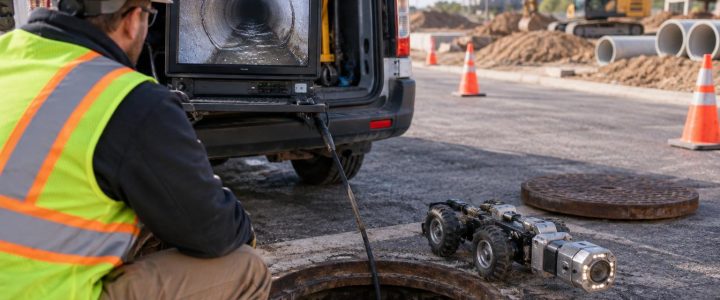
Professional video pipe inspection generally begins from an available access point, such as a manhole, catch basin, inlet, outlet, cleanout, or other suitable opening. A crawler or push camera is advanced through the pipe where diameter, access, bends, flow, and internal conditions allow. The equipment records video and observations along the inspected reach.
Depending on field conditions, the inspection may document the following:
Pipe condition and visible defects
- Cracks, fractures, holes, and broken sections
- Corrosion, abrasion, exposed aggregate, or visible material loss
- Deformation, flattening, buckling, or localized collapse
- Displaced, open, or visibly defective joints
- Misaligned pipe sections and changes in pipe direction
- Signs of internal leakage, such as visible infiltration during the inspection
Flow restrictions and maintenance concerns
- Sediment, riprap, debris, trash, or construction material inside the barrel
- Root intrusion at joints or defects
- Grease or mineral buildup where the system receives non-storm flows
- Standing water, low points, or obstructions visible from the camera position
- Intruding laterals, abandoned connections, or unexpected tie-ins
System configuration clues
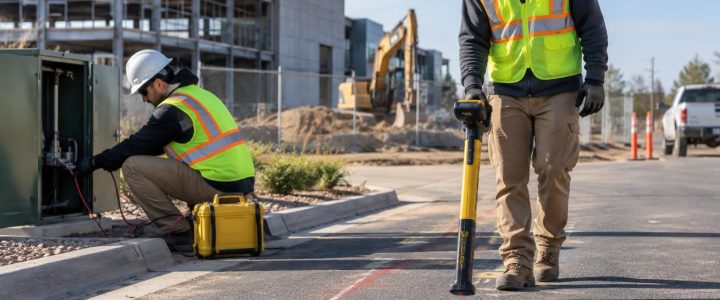
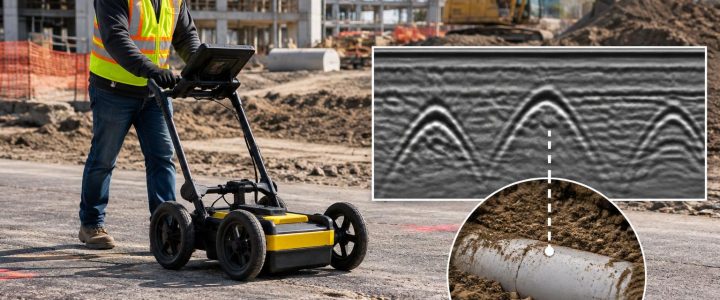
Video may reveal pipe changes, junctions, connections, inlets, outlet structures, and other identifiable features. These details can help clarify how an accessible culvert relates to the surrounding drainage system. If the camera includes a sonde, a locator may be able to trace selected points from the surface under suitable conditions.
That is not the same as a surveyed utility map. Surface locating can be affected by depth, soil conditions, access, interference, and the ability to transmit or detect a signal. When design requires reliable horizontal position or elevation, coordinate the inspection with private utility locating, survey control, and, where needed, physical verification.
What video cannot determine by itself
A clear camera image is valuable, but it is only one part of a responsible condition assessment. Project teams should avoid treating a video observation as a complete diagnosis.
For example, video may show a crack, separated joint, void-looking area, or pipe deformation. It generally cannot confirm the outside soil condition, the extent of any void beyond the pipe wall, soil compaction, bedding quality, loading history, or the structural significance of the observed condition. Likewise, an apparent low point may require survey data and engineering review before concluding that the pipe was installed at an improper grade.
Video also may not distinguish every pipe material with certainty, establish ownership, confirm exact depth, or prove the source of every inflow or leak. An inspection should describe what was observed, identify limitations, and help the responsible engineer or owner decide what additional work is appropriate.
Field conditions that affect a CCTV inspection
Not every culvert is ready for a camera on the first visit. A pipe may be inaccessible, too small for a crawler, heavily submerged, fully blocked, sharply bent, partially collapsed, or filled with sediment. Large culverts may require different equipment and access planning than a small storm-drain lateral.
Meaningful video quality also depends on preparation. Cleaning may be needed when sediment, debris, roots, grease, or standing water hides the pipe wall or prevents the camera from advancing. Cleaning is not simply a housekeeping step; it can determine whether the inspection captures the information needed for a repair decision.
Before scheduling a stormwater pipe inspection, provide what is known about pipe size, material, access structures, approximate run length, known flow conditions, and site restrictions. If information is uncertain, an initial field review can help define a practical approach.
A practical workflow for culvert repair decisions
A good inspection program connects field observations to the decision the owner or project team needs to make. The following workflow is commonly useful.
- Define the question. Is the concern flooding, settlement, an apparent blockage, pre-construction documentation, rehabilitation design, or a suspected failed section? The question guides the access plan and reporting needs.
- Review available records. Look at drainage plans, as-builts, maintenance records, prior videos, complaint locations, and known inlet and outlet locations. Treat old records as useful reference material, not final confirmation.
- Confirm safe access and site conditions. Plan traffic control, water-management needs, equipment access, and any confined-space requirements. Camera work should not be confused with authorization for confined-space entry.
- Clean when needed. Remove enough sediment or debris to allow camera travel and meaningful observation. Document significant cleaning findings because they may help explain restricted flow.
- Perform and document the inspection. Record the accessible pipe reach, visible observations, distance references where available, access points, and limits of the inspection.
- Review findings with the right disciplines. Use engineering review for structural, hydraulic, geotechnical, or design conclusions. Add locating, survey, excavation, or testing when the decision requires confirmation beyond video.
Using standardized condition assessment appropriately
For municipal and asset-management work, standardized coding can make pipe-condition data more consistent across a system. NASSCO’s Pipeline Assessment Certification Program, commonly called PACP, provides a standardized framework for documenting observed defects in pipelines. LACP is the related assessment framework for laterals.
Standardized codes can help owners sort observations, compare assets, and prioritize further review. However, a code is not a repair prescription by itself. A defect rating does not replace hydraulic analysis, structural evaluation, or a site-specific rehabilitation design. It is also important not to assume that every CCTV sewer inspection includes PACP or LACP coding. Confirm the requested deliverables, coding requirements, and qualifications before work begins.
For broader context on culvert condition and asset decisions, the Federal Highway Administration identifies inspection, maintenance, and condition information as important parts of culvert management. NASSCO likewise describes PACP as a standardized inspection-data framework. These resources support a disciplined approach: document what is observed, record limitations, and apply engineering judgment to the next decision.
What to request in a professional culvert inspection report
The right report format depends on the project, but a useful deliverable should allow someone who was not in the field to understand what was inspected and what could not be inspected. Request:
- Identification of access points and inspected pipe segments
- Inspection video with clear references to the pipe run or structure
- Observed defects, obstructions, connections, and notable features
- Distance references or footage counter information, when available
- Notes on water level, sediment, debris, access constraints, and other limitations
- Still images of significant observations where practical
- Standardized PACP or LACP coding only when specifically requested and provided
- A clear statement distinguishing field observations from engineering conclusions
For projects involving future excavation, replacement, or utility conflicts, the report can become part of the preconstruction record. It may also help identify where additional field verification should be concentrated rather than excavating long sections of pipe without a defined purpose.
When to add locating, survey, or vacuum excavation
CCTV answers an inside-the-pipe question. Other methods answer different questions. If a culvert route is uncertain, a camera sonde and surface locating may help trace portions of the accessible run. If grade, depth, or tie-in elevations are essential to design, survey work may be necessary. If the team needs to confirm pipe material, outside condition, burial depth, or a suspected void, targeted exposure may be appropriate.
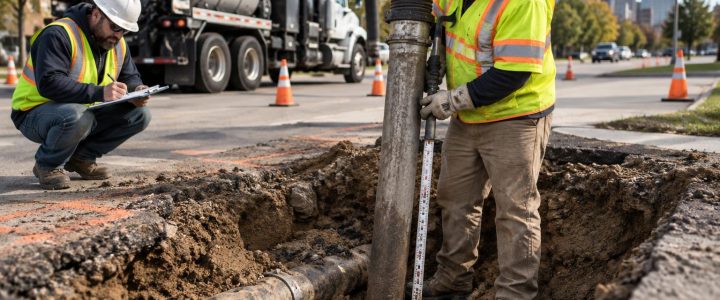
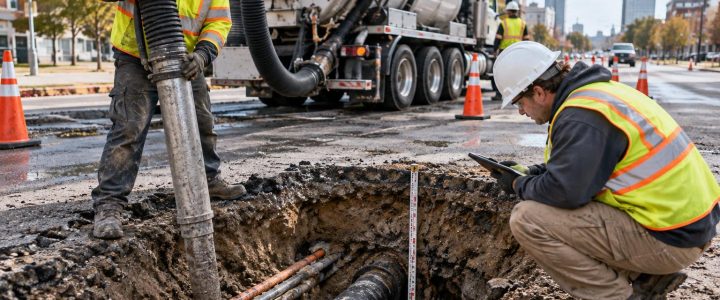
For example, an inspection might show a separated joint below a planned roadway improvement. The video identifies the feature and its approximate position along the pipe. A survey and targeted vacuum excavation investigation can then help verify the pipe’s position and expose the area without broad mechanical excavation. The appropriate sequence depends on site conditions, risk, and the decisions at hand.
FAQ: Culvert and stormwater pipe video inspection
Can CCTV find the cause of a blocked culvert?
It can often identify visible causes such as sediment, debris, roots, a damaged section, or an obstruction. It may not establish why material accumulated, whether upstream drainage patterns caused the problem, or whether an external failure is affecting the pipe. Those questions may require cleaning records, drainage analysis, survey, or engineering review.
Can a camera locate an underground culvert exactly?
Not by itself. A camera inspection can establish pipe-route clues and, in some cases, support surface tracing with a sonde and locator. Precise design-grade horizontal and vertical information typically requires additional locating and survey methods.
Can a CCTV inspection determine whether a culvert needs replacement?
It provides important condition evidence, but replacement versus repair should consider pipe condition, hydraulic needs, loading, site risks, future service requirements, and engineering judgment. Video is a strong starting point, not a substitute for a complete design decision.
Plan the next step with documented conditions
Whether the concern is a blocked storm drain, a deteriorating roadway culvert, or unknown drainage infrastructure before development, video inspection can turn an underground uncertainty into a documented field observation. Visionary Subsurface Solutions provides video pipe inspection for accessible stormwater, sanitary sewer, drainage, and other piping systems across Pennsylvania, New Jersey, Delaware, Maryland, New York, and the Washington, D.C. to New York City corridor. Contact our team to discuss your pipe access, project questions, and the inspection information needed for your next decision.