When a stormwater or sanitary sewer system does not perform as expected, the main question is often not simply whether a pipe is damaged. It is whether the pipes connect where the plans, markings, or assumptions say they do.
A professional CCTV pipe inspection for pipe connections can help contractors, engineers, municipalities, and facility managers investigate accessible piping from the inside. Video may show pipe branches, laterals, manhole connections, changes in material, abandoned segments, intruding debris, and other features that help explain how a system is arranged.
This is especially useful when a drainage structure does not discharge, a newly installed lateral is in doubt, a sanitary line has recurring backups, or available utility records do not clearly show the route and connectivity of underground piping.
However, a camera inspection is not the same as a complete utility locate or a surveyed as-built. Video provides visual evidence inside the pipe. Confirming precise horizontal position, elevation, depth, ownership, or structural capacity may require additional locating, survey work, test holes, cleaning, flow testing, or engineering review.
What a CCTV inspection can show about pipe connections
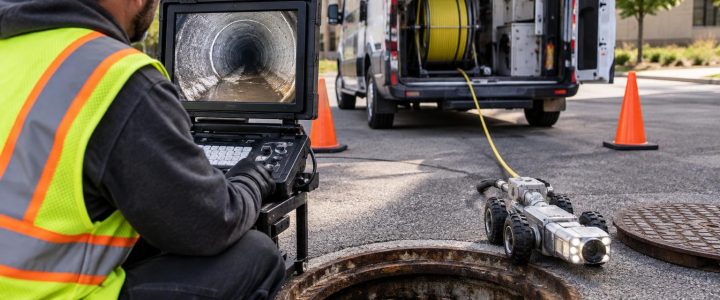
In a typical video pipe inspection, a camera is inserted through an available access point such as a manhole, inlet, cleanout, vault, catch basin, or other suitable opening. The camera travels through the accessible portion of the pipe while the operator records observations and footage.
For connection investigations, the purpose is to identify visible evidence of how the system is configured. Depending on pipe condition and access, the inspection may reveal:
- Branch connections, laterals, wyes, tees, taps, and junctions
- Connections entering or leaving a manhole or structure
- Changes in pipe diameter, material, or alignment
- Open ends, capped pipes, blind connections, and apparent abandoned lines
- Offset, separated, or defective joints near a connection
- Construction debris, sediment, roots, grease, or other material affecting flow
- Cracks, holes, deformation, fractures, or collapse that may limit the inspection path
- Water entering through joints, walls, or connection points where visible
- Evidence that a connection is blocked, partially obstructed, or poorly aligned
A video record can also help the project team compare observed conditions with utility plans, drainage drawings, previous reports, or contractor as-builts. That comparison can identify questions that need field verification before design, excavation, repair, or acceptance decisions are made.
Common project situations that call for connection verification
Storm drains that do not drain as expected
A catch basin may hold water after a storm even though it appears to have an outlet pipe. CCTV storm drain inspection can help determine whether the outlet is visible and open, whether sediment or debris is reducing the effective opening, and whether the pipe continues in the expected direction.
It can also identify connections from upstream inlets or laterals that are visible within the accessible pipe. This may help narrow down whether the issue is likely related to a blockage, a damaged segment, an unknown connection, poor grade, downstream restriction, or another condition requiring further investigation.
Suspected sanitary sewer lateral or service connection problems
For commercial properties and institutional facilities, recurring backups may involve a building lateral, a private main, a connection at a manhole, or a downstream line. A sewer camera inspection can document roots, grease, debris, broken pipe, displaced joints, or other visible conditions that affect the line.
Where the camera reaches an accessible junction, it may show whether a lateral connection is present and how it enters the main. Video alone does not prove which building or fixture is served by a particular branch. Dye testing, controlled flow testing, records review, and other methods may be appropriate when the source or destination of a connection must be confirmed.
New utility installation quality-control questions
During site development, a contractor or engineer may need to verify that newly installed storm sewer or sanitary sewer lines are clear and that accessible connections appear consistent with the intended layout. A post-installation pipe inspection can identify visible debris, damaged pipe, poorly seated joints, intruding gaskets, open connections, or other conditions that should be reviewed before paving, final restoration, or project acceptance.
Video inspection is most useful when it is planned before access points are buried or made difficult to reach. It is also important to establish whether the owner, engineer, or municipality requires a particular inspection procedure, acceptance standard, cleaning method, reporting format, or condition-coding system.
Unknown piping during redevelopment or renovation
Older commercial and industrial sites may contain drainage or sewer lines that are incomplete on available drawings. When an accessible structure or cleanout is available, robotic pipe inspection can help establish whether a pipe is active, where visible branches occur, and whether the line appears to continue beyond the inspected reach.
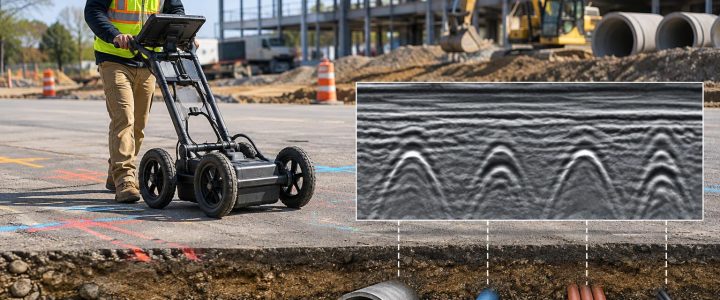
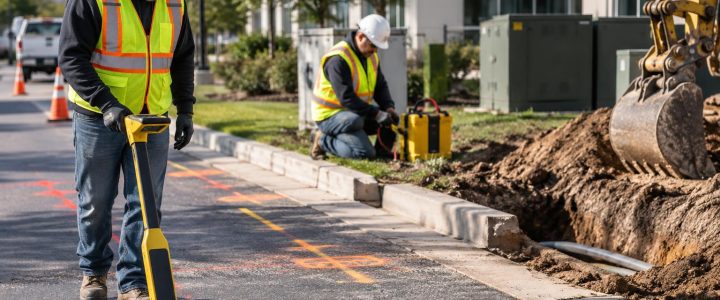
This information can support a better investigation plan, but it should not be treated as a substitute for a complete subsurface utility investigation. Where accurate surface correlation is needed, the inspection team may use an aboveground locator in conjunction with a sonde or transmitter, if conditions allow. Survey control may then be needed to document usable coordinates and elevations.
Pipe inspection, pipe locating, and condition assessment are different tasks
These services often work together, but they answer different questions.
- Video pipe inspection documents the visible interior of an accessible pipe. It can identify observable connections, defects, obstructions, and features.
- Pipe locating seeks to establish the approximate route of a detectable pipe or camera transmitter from the surface. Results can be affected by depth, signal quality, congestion, access, pipe material, and site conditions.
- Surveying places verified field information into a project coordinate and elevation framework when that level of accuracy is required.
- Condition assessment organizes inspection observations to support maintenance, rehabilitation, or risk decisions. It does not automatically establish the cause or structural significance of every observed defect.
For example, a camera may show an apparent lateral connection at a certain footage point. That observation can be valuable. But if a designer needs the connection’s surveyed location, invert elevation, and relationship to proposed work, additional field locating, survey, or exposure may be needed. Visionary Subsurface Solutions can coordinate video work with private utility locating when a project needs more than an internal pipe view.
A practical workflow for investigating unknown connections
- Define the decision the team needs to make. Determine whether the goal is to investigate a blockage, trace a suspected lateral, confirm a discharge route, document new work, or evaluate an aging system.
- Gather available information. Site plans, utility maps, manhole records, prior inspection footage, drainage calculations, and maintenance history can help select access points and inspection direction.
- Confirm access and field constraints. Identify manholes, inlets, cleanouts, vaults, traffic conditions, water levels, and any work-zone or access restrictions.
- Prepare the pipe when needed. Heavy sediment, grease, roots, standing water, or construction debris can block the camera or obscure key features. Cleaning may be necessary before a meaningful inspection can occur.
- Perform the inspection and document observations. Record the direction of travel, pipe size where known or observed, structures entered, visible branches, defects, and areas the camera could not pass.
- Review findings against the project question. Use the footage and report to identify what is confirmed, what remains uncertain, and what follow-up work is appropriate.
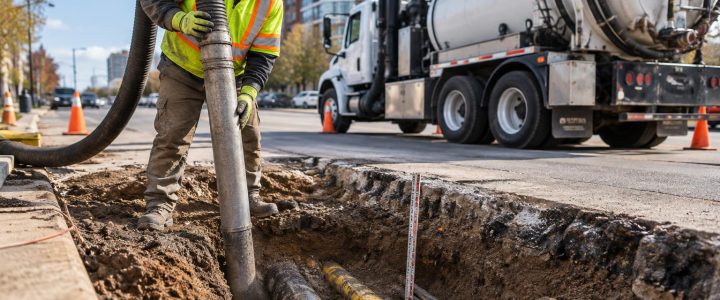
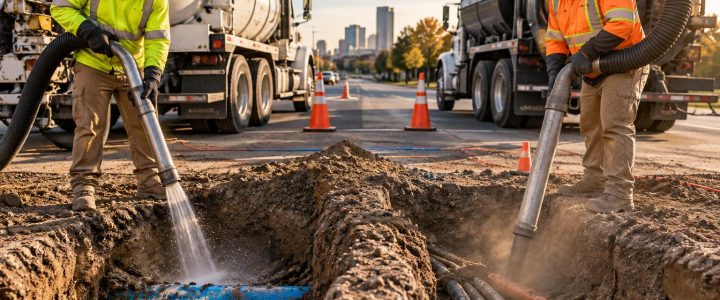
- Use targeted verification where needed. Consider surface locating, survey, dye or flow testing, vacuum excavation, or engineering evaluation when the result must support design, excavation, repair, or acceptance.
Why cleaning and access planning matter
A camera can only inspect what it can physically reach and clearly see. A pipe may be unsuitable for a complete inspection if it is fully collapsed, severely blocked, flooded, filled with sediment, or inaccessible from available entry points. Tight bends, damaged pipe, diameter changes, long runs, and complex configurations can also limit camera travel.
Cleaning is not merely a maintenance step. For a connection investigation, it can be the difference between seeing a branch opening and recording only a sediment-filled invert. The project team should discuss known conditions before mobilization so that cleaning, bypassing, traffic control, confined-space planning, or other preparation can be considered as appropriate.
Using standardized condition coding when it fits the project
Some owners and infrastructure programs use standardized coding methods to make inspection findings more consistent across a pipe inventory. The National Association of Sewer Service Companies publishes the Pipeline Assessment and Certification Program, commonly called PACP, as well as related standards such as LACP for laterals and MACP for manholes.
A PACP- or LACP-based inspection can be useful when a project requires structured observations, defect codes, and consistent reporting for rehabilitation planning or asset management. It is important to confirm the requested scope in advance. Not every camera inspection is a PACP or LACP assessment, and a standardized code does not by itself determine the engineering cause, remaining service life, or repair priority of a defect.
For more information on the coding frameworks, see NASSCO’s PACP information and its LACP information. Project owners should also identify any local reporting or acceptance requirements that apply to their work.
Questions to ask before ordering pipe inspection services
- What pipe system is involved: stormwater, sanitary sewer, drainage, culvert, process piping, or another accessible line?
- What access structures are available, and are their locations known?
- What pipe diameter, material, and approximate run length are expected?
- Is the concern a blockage, a connection, a visible defect, an unknown route, or construction quality?
- Has the pipe been cleaned recently, and are sediment, roots, grease, or debris expected?
- Do results need to support design, construction acceptance, maintenance planning, a dispute review, or an asset-management record?
- Is a surface location, surveyed coordinate, invert elevation, or physical exposure required in addition to video?
- Does the owner require PACP, LACP, a specific report format, or other defined deliverables?
FAQ: CCTV inspection for underground pipe connections
Can CCTV inspection locate every underground pipe?
No. CCTV inspection requires suitable access and a passable pipe. It may help trace the accessible route of a pipe and identify visible features, but it does not guarantee that every pipe, branch, or connection can be reached or precisely located from the surface.
Can a sewer camera confirm that two structures are connected?
If the camera travels from one structure to another, that provides strong visual evidence of a continuous accessible path between those points. If the camera cannot reach the next structure because of a blockage, collapse, debris, or configuration, additional investigation may be required.
Can video prove why a pipe cracked or failed?
Video can document a visible crack, fracture, deformation, displaced joint, or other condition. Determining the underlying cause or structural significance may require engineering review and, in some cases, additional testing, excavation, or records analysis.
When should a contractor schedule a new storm sewer inspection?
Schedule it after installation and cleaning, while access structures remain available and before final acceptance or restoration makes corrective work more difficult. Confirm the project specifications and owner requirements early so the inspection supports the intended quality-control process.
Make connection questions visible before they become excavation problems
Unknown pipe connections can create avoidable uncertainty during construction, drainage troubleshooting, rehabilitation planning, and property redevelopment. A well-planned CCTV inspection can provide useful visual evidence of accessible pipe routes, junctions, defects, and obstructions while clearly documenting the limits of the inspection.
Visionary Subsurface Solutions provides professional video pipe inspection for stormwater, sanitary sewer, drainage, and other accessible pipe systems across Pennsylvania, New Jersey, Delaware, Maryland, New York, and the Washington, D.C. to New York City corridor. Contact our team to discuss the pipe connection, condition, or documentation questions on your project.