Before acquiring, redeveloping, or expanding a commercial property, project teams often review visible buildings, pavement, drainage structures, and utility records. Underground pipe systems can receive less attention until a backup, sinkhole, failed drainage area, or excavation issue forces an investigation.
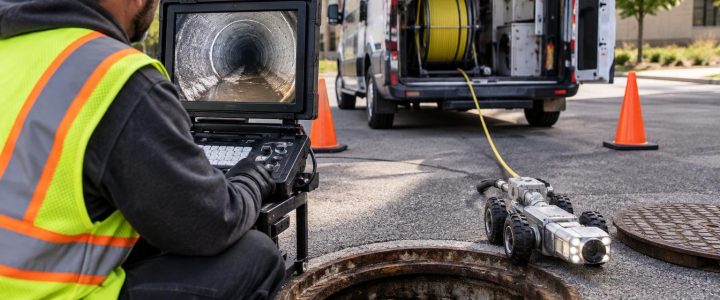
A professional CCTV pipe inspection can help reduce that uncertainty. By viewing accessible stormwater, sanitary sewer, drainage, and process piping from the inside, a project team can document observable conditions, connections, obstructions, and features that may affect design, budgeting, construction sequencing, or maintenance planning.
The inspection is not a substitute for engineering design, survey control, or excavation where those are needed. It is, however, a practical way to gather direct visual information about pipes that may otherwise be represented only by incomplete plans or assumptions.
Why inspect underground pipes before a property transaction or redevelopment?
Older commercial, industrial, institutional, and multifamily sites may have pipe systems installed in several phases. A single site can contain original storm sewers, later building additions, abandoned laterals, undocumented connections, patched pipe, private drainage runs, and structures that do not appear on available records.
During due diligence or early design, a video sewer inspection can help answer questions such as:
- Does an accessible storm or sanitary pipe appear open enough for further evaluation and continued use?
- Are there visible cracks, displaced joints, root intrusion, sediment, debris, or deformation?
- Do observed branches and laterals generally match the expected drainage or sewer layout?
- Is there construction debris or an obstruction that may affect drainage performance?
- Are there signs of a pipe connection, termination, or structural feature that should be investigated further?
- Which segments may need cleaning, repair, rehabilitation evaluation, or replacement planning?
This information can be especially useful before major paving work, utility relocation, demolition, building expansion, roadway reconstruction, or stormwater improvements. Finding a concern before finalizing a design is usually more manageable than discovering it after crews are mobilized.
What a video pipe inspection can and cannot establish
Camera evidence is valuable because it shows actual conditions inside a pipe at the time of inspection. Still, it is important to separate an observation from a conclusion about cause, location, or structural capacity.
What the inspection can often show
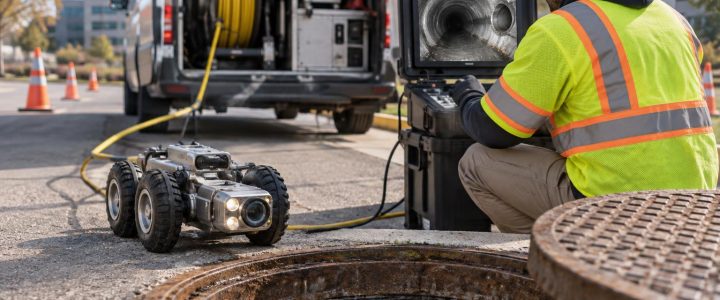
Depending on pipe access, cleanliness, diameter, flow, and configuration, CCTV or robotic pipe inspection can document:
- Visible pipe material characteristics and approximate internal size
- Cracks, fractures, holes, breaks, corrosion, or exposed reinforcement where visible
- Open, offset, displaced, or otherwise defective-looking joints
- Root intrusion, grease, sediment, debris, scale, or other obstructions
- Deformation, sagging indications, or collapse that is visible within the inspected reach
- Infiltration observed entering a pipe and signs that may warrant further investigation
- Laterals, service connections, junctions, manholes, inlets, and other identifiable features
- Construction debris, mortar, dropped materials, or damaged sections in newer installations
A professional inspection record generally includes video, still images, observations, footage or distance references, and identification of access points and pipe segments. That record can give engineers and owners a more defensible starting point than relying on a verbal report of a backup or a decades-old utility plan.
What video alone does not prove
A camera does not automatically provide a surveyed horizontal route, a verified invert elevation, or a precise depth. It also cannot establish pipe ownership, confirm that an observed defect is the root cause of a surface problem, or determine the remaining structural life of a pipe without appropriate engineering review.
For example, a camera may show a crack or joint separation. That observation may support further investigation, but it does not by itself explain whether the issue resulted from settlement, loading, corrosion, installation quality, groundwater conditions, or another factor. Similarly, standing water may suggest a low area or restricted flow, but grade and elevation questions may require survey data or other measurements.
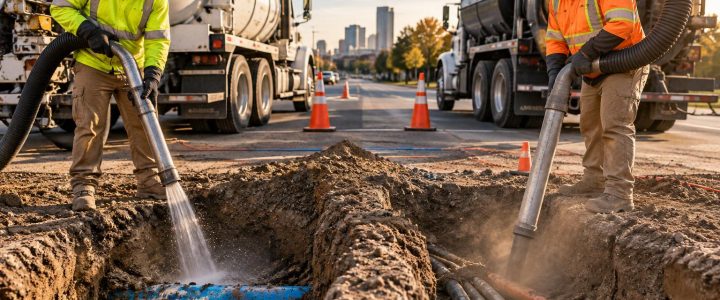
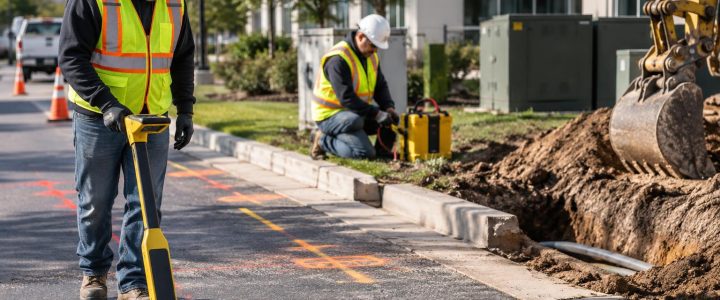
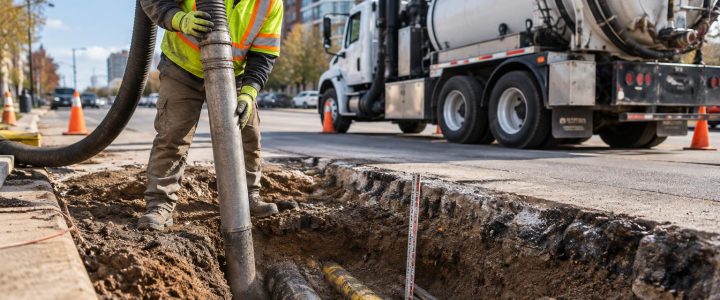
When a project needs a documented route or depth, the inspection may be coordinated with private utility locating, survey, structure measurements, or targeted vacuum excavation. When pipe access is unavailable or a line is fully obstructed or collapsed, cleaning, alternative access, or carefully planned excavation may be necessary before meaningful inspection can occur.
Pipe inspection, pipe locating, and condition assessment are different tasks
These services often work together, but they answer different questions.
- Video pipe inspection looks inside an accessible pipe to document visible conditions, connections, and features.
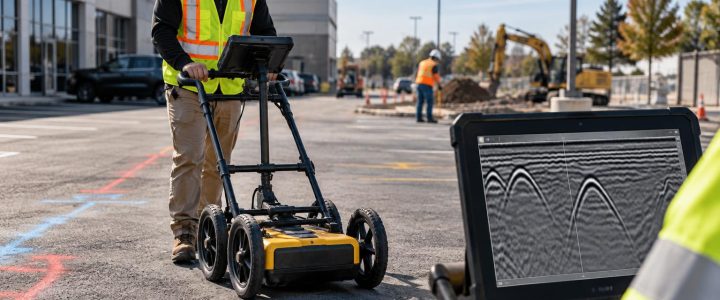
- Pipe locating uses appropriate locating methods to help trace a detectable line or a sonde associated with an inspection system. Results should be tied to site control when design-grade mapping is needed.
- Condition assessment organizes observed defects and their severity to support maintenance, rehabilitation, or engineering decisions. It may include standardized coding when the project scope calls for it.
For municipal and larger infrastructure programs, the National Association of Sewer Service Companies (NASSCO) publishes the Pipeline Assessment Certification Program (PACP) and the Lateral Assessment Certification Program (LACP), which provide standardized approaches for coding observed pipeline and lateral conditions. A standard camera video is not automatically a PACP or LACP inspection. Project teams should specify the required methodology, reporting format, and operator qualifications when standardized condition data is needed.
Standardized records can be useful for comparing pipe segments over time and feeding observations into an asset-management workflow. They do not eliminate the need for engineering judgment about repairs, replacement priorities, hydraulic performance, or structural significance.
High-value uses during redevelopment planning
Confirm the condition of existing stormwater infrastructure
Storm sewer systems on developed sites may include roof leaders, area drains, parking-lot inlets, catch basin connections, culverts, detention-system piping, and outfalls. A storm drain inspection can identify sediment accumulation, root intrusion, damaged joints, debris, or visible damage that may limit drainage performance.
For redevelopment, this can help the civil team decide which existing components merit cleaning and reinspection, which segments should be included in design investigation, and where proposed grading or utility work could place existing drainage assets at risk.
Investigate sanitary sewer risks before adding demand
New tenants, building additions, restaurants, medical uses, or changes in occupancy can increase wastewater loading. A CCTV sewer inspection may identify visible obstructions, offsets, root intrusion, or defective connections in accessible sanitary lines before a project depends on them.
Where recurring backups have been reported, the goal should not be merely to find a blockage. The inspection should document the affected segment, access points, observed condition, and any visible connections so the team can distinguish between a cleaning issue and a possible repair, capacity, or configuration issue.
Document existing conditions before demolition and construction
Pre-construction video records can establish a baseline for accessible pipes near planned excavation, heavy equipment travel routes, shoring, utility crossings, or demolition areas. If concerns arise later, a clear pre-work record helps the team compare observed post-work conditions with conditions documented before the work began.
This is particularly useful when a project will rely on older private storm or sewer systems that remain in service during construction.
Review new or recently repaired pipe before acceptance
On a newly installed system, a construction pipe inspection can identify visible installation concerns such as debris, damaged pipe walls, poor-looking joints, intruding gaskets, connection issues, or alignment concerns. It can also help document that pipe segments were inspected after cleaning and before final acceptance.
Video does not replace all contract testing requirements. Leakage testing, deflection testing, mandrel testing, survey verification, or other acceptance measures may still be required by the contract documents or owner. CCTV complements those activities by providing a visual record of the pipe interior.
How to plan an effective inspection scope
A productive inspection begins before the camera enters the pipe. The owner, contractor, or engineer should define the question the work needs to answer.
- Identify the system and purpose. Clarify whether the target is storm sewer, sanitary sewer, culvert, roof drainage, site drainage, or another accessible line. State whether the purpose is due diligence, troubleshooting, construction documentation, or rehabilitation planning.
- Gather available records. Utility maps, as-builts, prior inspection videos, maintenance logs, drainage complaints, and site plans can help identify likely access points and priority segments. Records should be treated as references, not proof of current field conditions.
- Confirm access and field constraints. Manholes, cleanouts, inlets, roof drains, traffic control needs, confined-space conditions, water levels, and active flows can affect the inspection approach.
- Address cleaning needs. Heavy sediment, grease, roots, debris, or standing water may block the camera view. Jetting, vacuum removal, or other cleaning may be appropriate before the inspection, depending on site conditions and the system.
- Specify the deliverables. Decide whether the project needs video, still images, a segment log, footage references, defect observations, standardized coding, locating support, or data formatted for an asset-management platform.
- Plan follow-up investigation. If the inspection identifies a questionable feature, determine whether the next step should be cleaning, locating, survey, test holes, flow evaluation, engineering review, or repair design.
What to look for in a professional pipe inspection report
The right level of documentation depends on the project, but a useful report should allow another project team member to understand what was inspected and what was observed. At minimum, ask for clear identification of the inspected segment, entry and exit structures when known, inspection direction, dates, video files, and a log of material observations.
For due diligence and redevelopment work, it is also helpful to include accessible structure identifiers, surface observations that affect access, approximate footage references to notable features, and a clear statement of any segments that could not be fully inspected. Limitations are important data. A pipe that could not be viewed beyond an obstruction should not be treated as a pipe that has been cleared of concerns.
Where a standardized assessment is requested, confirm in advance whether PACP or LACP coding is required and how the data will be delivered. NASSCO describes these programs as standardized inspection coding systems; project-specific acceptance decisions still belong with the owner and qualified design or engineering team.
FAQ: Commercial CCTV pipe inspection
Can a camera locate an underground storm drain?
A camera can help establish the route of an accessible pipe by documenting the direction of travel, connections, structures, and distance references. A transmitter or sonde may sometimes be tracked from the surface. Precise horizontal and vertical positions generally require appropriate locating methods, survey control, and field verification.
Can CCTV determine whether a pipe must be replaced?
It can provide evidence of visible defects and obstructions, but replacement decisions may require engineering review of the pipe’s function, loading, material, hydraulic needs, defect severity, and repair options. In some cases, cleaning and follow-up inspection are appropriate before deciding on rehabilitation or replacement.
Should pipes be cleaned before inspection?
Often, yes. Cleaning may be needed when sediment, grease, roots, debris, or heavy flow prevents a clear view. The field team should assess access, pipe condition, and the likely source of the obstruction before selecting a cleaning approach.
Can every pipe be inspected with a robotic camera?
No. Inspection feasibility depends on access, pipe size, bends, water level, debris, pipe configuration, and whether the pipe is intact enough for equipment passage. A severely obstructed, collapsed, or inaccessible line may need preparation, alternate access, or another investigation method.
Use inspection findings to make the next decision clearer
For commercial property due diligence and redevelopment, the value of video pipe inspection is not simply having footage. The value is obtaining documented observations that help the project team prioritize risk, scope follow-up work, and avoid treating unknown pipe conditions as known facts.
Visionary Subsurface Solutions provides video pipe inspection for accessible stormwater, sanitary sewer, drainage, and other underground piping systems throughout Pennsylvania, New Jersey, Delaware, Maryland, New York, and the Washington, D.C. to New York City corridor. Contact our team to discuss the inspection objectives, access conditions, documentation needs, and related investigation services for your project.