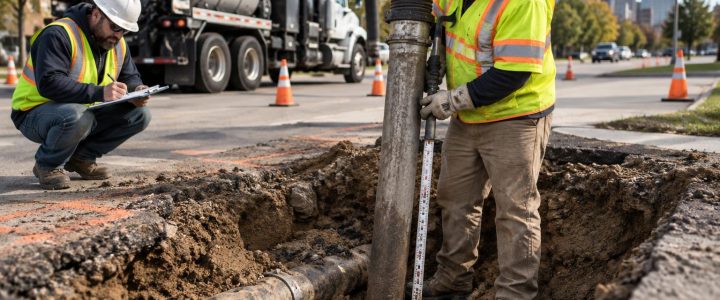
Construction activities near existing storm sewer, sanitary sewer, culvert, and drainage systems can create risks that are not visible from the surface. Excavation, compaction, utility installation, pavement work, directional drilling, and heavy equipment traffic may affect buried pipes even when no immediate failure is apparent.
A professional CCTV pipe inspection after construction gives the project team a documented look inside accessible piping. It can help identify visible changes such as cracks, joint separation, deformation, debris, intruding material, or blockages. It can also establish whether an observed condition appears to have been present before work began or needs further investigation.
Video inspection is not a substitute for a full engineering analysis, surveyed utility record, or physical exposure of a pipe. It is, however, an efficient way to investigate concerns, document conditions, and decide whether cleaning, locating, testing, repair, or further evaluation is warranted.
Why inspect existing pipes after nearby construction?
Many buried pipe problems do not show up immediately. A damaged joint may admit soil gradually. A partially crushed pipe may continue to pass water until a larger storm event. Construction debris can remain in a line until it catches sediment and creates a blockage months later.
Post-construction CCTV pipe inspection is often useful when the work occurred close to existing underground infrastructure, particularly where records were incomplete or pipe depth and alignment were uncertain.
Common situations that justify an inspection
- Excavation, trenching, or grading occurred near known or suspected storm and sewer lines.
- New utility crossings were installed over, under, or alongside an existing pipe.
- Heavy equipment repeatedly traveled over a pipe route, especially in areas with shallow cover.
- A drainage inlet, manhole, cleanout, or downstream structure now drains more slowly than before.
- A sanitary line has recurring backups, unusual flow restrictions, or evidence of infiltration.
- Settlement, sinkholes, wet ground, pavement distress, or erosion developed near a pipe alignment.
- A contractor, owner, or municipality needs condition documentation before final release, turnover, or a repair decision.
- Construction debris, grout, concrete, aggregate, or soil may have entered an open structure or pipe.
An inspection is particularly valuable when there is a clear question to answer. For example: Did a newly installed water main cross a storm line without obstructing it? Is a recurring drainage problem caused by a blockage, a damaged pipe, or an issue farther downstream? Did work near a sanitary lateral introduce debris or disturb a connection?
What a CCTV pipe inspection can show
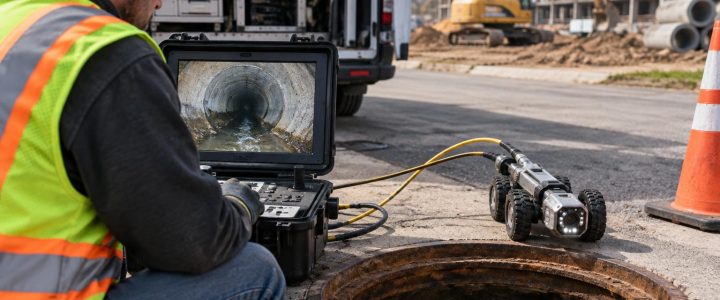
During a video pipe inspection, a camera is introduced through an available access point, such as a manhole, inlet, cleanout, or other suitable opening. The camera travels through the pipe as field conditions allow while the operator records observations, distance readings, and identifiable features.
For accessible sections with adequate visibility, the inspection may document:
- Cracks, fractures, holes, or visible breaks
- Open, offset, displaced, or otherwise defective joints
- Deformation, flattening, sagging, or apparent collapse
- Root intrusion, sediment, grease, debris, or other obstructions
- Construction material inside the line
- Connections, laterals, taps, tees, and junctions
- Changes in pipe material, size, or apparent installation condition
- Standing water, flow restrictions, or visible infiltration at joints or defects
- Accessible pipe ends, unknown connections, or points where the camera cannot continue
Video is especially useful for comparing the pipe interior on either side of a construction area. If the inspection identifies an obstruction or apparent defect near the work zone, the project team has a clearer basis for determining the next step.
What video inspection cannot determine by itself
A camera provides visual evidence from inside the pipe. It does not automatically establish why a condition exists, when it occurred, or how structurally significant it is.
For example, a camera may show a longitudinal crack, but additional evaluation may be needed to determine whether it is superficial, active, related to installation, or associated with soil movement. Similarly, sediment in a pipe may indicate poor drainage, construction entry, or a low area, but the video alone may not establish the cause.
Video inspection also should not be treated as a precise survey of pipe position. Camera distance readings can help relate observations to an access point, but they can be affected by bends, slack, changes in direction, and field conditions. If the horizontal route or elevation of a pipe is needed for design, conflict resolution, or excavation planning, the project may need pipe locating, surveying, test holes, or another appropriate method.
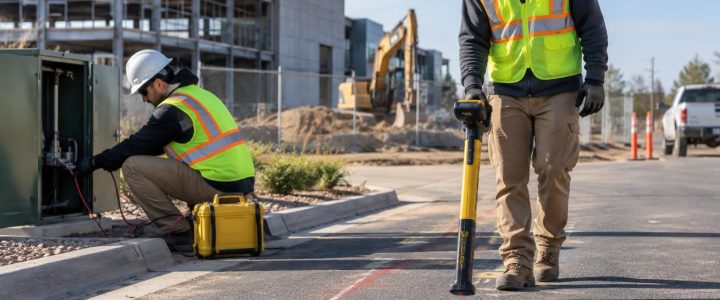
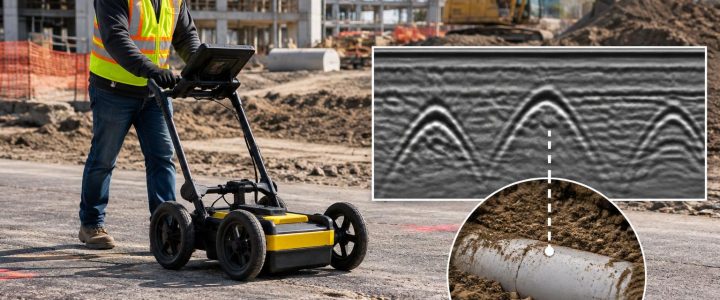
Visionary Subsurface Solutions can combine inspection findings with private utility locating when a project needs more information about accessible pipe routes or nearby underground utilities. The appropriate approach depends on the pipe material, access, site conditions, and the accuracy required for the decision at hand.
A practical workflow after possible pipe-impacting work
When a project team suspects that construction may have affected an existing pipe, a disciplined process helps avoid assumptions and unnecessary excavation.
- Define the concern. Identify the affected area, pipe system, symptoms, recent activities, and available access points. Note whether the concern involves drainage performance, sewage backup, potential damage, construction documentation, or a planned repair.
- Gather available records. Review as-builts, utility plans, prior inspection videos, maintenance records, photographs, and information from facility staff. Records may be incomplete, but they can help identify likely structures and downstream connections.
- Assess access and preparation needs. Confirm whether manholes, inlets, cleanouts, or other entry points are accessible. High water, debris, sediment, grease, roots, or a severe obstruction can prevent meaningful viewing. Cleaning may be necessary before the inspection.
- Perform the CCTV sewer or storm drain inspection. Record the run, observations, accessible connections, and locations referenced to known structures or measured distance.
- Review findings against the construction area. Compare observed conditions with the work limits, known crossings, prior documentation, and reported symptoms. Avoid assigning cause from video alone when the evidence is inconclusive.
- Select the next investigation or repair step. Depending on the finding, this could include cleaning, targeted excavation, pipe locating, leak testing, engineering review, rehabilitation planning, or monitoring.
Conditions that deserve prompt follow-up
Some inspection findings should be brought to the attention of the responsible project team quickly because they can lead to loss of pipe function, soil migration, or more extensive repair work. Examples include a visible collapse, a substantial blockage, a separated connection, a major joint offset, or material intruding into the flow path.
The proper response depends on the pipe system and site context. A storm sewer with sediment may need cleaning and a follow-up inspection. A sanitary sewer with a potentially open joint may require a more focused investigation. If there is concern about voids, active leakage, or surface settlement, targeted excavation or engineering review may be appropriate.
How robotic pipe inspection helps on larger or difficult systems
Robotic pipe inspection equipment can support longer runs and larger-diameter accessible systems where a basic push camera is not the right tool. A crawler-mounted camera can provide controlled travel, pan-and-tilt viewing, lighting, and footage that is easier to relate to measured distance and observed features.
This is useful for storm sewer inspection, culvert inspection, municipal drainage networks, commercial site piping, and other systems with manhole access. Equipment selection still depends on pipe diameter, bends, flow, debris, access conditions, and whether the line is passable.
A robot cannot travel through every pipe. A completely collapsed line, a heavily sedimented run, tight bends, submerged conditions, or a blocked access point may limit the inspection. In those cases, cleaning, alternate access, or another investigation method may be needed.
Using inspection records to support project decisions
A useful professional pipe inspection deliverable does more than provide a video file. The documentation should help the owner, contractor, engineer, or facility manager understand what was inspected, what could not be inspected, and where notable observations were found.
Information to request in the inspection documentation
- Identifying information for the pipe segment and access structures
- Date of inspection and the stated purpose of the work
- Video footage and observation logs
- Measured distance references from the access point, where feasible
- Observed pipe size, material, and flow direction when identifiable
- Defects, obstructions, connections, and inaccessible areas
- Notes on cleaning, water level, sediment, or conditions that limited visibility
- Recommendations for additional investigation when the video evidence is not enough to answer the project question
For agencies or programs that require standardized condition coding, a project may specify an inspection performed and reported under the relevant NASSCO PACP or LACP framework. Those methodologies use defined observations and coding practices for pipes and laterals. Not every camera inspection is a standardized assessment, so requirements should be established before field work begins.
Frequently asked questions about post-construction pipe inspection
Can CCTV prove that construction caused pipe damage?
Not by itself. Video can document the condition observed at the time of inspection and may show whether a defect is located near a work area. Determining cause may require pre-work records, construction documentation, excavation, testing, engineering evaluation, or other evidence.
Can a sewer camera locate the pipe from the surface?
In some situations, a camera sonde or related locating method can help trace an accessible pipe segment from the surface. Results depend on the equipment, pipe configuration, depth, access, interference, and site conditions. For a surveyed horizontal or vertical position, additional locating and survey work may be required.
Should a pipe be cleaned before a CCTV inspection?
Often, yes. Sediment, roots, grease, debris, and standing water can hide the pipe wall and prevent the camera from moving through the line. The needed level of cleaning should match the inspection objective and actual field conditions.
Plan the inspection around the decision you need to make
The best time to order a video pipe inspection is before a suspected issue becomes a costly emergency or a disputed condition becomes harder to document. Whether the concern is a blocked storm drain, a possible construction impact, an unknown connection, or an aging sanitary sewer line, the inspection scope should be tied to the decision that follows.
Visionary Subsurface Solutions provides professional video pipe inspection for accessible stormwater, sanitary sewer, drainage, and other underground piping systems throughout Pennsylvania, New Jersey, Delaware, Maryland, New York, and the Washington, D.C. to New York City corridor. Contact our team to discuss your project conditions, available access, and the information you need from the inspection.