Rehabilitation decisions are difficult when the underground pipe system is only partly understood. A recurring backup, sinkhole concern, poor drainage area, or maintenance history may point to a problem, but those symptoms do not show where the problem begins, how far it extends, or whether a localized repair will address it.
A professional CCTV inspection before pipe rehabilitation gives the project team a visual record of accessible pipe interiors. It can help identify observed defects, obstructions, connections, and changes in pipe condition before a contractor selects cleaning, point repair, lining, replacement, or another solution. For storm sewer, sanitary sewer, and site drainage systems, this information can reduce assumptions during estimating and design.
Video inspection is not a substitute for engineering analysis, survey, or excavation when those services are needed. It is an investigation tool. Used early and with a clear scope, it gives engineers, contractors, and owners a stronger basis for deciding what to investigate next.
Why inspect a pipe before rehabilitation work?
Rehabilitation work often begins with incomplete records. Plans may not reflect later modifications. A facility may have several connected inlets, laterals, manholes, roof drains, or cleanouts with uncertain routing. The reported problem may also be downstream from the actual defect.
CCTV sewer inspection and stormwater pipe inspection help convert a broad concern into observations that can be located within the inspected run. Depending on access and field conditions, an inspection may show:
- Sediment, debris, grease, roots, or other obstructions
- Cracks, fractures, holes, breaks, and visible wall loss
- Open, offset, separated, or displaced joints
- Deformation, sagging indications, or sections that appear damaged
- Intruding service connections and lateral connections
- Active water entry that may indicate infiltration or another pathway
- Construction debris or installation issues in newer pipe
- Changes in pipe material, diameter, direction, or configuration
- The visible condition of manholes, structures, and accessible connections
These observations can help a team define the limits of cleaning, identify runs that deserve more investigation, and avoid treating every defect as if it requires the same remedy. For example, a blockage caused by loose construction material calls for a different response than repeated root intrusion through defective joints or a pipe section that appears severely deformed.
What a pre-rehabilitation CCTV pipe inspection can establish
Documented pipe condition by run
A useful inspection records each accessible run from a known structure or access point to the next structure, termination point, or point where progress stops. The resulting video, still images, and observations allow the project team to review what was visible at a given time.
For rehabilitation planning, the important question is often not simply whether a defect exists. It is where the defect appears in relation to a manhole, inlet, cleanout, connection, or other recognizable feature. Clear run identification and distance tracking make the inspection more useful during design, bidding, and construction.
Possible causes of reduced flow
Video can reveal visible conditions that restrict flow, such as heavy sediment, debris, grease accumulation, root masses, a displaced joint, or a damaged pipe section. It can also show standing water during the inspection. However, video alone may not establish the hydraulic cause of a drainage problem. Grade, capacity, downstream controls, groundwater conditions, and rainfall-related loading may require separate review by the engineer or owner.
Connections and route clues
A camera can help identify visible lateral connections, tie-ins, junctions, direction changes, and structures along an accessible pipe. This can be valuable when reviewing an old storm sewer system before a pavement replacement, utility installation, or rehabilitation program.
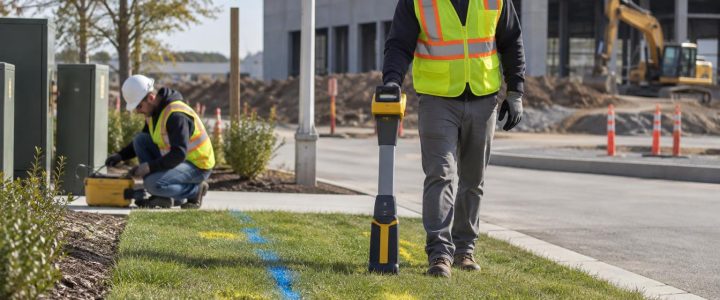
That is different from a precise utility map. Camera footage alone does not always provide a surveyed horizontal alignment or elevation. A sonde, surface locating, survey control, 3D scanning, test holes, or other investigation may be appropriate when the pipe route or depth must be established for design or excavation. Visionary Subsurface Solutions can coordinate private utility locating when a pipe investigation also requires additional subsurface information.
Separate observation from diagnosis and repair design
One of the most important uses of professional pipe inspection is keeping the record clear. The operator can document an observed crack, an open joint, root intrusion, or an obstruction. The engineer, owner, or qualified design team then evaluates what that observation means for structural performance, service life, infiltration, capacity, and repair selection.
For example, a camera may show a longitudinal crack. It may not show the full extent of damage outside the visible interior surface, the surrounding soil condition, or whether external loading has affected the pipe. Similarly, visible water entering at a joint can support further investigation, but it does not by itself establish the source, volume, or systemwide impact of infiltration.
This distinction helps prevent two common mistakes:
- Assuming that every visible defect requires full replacement
- Assuming that a pipe that looks generally clear on video needs no additional assessment
Repair versus replacement decisions should consider the inspection record alongside pipe material, diameter, depth, access, surface restoration impacts, maintenance history, flow requirements, design constraints, and engineering judgment.
Build an inspection scope that supports the rehabilitation decision
A camera inspection produces better planning information when the scope matches the project question. Before mobilization, identify the system to be inspected, available access points, likely pipe sizes, known problem areas, and the decisions the inspection needs to support.
For sanitary sewer rehabilitation
Consider whether the project needs to evaluate mainline runs, service laterals, connections, cleanouts, and manholes. Recurring backups may be associated with a localized obstruction, a failed joint, root intrusion, a connection problem, or a downstream restriction. Reviewing the system as connected runs, rather than as one isolated complaint, can help define the next step.
For storm sewer and drainage rehabilitation
Include accessible inlets, catch basins, manholes, culverts, roof-drain connections, outlet structures, and suspect low areas where relevant. Stormwater systems often collect sediment and debris, which can conceal defects or make a pipe impassable. An inspection plan should account for cleaning needs and safe access to structures.
For newly installed or recently repaired pipe
Post-installation video inspection can document whether accessible pipe is free of visible construction debris, whether connections appear completed, and whether obvious damage or displaced joints are present. If the inspection identifies concerns before acceptance or final paving, corrections may be less disruptive than they would be after the site is complete.
Prepare the pipe so the camera can provide meaningful information
A camera cannot see through heavy sediment, opaque water, grease buildup, root masses, or dense debris. It also may not pass through a complete collapse, severe deformation, tight bend, offset joint, blocked connection, or pipe that is too small or otherwise unsuitable for the selected equipment.
Cleaning is often a necessary part of pre-rehabilitation investigation, not a separate afterthought. The goal is to create enough visibility and passability to inspect the pipe wall and document the conditions that remain. If cleaning removes the material causing the restriction, the inspection should still record the location and nature of the condition where practical.
Field conditions may change the plan. Water level, flow, access limitations, traffic control requirements, pipe configuration, and the condition found during cleaning can affect how much of a system can be inspected. A professional report should identify uninspected portions and the reason inspection could not proceed, rather than implying complete coverage.
Use consistent coding when condition data will drive a larger program
For municipal systems, portfolios of facilities, or rehabilitation programs involving many pipe runs, standardized condition assessment can make the data more comparable. The National Association of Sewer Service Companies publishes the Pipeline Assessment Certification Program, commonly called PACP, for coding defects observed in sewer pipelines. Its Lateral Assessment Certification Program, or LACP, addresses laterals.
PACP or LACP-style data can support asset-management workflows by organizing observations by defect type, location, and severity coding rules. However, not every camera inspection is a NASSCO-certified inspection, and not every project needs a formal coded assessment. Confirm the requested methodology, deliverable format, and inspector qualifications before work begins. For background on the programs, see NASSCO.
Where formal coding is requested, the owner and engineer should also define how the data will be used. Condition codes are valuable records of observed features; they do not independently prescribe a repair method or replace engineering design.
What to request in a pipe inspection deliverable
A rehabilitation team needs more than a collection of video files. Request deliverables that make the findings traceable to the physical system and useful in later meetings, designs, and bid documents.
- Run IDs and clear upstream/downstream structure references
- Inspection date, pipe size when known, and access points used
- Video with readable on-screen distance and run information when field conditions allow
- Still images of notable observed conditions
- A written log describing obstructions, defects, connections, and areas not inspected
- Locations stated by distance along the run and referenced to known structures
- Notes on cleaning, flow, water level, or access limitations that affected visibility
- Condition coding when specifically required for the project
If the project requires surveyed asset locations, elevations, or detailed structure geometry, discuss those needs separately. Services such as 3D manhole LiDAR scanning may complement video inspection where detailed manhole information is needed.
A practical sequence for pre-rehabilitation investigation
- Define the decision. Identify whether the project is responding to backups, drainage failures, planned rehabilitation, redevelopment, or an acceptance concern.
- Gather available records. Review plans, maintenance logs, prior video, complaint locations, and known access points. Treat older records as useful leads, not guaranteed field truth.
- Plan access and preparation. Confirm structure access, traffic and site constraints, anticipated pipe sizes, cleaning needs, and safe work requirements.
- Inspect accessible runs. Record conditions consistently and identify the limits of the inspection.
- Review findings with the project team. Separate observed conditions from assumptions about cause and repair strategy.
- Assign follow-up work where needed. This may include locating, survey, cleaning, flow assessment, testing, vacuum excavation, or engineering evaluation.
- Develop a repair scope supported by the record. Use the inspection information to define priorities, quantities, risk areas, and allowances more clearly.
FAQ: CCTV inspection before pipe rehabilitation
Can a CCTV inspection tell us whether the pipe must be replaced?
It can document visible conditions that inform the decision, but it does not by itself determine the structural significance of every defect or prescribe a repair. Replacement decisions may require engineering review and consideration of loading, depth, material, service needs, access, and the condition of the surrounding site.
Can a sewer camera locate the pipe precisely?
A camera can help establish the route of an accessible pipe through visible connections and distance measurements. When a precise horizontal position or depth is needed, additional locating and survey work may be required. Results depend on access, pipe material, depth, equipment, and field conditions.
Should pipes be cleaned before a storm drain inspection?
Often, yes. Heavy sediment, debris, roots, grease, or water can prevent meaningful visual inspection and may stop the camera from advancing. The appropriate preparation depends on the system and the condition encountered.
Is robotic pipe inspection only for large municipal sewers?
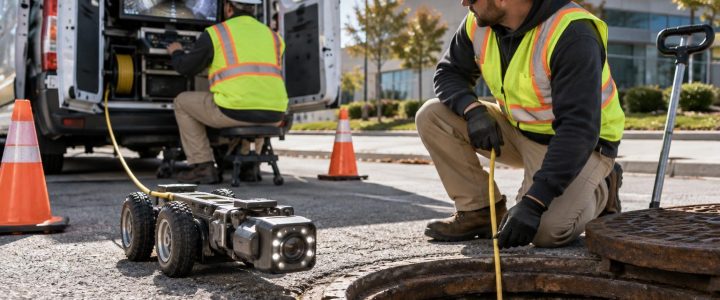
No. The appropriate inspection equipment depends on pipe diameter, access, bends, flow, and the project objective. Push-camera, crawler, and robotic systems may each have a role, but no method is suitable for every pipe condition.
Plan rehabilitation with a clearer view of the system
Before committing to a rehabilitation method, establish what can be observed inside the accessible pipe system, document the limitations, and identify the questions that still need to be answered. That process supports better scopes for storm sewer, sanitary sewer, culvert, and drainage pipe work.
Visionary Subsurface Solutions provides professional video pipe inspection for construction, infrastructure, drainage, and facility projects throughout Pennsylvania, New Jersey, Delaware, Maryland, New York, and the Washington, D.C. to New York City corridor. Contact our team to discuss the pipe system, available access, and the information your project needs before rehabilitation begins.