Trenching work can look routine right up until conditions change. A small excavation for a utility repair, footing, drainage line, or connection may involve unstable soil, changing weather, buried utilities, mobile equipment, and workers entering a confined work area. When a trench wall fails, there may be little warning and very little time to react.
Good trenching safety starts before the bucket breaks ground. The most reliable approach is to plan the work, identify what is below and around the excavation, select the right protective system, and have a competent person inspect conditions throughout the job. A trench that was safe at the start of the shift may not be safe after rain, vibration, adjacent loading, or a change in soil conditions.
What makes trenching and excavation work dangerous?
A trench is a narrow underground excavation in which the depth is generally greater than the width, but the safety hazards are not limited to trench walls. Workers can be exposed to cave-ins, falls, falling loads, water accumulation, hazardous atmospheres, underground utility contact, and struck-by hazards from nearby equipment.
A cave-in is the hazard that demands the most attention. Soil can fail because of its type, moisture content, previous disturbance, vibration, surcharge loads near the edge, or inadequate protection. A wall that appears firm can still become unstable after equipment operates nearby or water enters the excavation.
Under OSHA construction standards, employees in excavations must be protected from cave-ins by an adequate protective system unless the excavation is made entirely in stable rock or is less than 5 feet deep and a competent person finds no indication of a potential cave-in. Excavations 20 feet deep or more require a protective system designed by a registered professional engineer. Review the applicable OSHA protective-system requirements and project-specific requirements before work begins.
Before You Start: trenching safety planning questions
Pre-task planning should match the actual excavation, not just a generic checklist. The foreman, competent person, operator, and crew should understand the plan before anyone enters the trench.
Confirm the scope and site conditions
- What is the planned depth, width, length, and purpose of the excavation?
- What soil conditions are expected, and has the area been previously excavated, backfilled, or disturbed?
- Will the work occur near foundations, pavement, retaining walls, poles, stored materials, or heavy equipment?
- Could rain, snowmelt, groundwater, leaking utilities, or runoff enter the excavation?
- Is there enough room for a safe slope or bench, or is a trench box or shoring system more practical?
Identify underground and overhead hazards
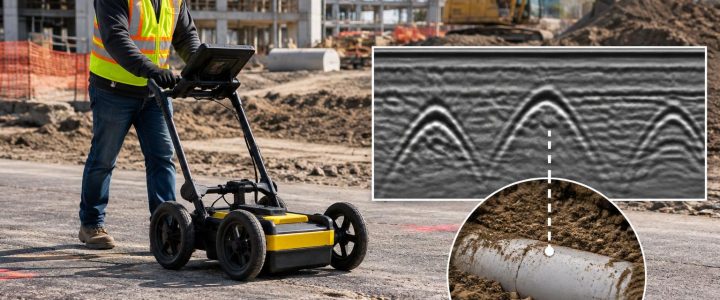
Call-before-you-dig markings are an important starting point, but they may not identify every privately owned utility, abandoned line, or unrecorded facility. Review available drawings, walk the site, and coordinate with utility owners. Where conditions warrant more certainty, use qualified investigation methods before excavation reaches a suspected facility.
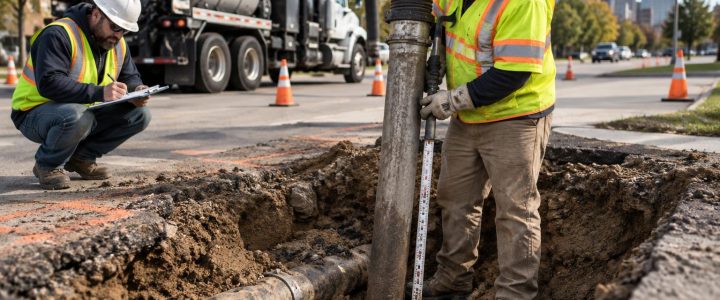
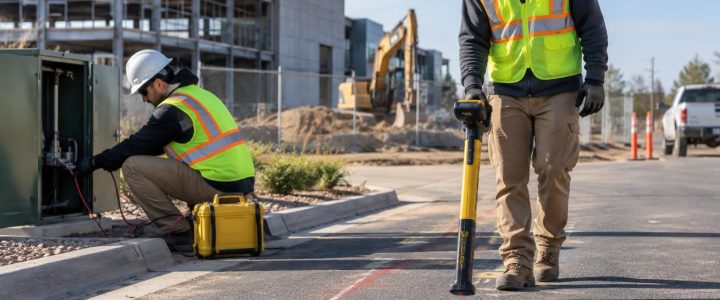
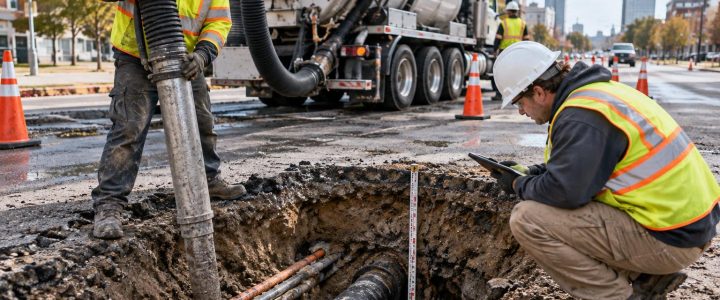
For work on commercial and industrial properties, private utility locating can help investigate utility paths that may not be covered by a public locate request. Marks and records should still be treated as information to verify, not as a guarantee of exact location or depth. When a utility must be exposed for confirmation, carefully planned vacuum excavation and test holes can help establish its horizontal position and elevation with less disturbance than mechanical digging.
Select protection before excavation starts
Do not wait until the excavation is open and workers need access. Choose a protective approach during planning:
- Sloping: Cutting the excavation wall back at an angle suited to the soil and site conditions.
- Benching: Cutting the wall into horizontal steps where conditions and soil classification allow it.
- Shoring: Installing a system that supports the trench walls and resists movement.
- Shielding: Using a trench box or other shield to protect workers if a wall fails.
These methods are not interchangeable. A trench box, for example, protects workers inside the shield but does not necessarily stop soil outside the box from moving. The box must be appropriate for the excavation, installed and used according to the manufacturer’s tabulated data or an engineered design, and positioned so workers remain protected.
Use the hierarchy of controls in trenching work
Personal protective equipment matters, but a hard hat, boots, and high-visibility clothing cannot protect a worker from a collapsing trench wall. Start with stronger controls.
Eliminate or reduce the need for entry
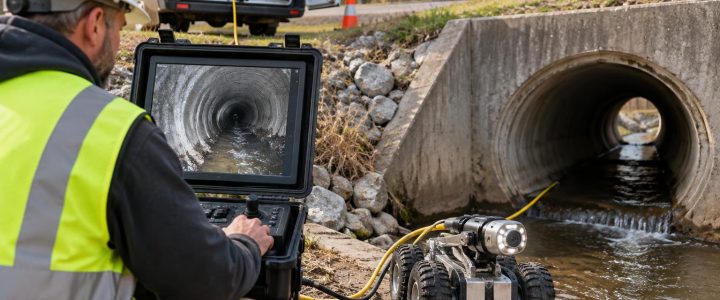
Ask whether the task can be completed without putting a worker in the excavation. Can a connection be assembled at grade? Can a camera, remote tool, or longer-handled device complete part of the task? Can the excavation be redesigned to provide safer access? These questions are especially useful for short-duration repairs, inspections, and exploratory work.
Use engineering controls
Protective systems, safe slopes, engineered shoring, trench shields, barricades, and controlled access points are engineering controls. They physically change the work environment rather than relying solely on workers to recognize a hazard at the right moment.
Keep spoil piles, materials, and equipment back from the excavation edge. OSHA requires excavated materials and other equipment to be kept at least 2 feet from the edge or otherwise restrained so they cannot fall into the excavation. This separation also helps reduce the added load that can destabilize a trench wall.
Support the plan with administrative controls and PPE
Administrative controls include a pre-task briefing, designated equipment travel routes, clear communication between the operator and spotter, inspection records, and stop-work authority. PPE may include head protection, protective footwear, eye protection, gloves, hearing protection, and high-visibility garments based on the work and traffic exposure. PPE is the final layer, not the primary cave-in control.
The competent person inspection is an active safety control
OSHA requires a competent person to inspect excavations, adjacent areas, and protective systems daily before work starts and as conditions change, including after a rainstorm or other hazard-increasing occurrence. OSHA defines a competent person as someone able to identify existing and predictable hazards and who has authority to take prompt corrective measures. See OSHA’s excavation requirements for inspections, access, and water hazards for the full regulatory language.
On a well-run job, the inspection is not a quick look from the trench edge. It considers the entire work area and whether the original plan still fits current conditions.
Warning signs that require a pause and reassessment
- New cracks, bulging, sloughing, spalling, or soil falling from the trench wall
- Water seepage, standing water, leaking pipes, or changing groundwater conditions
- Settlement, cracking, or movement near pavement, structures, poles, or adjacent excavations
- Equipment operating too close to the edge or stored material adding load near the trench
- Visible movement or damage to shoring, shields, ladders, or access points
- Vibration from traffic, compactors, pile work, or nearby equipment
- A soil condition that differs from the assumption used to select the protective system
If conditions are unsafe, keep workers out until the competent person has evaluated the problem and corrective measures are in place. This is where meaningful stop-work authority matters: workers should be able to report a changing condition without being pressured to “just get it done.”
Control access, egress, water, and equipment movement
Provide safe entry and exit
For trench excavations 4 feet or more in depth, OSHA requires a ladder, stairway, ramp, or other safe means of egress so workers do not have to travel more than 25 feet laterally. Place access where it will remain usable, secure it as needed, and keep it clear of materials and hoses. Do not treat a bucket, trench wall, or improvised step as a safe access route.
Keep people out from under suspended loads
Pipes, structures, trench boxes, and materials may be lifted or moved near the excavation. No worker should be below a suspended load or between a moving load and a fixed object. Establish a landing area, use qualified rigging practices, and communicate clearly with the operator and signal person.
Manage water before it becomes an emergency
Water can weaken soil, hide hazards, interfere with egress, and create electrical risks. Plan for surface drainage and groundwater control before digging. Inspect after rain and when conditions change. If pumps are used, make sure discharge does not create erosion, flooding, or a new hazard elsewhere on the site. Do not allow employees to enter a water-accumulated excavation until necessary precautions are in place.
Separate equipment from the trench edge
Excavators, loaders, dump trucks, compactors, and deliveries can create vibration and surcharge loads. Establish a travel path and exclusion area before equipment arrives. The operator needs a clear view of the trench limits, while ground workers need a safe place to stand that is outside swing areas, backing paths, and potential collapse zones.
Common trenching safety mistakes to avoid
- “It is only a quick repair.” Short duration does not reduce the consequences of a collapse.
- Entering before protection is ready. Install or position the protective system before entry, not after the crew is already working below grade.
- Using a trench box outside its approved conditions. Follow the manufacturer’s instructions, tabulated data, and any engineered plan.
- Ignoring changing soil or weather conditions. Yesterday’s inspection does not replace today’s inspection.
- Putting spoil piles at the edge. Keep material back and prevent it from rolling or falling into the excavation.
- Assuming utility markings establish depth. Surface marks communicate an approximate horizontal path; they do not eliminate the need for careful excavation and verification.
- Working around equipment without a defined plan. Set travel routes, communication methods, and restricted areas before the shift begins.
A practical trenching safety checklist
Use this as a field prompt, then add the requirements of the excavation plan, employer program, equipment manufacturer, and applicable regulations.
- Confirm the excavation scope, depth, location, and expected soil conditions.
- Review utility information, markings, drawings, and the plan for verification.
- Identify nearby structures, traffic, equipment routes, overhead hazards, and water sources.
- Select the protective system and confirm it fits the actual excavation conditions.
- Keep spoil, materials, and equipment away from the edge or properly restrained.
- Provide safe access and egress before workers enter.
- Inspect the excavation, adjacent areas, and protective systems before each shift and after changing conditions.
- Set boundaries for equipment, suspended loads, pedestrians, and delivery vehicles.
- Stop work when soil, water, utilities, protective systems, or site conditions no longer match the plan.
- Document concerns and communicate changes to every affected crew.
Make trenching safety part of the daily plan
Effective trenching safety is not achieved by a single toolbox talk or a trench box sitting nearby. It depends on planning, competent inspection, the right protective system, controlled equipment movement, and crews who speak up when conditions change. Site-specific conditions, applicable regulations, employer policies, manufacturer instructions, and qualified professional judgment should guide every excavation decision.
If your project involves uncertain private utilities, congested subsurface conditions, or a need to verify utility locations before excavation, contact Visionary Subsurface Solutions to discuss a practical investigation plan for your project.