Trenching safety starts before the first bucket enters the ground. A trench can look stable at the beginning of a shift and become dangerous quickly after rain, vibration, nearby equipment movement, or changes in soil conditions. Cave-ins can happen with little warning, and a worker may not be able to move out of the way in time.
A safe excavation plan considers more than the trench itself. It addresses soil conditions, protective systems, access and egress, utilities, water, spoil piles, equipment, traffic, and the work sequence. The goal is not simply to get workers into the trench. It is to complete the work while keeping people out of avoidable collapse, struck-by, and hazardous-atmosphere risks.
Under OSHA excavation standards, a protective system is generally required for employees working in trenches five feet deep or deeper, unless the excavation is made entirely in stable rock or a competent person determines there is no indication of a potential cave-in. OSHA and the National Institute for Occupational Safety and Health both emphasize that cave-ins are a leading trench hazard and that workers should not enter an unprotected trench. Site conditions, employer procedures, and local requirements may call for protective measures at shallower depths as well.
Why trench work becomes dangerous so quickly
Soil is not a fixed structure. Its strength can change because of moisture, prior disturbance, vibration, surcharge loads, or a nearby excavation. A vertical trench wall may stand temporarily, then fail after a minor change in conditions.
Common trench hazards include:
- Cave-ins: Soil can collapse from the sidewalls, trench ends, or material stacked at the edge.
- Falls into the excavation: Workers, tools, vehicles, or materials can enter an open trench when edges are not protected or clearly controlled.
- Struck-by hazards: Excavators, trucks, suspended loads, and loose spoil can endanger people in and around the trench.
- Underground utility contact: Existing electric, gas, communications, water, sewer, and other lines may be present where records do not show them or where their position differs from plans.
- Water accumulation: Rain, groundwater, broken utilities, or runoff can weaken trench walls and create drowning or engulfment hazards.
- Hazardous atmospheres: Some excavations can contain low oxygen, flammable gases, or toxic vapors, especially near sewers, landfills, fuel systems, industrial operations, or contaminated soil.
- Equipment and traffic vibration: Heavy equipment, public traffic, and rail activity can add loads and vibration that affect trench stability.
A protective system is essential, but it does not replace planning. Crews still need to control the hazards around the excavation.
Before You Start: trenching safety questions for the crew
Before excavation begins, the supervisor, competent person, equipment operator, and affected workers should review the task together. A brief, focused conversation can identify issues before they become urgent.
- What work must be performed in the trench, and how long will workers need to be inside?
- Has the excavation area been checked for underground utilities through the required notification process and available project information?
- Where will equipment, haul trucks, materials, and spoil piles be placed?
- What soil conditions are expected, and who is the designated competent person?
- What protective system will be used: sloping, benching, shoring, shielding, or a combination?
- How will workers enter and exit the trench?
- Could rain, groundwater, runoff, vibration, traffic, or nearby structures affect stability?
- Is atmospheric testing needed based on the location, depth, work activity, or nearby systems?
- Who has stop-work authority if conditions change?
This discussion should be updated when the work area, weather, equipment, or excavation depth changes. A plan that was appropriate at the start of the day may not be adequate after a storm or after the crew extends the trench.
Use the hierarchy of controls for excavation hazards
Personal protective equipment matters, but a hard hat and safety boots cannot protect a worker from a trench collapse. The strongest controls remove workers from the hazard or physically prevent the hazard from reaching them.
Eliminate or reduce entry where practical
Look for ways to perform work from outside the excavation. Examples may include assembling sections at grade, using longer-handled tools where appropriate, changing the installation sequence, or using equipment that reduces the time people spend in the trench. These options will not fit every job, but they are worth discussing during pre-task planning.
Use engineered or properly selected protective systems
Common protective approaches include:
- Sloping: Cutting the trench walls back at an angle suited to the soil conditions and site constraints.
- Benching: Creating stepped sides where soil conditions and excavation geometry permit it.
- Shoring: Supporting trench walls with hydraulic, timber, or other designed support systems.
- Shielding: Using a trench box or shield designed to protect workers if soil collapses around it.
The right system depends on soil classification, excavation depth, available room, adjacent loads, utilities, water conditions, and the manufacturer’s instructions or engineered design. A trench box is not automatically safe just because it is on site. It must be appropriate for the excavation and installed, used, and moved according to its tabulated data or manufacturer guidance.
Do not make field changes to a shield, shoring system, or engineered configuration without appropriate direction. Makeshift solutions and damaged protective systems can create a false sense of security.
Control the hazards at the trench edge
Many trench incidents begin at the edge. The ground immediately around an excavation carries extra loading from spoil, equipment, materials, traffic, and people. That added weight is called a surcharge load, and it can contribute to wall failure.
Keep spoil piles and materials back
OSHA generally requires excavated material and other equipment or materials to be kept at least two feet from the edge of an excavation, or restrained by a retaining device. This helps prevent material from rolling into the trench and reduces loading at the edge.
Two feet is a minimum separation rule, not a complete layout plan. Consider where trucks will travel, where pipe will be staged, and whether the edge itself is soft or previously disturbed. Keep heavy equipment and loads far enough away to avoid undermining the excavation or overloading the soil.
Manage mobile equipment deliberately
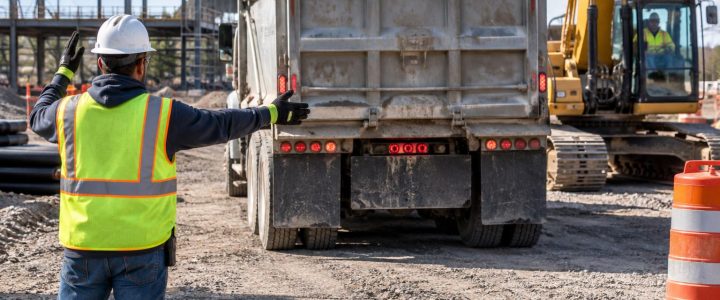
Set clear travel paths and exclusion areas for excavators, loaders, trucks, and compactors. Workers on foot should never have to guess where equipment will swing, back, dump, or stage materials.
- Use a trained spotter when visibility is limited and establish clear communication methods.
- Keep personnel out of an excavator’s swing radius and away from suspended loads.
- Do not allow workers to stand between mobile equipment and a trench edge, wall, material pile, or other fixed object.
- Use barricades, berms, stop logs, or other controls where vehicles could enter the excavation area.
Inspect conditions before entry and throughout the shift
A competent person is central to excavation safety. OSHA defines a competent person as someone capable of identifying existing and predictable hazards and who has authority to take prompt corrective action. This is not just a title on a site plan. The person must have the knowledge, authority, and involvement needed to respond when conditions change.
OSHA requires inspections of excavations, adjacent areas, and protective systems daily before work starts and as conditions require throughout the shift. Additional inspections are required after events that could increase hazards, such as a rainstorm, water intrusion, or another occurrence that may affect safety.
During inspections, look for warning signs such as:
- Cracks, fissures, sloughing, bulging, or spalling on trench walls
- Soil or material falling from the edge
- Water collecting in the trench or seeping from walls
- Damaged, shifted, or improperly positioned trench shields or shoring
- New vibration from equipment, traffic, demolition, or compacting work
- Changing soil texture, fill material, voids, or signs of prior disturbance
- Loads, stockpiles, or equipment moving closer to the edge
- Missing, blocked, or unsafe access points
If the competent person finds evidence of a situation that could result in a cave-in, protective-system failure, hazardous atmosphere, or other dangerous condition, workers should leave the excavation until the hazard is corrected.
Provide safe access, egress, and work space
Workers need a safe way in and out before they enter the trench. OSHA requires a ladder, stairway, ramp, or other safe means of egress in trench excavations four feet or more in depth so that workers do not have to travel more than 25 feet laterally to reach it.
Place ladders on stable footing, extend them as needed for safe use, and keep the route clear. Inspect access points during the shift. A ladder that was secure in the morning may become unstable as the trench is extended or as soil is removed.
Do not crowd the work area. Pipe, tools, pumps, workers, and protective systems all need space. If workers cannot move safely inside the protected area, revise the work plan rather than forcing the task into a space that is too tight.
Plan for water, weather, and atmosphere hazards
Water changes the excavation plan
Water can soften soil, add pressure to trench walls, and hide changing conditions. Do not treat dewatering as a routine pumping task alone. Determine where water is coming from, how pumping could affect soil stability, where discharge will go, and whether the protective system remains suitable.
After rain, inspect the trench and surrounding area before allowing reentry. Check for runoff paths, saturated spoil piles, erosion at the edge, and standing water. If a utility is damaged and water enters the excavation, stop work, keep people clear, and follow the project emergency process.
Do not overlook air quality
Excavations may require atmospheric testing when hazardous conditions could reasonably be expected. This is particularly important when work is near sanitary sewers, chemical systems, fuel storage, landfills, industrial facilities, or areas with known contamination. Welding, cutting, equipment exhaust, and certain products used in the trench can also affect air quality.
When testing is needed, use properly selected and maintained equipment, follow the employer’s confined-space and respiratory-protection procedures where applicable, and provide ventilation or other controls based on the identified hazard. Never rely on odor alone to judge whether an atmosphere is safe.
Underground utilities: treat records and markings as important, not final
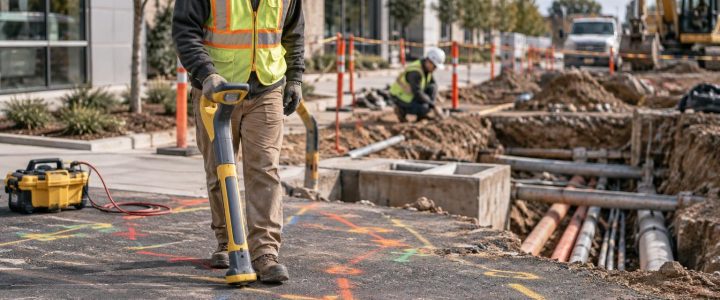
Before digging, use the required utility notification process, review available plans, walk the site, and discuss expected crossings with the crew. Markings and records are valuable planning tools, but they may not show every private line, abandoned line, unknown installation, or field change.
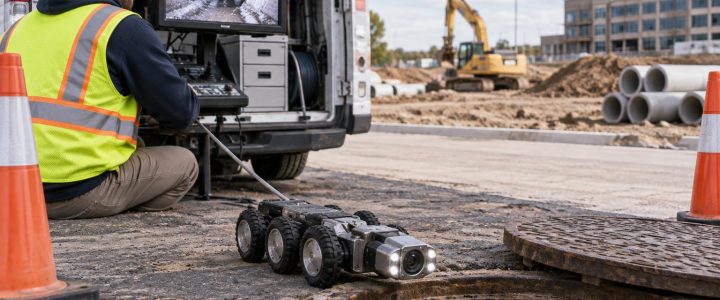
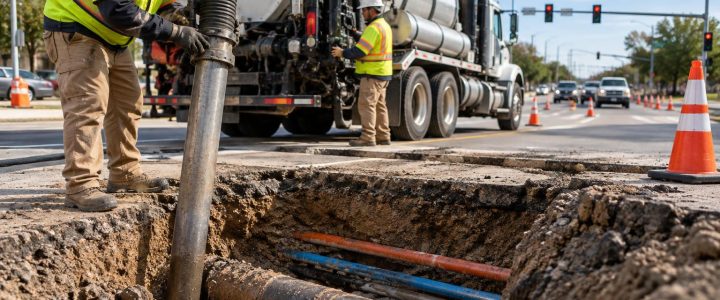
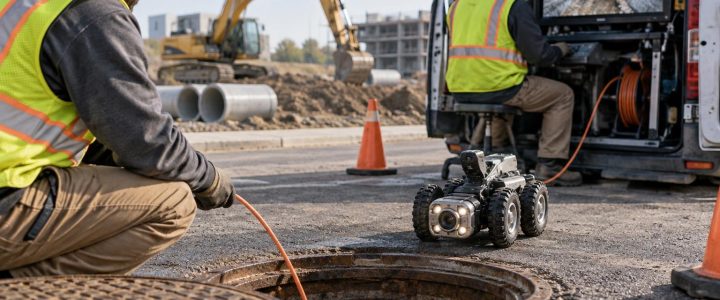
When excavation will occur near expected utilities, use the required tolerance-zone procedures and the project’s safe-dig methods. Mechanical excavation close to a utility can create a serious risk of utility damage, flooding, service interruption, fire, or electrical injury. When more information is needed before digging, private utility locating and physical verification methods can help project teams better understand subsurface conditions.
Common trenching mistakes to avoid
- Entering a trench briefly because “it will only take a minute.”
- Assuming dry weather means the soil is stable.
- Using a trench box that is too small, damaged, improperly placed, or not suitable for site conditions.
- Leaving spoil, pipe, or equipment too close to the edge.
- Using the excavator bucket as a personnel platform or access method.
- Failing to reinspect after rain, equipment movement, utility strikes, or soil changes.
- Allowing workers to stay in a trench while a protective system is being moved or adjusted without following the manufacturer’s instructions and the work plan.
- Assuming utility markings identify all underground facilities or their exact depth.
Trenching safety FAQ
Can a trench be safe if it is less than five feet deep?
It can still present serious hazards. OSHA’s protective-system threshold does not mean every trench under five feet is safe without protection. A competent person should evaluate the conditions, including unstable soil, water, nearby loads, and the possibility that the excavation will deepen during the work.
Is a trench box the same as shoring?
No. A shield, often called a trench box, is designed to protect workers inside the structure if a collapse occurs. Shoring supports the trench walls to help prevent movement or collapse. Both must be selected and used correctly for the excavation and work conditions.
Who can inspect a trench?
OSHA requires inspections by a competent person. Employers should designate individuals who have the training, practical knowledge, and authority to identify hazards and correct them promptly.
Make trench safety part of the work plan
Safe trenching is not achieved by a last-minute ladder or a box dropped into an excavation. It comes from planning the work, selecting the proper protective system, controlling edge hazards, inspecting conditions, and giving the competent person real authority to stop work.
For projects involving uncertain underground conditions, Visionary Subsurface Solutions can help teams plan for subsurface risk through services such as vacuum excavation and QL-A test holes. Contact Visionary Subsurface Solutions to discuss your project, expected site conditions, and the information your team may need before excavation begins.