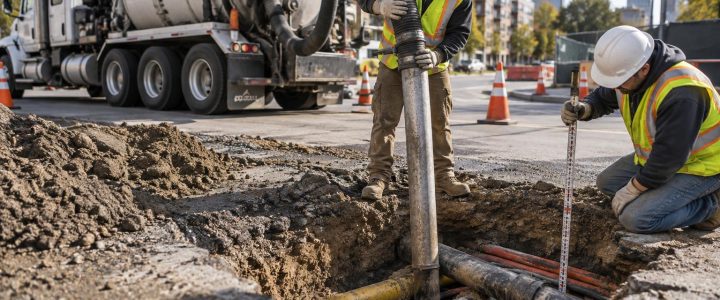
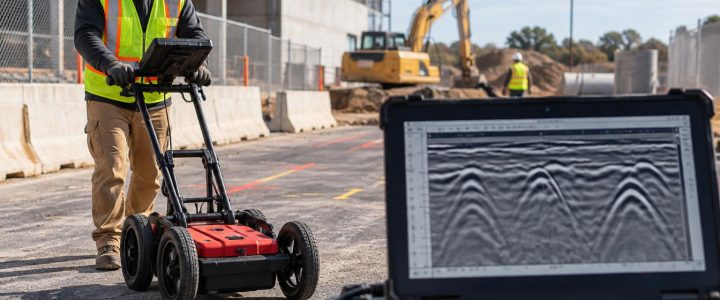
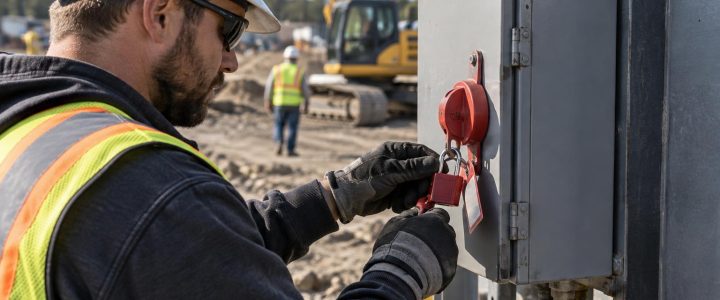
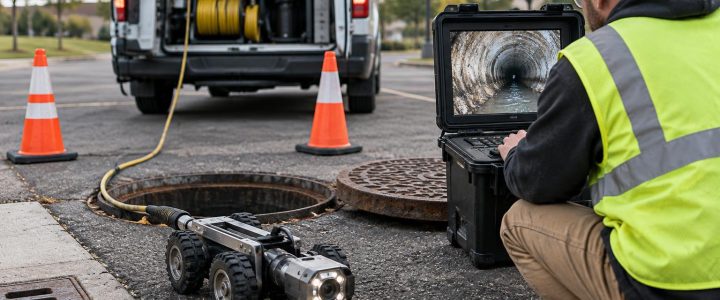
Heavy equipment helps construction crews move material quickly, but it also creates one of the most serious jobsite hazards: a worker on foot being struck, crushed, or caught between equipment and another object. Excavators, loaders, skid steers, dump trucks, forklifts, rollers, and telehandlers can all have blind spots, changing travel paths, limited stopping distance, and noisy work areas.
The most reliable way to reduce this risk is not to depend on workers being alert at all times. It is to plan the work so people and equipment do not need to occupy the same space. Physical separation, controlled routes, clear communication, and active supervision work together to make construction site safety more dependable.
The guidance below is a practical starting point for contractors, foremen, equipment operators, and project managers. The specific controls should always reflect site conditions, the equipment manufacturer’s instructions, employer policies, and applicable requirements.
Why equipment-pedestrian incidents happen
Most struck-by incidents are not caused by one careless decision. They usually develop when several routine conditions line up: a tight site, changing work areas, deliveries, limited visibility, production pressure, poor housekeeping, or crews working close to mobile equipment.
Common scenarios include:
- A worker walks behind a truck as it begins backing.
- An operator swings, turns, or reverses before seeing a worker who has entered a blind area.
- A laborer crosses an unmarked equipment route to reach tools, materials, or a break area.
- A spotter gives directions while standing in an unsafe location or moves out of the operator’s view.
- A worker approaches equipment to speak with an operator without first making positive contact.
- Site access changes after excavation, material storage, or deliveries, but the traffic plan is not updated.
Noise, dust, low light, rain, uneven ground, and high-visibility clothing can affect the situation, but none of them replaces a well-planned separation system. High-visibility apparel can help a worker be seen; it does not make that worker visible through a machine, around a load, or behind a truck.
Start with separation, not warnings
Warnings, backup alarms, radios, mirrors, cameras, and spotters are important layers of protection. They are not the strongest first control. A better construction safety plan looks first for ways to keep workers away from equipment movement altogether.
Eliminate unnecessary interaction
Ask whether the work can be sequenced to avoid mixing foot traffic and equipment activity. For example, crews may be able to complete layout, grade checking, or material staging before large equipment begins working in the same zone. A delivery can be scheduled when fewer trades are present. Pedestrian access can be moved to the opposite side of the site.
These changes may seem small, but they reduce the number of times an operator and a worker on foot must depend on eye contact or radio communication.
Create physical separation where practical
Use barriers, fencing, cones, delineators, gates, jersey barriers, or temporary walkways to make the safe route obvious. The level of protection should match the risk. A few cones may be useful for a low-speed, short-duration task with close supervision. They may not be enough beside frequent haul-truck traffic or a busy loading area.
Separate pedestrian routes should lead to places workers actually need to reach, such as:
- Site entrances and sign-in areas
- Job trailers and sanitation facilities
- Material storage and tool areas
- Break areas
- Work zones accessed by multiple trades
If the designated route is indirect, blocked by mud, or repeatedly crosses active traffic, workers will naturally look for a shorter path. That is a planning problem to correct, not simply a behavior problem to repeat at the next toolbox talk.
Build an internal traffic control plan that crews can use
An internal traffic control plan is a site-specific plan for how equipment, delivery vehicles, and pedestrians move within the project. It does not need to be complicated to be useful, but it should be clear, current, and visible to every contractor on site.
Map the movement before work begins
Before a major phase starts, walk the site with the superintendent, foremen, equipment lead, and safety personnel as appropriate. Identify where machines will enter, travel, load, dump, turn, fuel, park, and exit. Then identify where people will walk and work.
Pay special attention to:
- Truck entrance and exit points
- Backing areas and turnarounds
- Dump zones, loading zones, and stockpiles
- Equipment staging and maintenance areas
- Blind corners, gates, ramps, and narrow passages
- Temporary crossings between work areas
- Areas where public traffic, visitors, or other trades may enter
Where possible, design routes to reduce backing. A one-way circulation route or a turnaround can reduce repeated reverse movements. When backing cannot be avoided, define who controls the area and how pedestrians will be kept out.
Update the plan as the site changes
Construction sites change daily. Excavations open and close. Stockpiles move. A new subcontractor arrives. A concrete pour, utility installation, or paving operation can alter the safest route in a few hours.
Review traffic controls when the work phase changes, after a near miss, when new equipment arrives, and whenever access is rerouted. Communicate changes during the daily pre-task meeting rather than assuming workers will notice new cones or signs.
Manage blind spots and operator visibility
Every machine has areas the operator cannot see directly. Blind spots vary by equipment type, attachment, load, cab design, mirrors, camera placement, and operating position. Ground conditions and dust can further limit what the operator sees.
Operators should conduct the inspections required by their employer and the equipment manufacturer. From a jobsite safety standpoint, crews should also make visibility part of the daily conversation: What equipment is working today? Where are its blind spots? Which work zones are off limits to pedestrians?
Use a positive-contact rule
Workers should never assume an operator sees them. Before approaching equipment, stop outside the equipment’s operating area and establish positive contact. Depending on the task and site rules, this may be eye contact, a hand signal, radio confirmation, or acknowledgment from the operator.
Approach only after the operator has recognized the worker and the machine is in a safe condition. Never walk under a raised load, between a machine and a fixed object, or into an area where the machine could swing, roll, turn, or reverse.
If positive contact is lost, the worker should move to a safe position and the operator should stop movement until communication is restored. This simple rule is especially important around loud equipment, congested sites, and tasks requiring frequent coordination.
Use spotters carefully and give them one clear job
A spotter can help control a backing maneuver, tight turn, or movement near a restricted area. But a spotter is not a substitute for planning, barriers, or an operator’s safe operating practices. Spotters need training on the site’s communication method, the equipment’s hazard zones, and where to stand.
Spotter practices that reduce confusion
- Use one designated spotter for a specific movement whenever possible.
- Agree on standard hand signals or radio terms before the equipment moves.
- Keep the spotter where the operator can see them continuously.
- Position the spotter outside the machine’s travel path, swing area, and pinch points.
- Keep all other workers out of the controlled area.
- Stop the movement immediately if the operator loses sight of the spotter or receives an unclear signal.
A common mistake is asking a spotter to direct equipment while also carrying materials, monitoring a separate crew, or talking with a delivery driver. Assign the role clearly and keep the task focused.
Before You Start: heavy equipment safety checklist
Use these questions during the morning huddle, equipment briefing, or job hazard analysis.
- What equipment is moving today? Include contractor-owned, rental, delivery, and subcontractor equipment.
- Where will each machine travel, load, turn, dump, and park? Identify the high-conflict locations.
- Where will workers walk? Set clear pedestrian routes and access points.
- Can backing be eliminated or reduced? Consider one-way routes, turnarounds, and staging changes.
- Which areas are restricted to pedestrians? Mark and communicate them before work begins.
- When is a spotter needed, and who is assigned? Confirm the communication method and safe position.
- What conditions could reduce visibility? Consider darkness, weather, dust, slope, parked vehicles, material piles, and changing grades.
- How will new workers, delivery drivers, and visitors receive site instructions? Do not assume they know the site traffic pattern.
Common mistakes to avoid
Relying on backup alarms alone
Backup alarms are one warning layer, but they may be hard to hear in a loud environment or become background noise when many machines are operating. Use them along with controlled routes, exclusion zones, visibility aids, and communication.
Allowing informal pedestrian shortcuts
A shortcut through an equipment area may save seconds but can expose a worker to a blind spot or unexpected movement. If workers repeatedly take the same shortcut, inspect why the official route is not working and improve it.
Assuming the operator has seen the worker
Seeing the cab does not mean the operator sees you. A worker may be hidden by an attachment, counterweight, load, window post, mirror limitation, or site obstruction.
Changing the plan without telling everyone
Moving a stockpile or closing a gate can change traffic patterns immediately. Share the change with affected trades, operators, spotters, and delivery personnel before equipment begins using the revised route.
Supervisor actions after a near miss
A near miss is useful information about a weak control. Address it promptly without turning the discussion into blame. Pause the affected operation, secure the area, and learn what allowed the conflict to develop.
Ask practical questions:
- Did the pedestrian and equipment routes overlap?
- Was the area clearly controlled and communicated?
- Did visibility, noise, weather, or congestion contribute?
- Was the spotter positioned safely and focused on the movement?
- Did the work sequence create avoidable interaction?
- What physical or procedural change will prevent a repeat?
Then share the lesson with the crews who face similar conditions. A brief, specific correction is more useful than a generic reminder to “be careful.”
Reliable resources for construction equipment safety
For additional planning guidance, review OSHA’s struck-by hazards in construction resources and CPWR’s resources on work-zone and vehicle safety. These resources reinforce a central principle: separating workers on foot from moving vehicles and equipment is a key part of reducing struck-by risk.
Make the safe route the easy route
Heavy equipment safety improves when the jobsite makes safe decisions practical. Keep people out of equipment travel paths where possible, create routes that crews will actually use, manage backing and blind spots, and stop work when communication breaks down. These steps help protect operators, ground crews, delivery drivers, and every trade sharing the site.
On projects where excavation, underground work, or uncertain subsurface conditions affect equipment movement and work-zone planning, contact Visionary Subsurface Solutions to discuss your project and the information needed to support safer decisions.