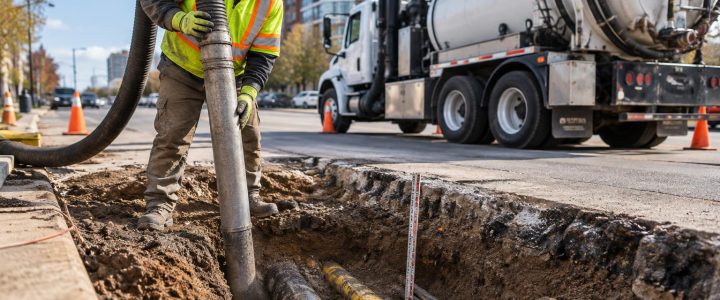
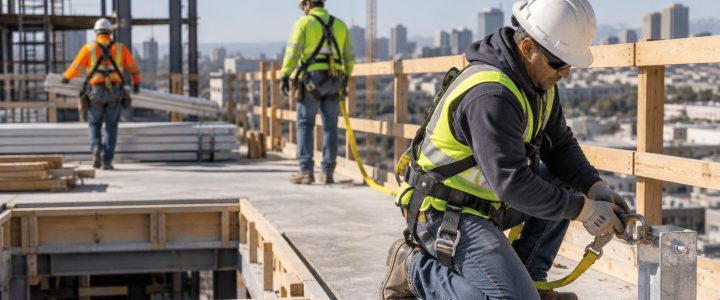
Construction work zone safety starts before the first cone, sign, or piece of equipment reaches the site. Whether work is taking place beside a public road, in a parking lot, or inside an active industrial facility, people and vehicles may be operating close together under changing conditions. A good plan makes their paths predictable and keeps workers out of conflict zones whenever possible.
Work-zone incidents often develop from ordinary conditions: a delivery truck arrives early, a lane closure changes, a machine backs up, a queue spills into the work area, or a worker crosses an access route to retrieve materials. The safest response is not simply telling everyone to “be careful.” It is to identify those conflict points in advance and control them through layout, separation, communication, and active supervision.
This guide focuses on practical construction work zone safety for contractors, foremen, superintendents, equipment operators, and project managers. It applies to roadway work as well as projects with public or internal vehicle traffic.
Why work zones create high-risk conditions
A work zone changes the normal travel environment. Drivers may encounter narrowed lanes, shifted travel paths, stopped vehicles, unfamiliar signs, workers on foot, and equipment entering or leaving the work area. On a private construction site, truck drivers, visitors, forklifts, loaders, and crew vehicles can create similar exposure.
The main hazards are usually struck-by incidents, vehicle intrusions into the work area, backing incidents, and workers being caught between moving equipment and fixed objects. These hazards increase when visibility is poor, traffic control is inconsistent, or the work plan does not match current field conditions.
OSHA construction standards address signs, signals, and barricades, while the OSHA Subpart G requirements provide a regulatory starting point for construction signs, signals, and barricades. For work on public roads, the applicable agency and project documents may require traffic control consistent with the Manual on Uniform Traffic Control Devices (MUTCD). Local agency permits, contract documents, and approved traffic control plans can add project-specific requirements.
Those documents matter, but they do not replace field judgment. A plan that looked sound on paper may need adjustment when traffic volumes, delivery patterns, weather, work sequencing, or the physical site change.
Start with a traffic and pedestrian plan, not just a cone layout
Cones and barricades are tools, not a complete plan. Before work begins, the project team should understand who needs to move through the area, where they will travel, and where movements could overlap.
Map every type of movement
During pre-task planning, identify:
- Public vehicle travel, including through traffic, turning traffic, and parking movements
- Construction truck entry, exit, staging, loading, and washout routes
- Equipment travel routes, swing areas, and backing locations
- Workers walking between parking, trailers, material storage, break areas, and work fronts
- Delivery, emergency, waste-hauling, and visitor access
- Nearby schools, transit stops, businesses, driveways, and accessible pedestrian routes when applicable
Then look for the places where two movements cross. A pedestrian crossing a haul route, a dump truck backing near material staging, or a loader exiting onto a public road are examples of conflict points that deserve specific controls.
Separate movements where practical
Separation is stronger than relying on a worker to notice every approaching vehicle. Consider whether the work sequence or site layout can eliminate a conflict altogether. For example:
- Place worker parking away from truck circulation routes.
- Create a designated pedestrian path that does not cross the equipment area.
- Use separate gates for employee vehicles and deliveries when the site allows it.
- Schedule large deliveries outside peak public traffic or major equipment movement periods.
- Set up a turnaround area so trucks do not need to back through an active work zone.
- Relocate staging that forces workers to walk behind operating equipment.
Physical barriers, designated walkways, and controlled entry points can support this separation. Their effectiveness depends on keeping them intact and making sure the actual work operation does not drift outside the planned area.
Before you start: work zone safety checklist
A brief check at the beginning of a shift can reveal problems before vehicles and workers are exposed. The responsible supervisor should confirm that the field setup matches the day’s work, not merely yesterday’s setup.
- Is the current traffic control setup consistent with the approved plan and applicable project requirements?
- Are signs, channelizing devices, barriers, and flagging locations visible, upright, and in the correct sequence?
- Have work limits, open excavations, stored materials, and equipment areas been clearly defined?
- Is there a safe route for workers on foot from parking and staging to the work area?
- Are truck routes, equipment routes, and delivery procedures understood by the crew?
- Have operators and ground personnel agreed on communication methods and exclusion zones?
- Are flaggers or traffic-control personnel trained, equipped, and positioned to perform their assigned role?
- Have weather, darkness, glare, dust, queues, or changing traffic conditions created new visibility concerns?
- Can emergency vehicles access the site or pass the work area as required?
- Does everyone know who can stop work if traffic control is moved, damaged, or no longer effective?
Documenting inspections may be required by a project or employer policy. Even when it is not, a consistent check helps catch missing devices and changing conditions early.
Control the work area from advance warning to termination
Roadway work zones commonly use sections that warn drivers of upcoming changes, guide them through a transition, provide a buffer, contain the active work, and return them to normal travel. The exact arrangement should follow the approved plan and applicable authority requirements.
From a field perspective, crews should understand the purpose behind these sections. Advance warning gives road users time to recognize and respond to the change. Transitions direct vehicles into the correct path. Buffers create recovery space. The activity area needs clear limits so workers, equipment, and materials do not creep into traffic.
Protect the buffer space
A buffer is not a storage area. Placing tools, spoil piles, equipment, or workers in a planned buffer removes the space intended to provide separation from errant vehicles. Supervisors should also look for activities that gradually expand beyond the protected work area, such as an excavator repositioning, a concrete truck staging, or materials being unloaded near the taper.
Keep devices visible and maintained
Traffic-control devices can be knocked over, shifted, covered by debris, or made difficult to see by rain, dust, low sun, snow, or parked vehicles. Inspect them after setup and throughout the shift, particularly after a delivery, weather event, shift change, or impact.
Do not improvise with damaged devices or assume a small gap is harmless. A missing delineator or moved barricade can change how a driver reads the work zone. If the setup is no longer adequate, pause affected work and correct it.
Manage internal construction traffic with the same discipline
Many serious vehicle interactions happen inside the site boundary, where crews may assume public-road rules no longer apply. Internal routes need clear direction, speed management, and separation just as much as a roadside work zone.
Use a site circulation plan
For projects with frequent deliveries or mobile equipment, establish a simple circulation plan that shows gates, one-way routes, stopping locations, haul roads, unloading areas, pedestrian paths, and restricted zones. Provide it to subcontractors, drivers, and visitors before they enter the active area.
Plans should account for the largest expected vehicle. A route that works for a pickup may not work for a concrete mixer, lowboy, or tractor-trailer. Check turning space, overhead obstructions, soft shoulders, backing needs, and whether a driver can see personnel at intersections.
Minimize backing
Backing is especially hazardous because mirrors and cameras do not eliminate blind areas, and jobsite conditions can change quickly. Design routes so vehicles can pull through or turn around when feasible. If backing cannot be avoided, establish the backing area before the maneuver begins.
A spotter can help only when the driver and spotter maintain clear communication and the spotter stays in a visible, protected location. The spotter should never stand between a moving vehicle and a fixed object, walk behind the vehicle, or assume the driver can see them at all times. If visual contact is lost, the driver should stop until communication is restored.
Set clear expectations for workers on foot
High-visibility apparel is important where workers are exposed to traffic or equipment, but it is not a shield. Workers need a clear understanding of where they may walk, when they need to make eye contact with an operator, and which areas are off limits.
Discuss these basic rules in the daily briefing:
- Use designated walkways and crossings whenever they are provided.
- Do not walk through an equipment swing radius, blind area, or backing zone without the operator’s acknowledgment.
- Do not take shortcuts through material staging, truck routes, or between parked equipment.
- Keep phones and other distractions out of hand when crossing or working near vehicle routes.
- Report damaged barricades, confusing signs, near misses, and changes in traffic patterns immediately.
- Respect restricted zones even when equipment appears idle; another operator may start or move it without warning.
Supervisors should avoid blaming workers for every close call. If people repeatedly take the same shortcut, the route may be poorly designed, inconvenient, or unclear. Fix the condition as well as reinforcing expectations.
Plan for changing conditions and temporary operations
A safe morning setup can become inadequate by afternoon. Work zones should be reviewed whenever the operation changes, including lane shifts, new excavation locations, altered truck routes, nighttime work, paving operations, utility deliveries, or weather delays.
Common warning signs that the plan needs adjustment
- Drivers brake suddenly, make late lane changes, or enter the work area by mistake.
- Traffic queues extend beyond the expected warning area.
- Workers regularly cross haul routes or step around barriers.
- Drivers ask where to go after entering the site.
- Spotters are being used constantly because routes require repeated backing.
- Cones, signs, or barricades are repeatedly struck or moved.
- Dust, darkness, glare, rain, or snow reduces visibility.
- The work area has expanded beyond the original protected limits.
These are process warnings. Treat them as a reason to stop, reassess, and improve the control plan before an incident occurs.
Use briefings and stop-work authority effectively
A useful toolbox talk does more than remind workers to wear PPE. Review the day’s vehicle movements, the location of active work, the identities of flaggers or spotters, and any unusual deliveries or traffic changes. Ask operators what they cannot see from the cab. Ask workers on foot where they expect to cross. Those answers can expose mismatches between the plan and the real operation.
Everyone should have authority to raise a concern when a work zone becomes unsafe. A worker who sees a missing barricade, uncontrolled vehicle access, or a traffic queue reaching the work area should know who to notify and should not be expected to continue in the hazard. Supervisors must respond promptly so reporting remains meaningful.
Make work zone safety part of daily production planning
Construction work zone safety is not separate from production. When traffic routes, pedestrian paths, delivery timing, and work limits are planned well, crews spend less time reacting to conflicts and more time working predictably. The most effective controls reduce exposure by design rather than asking people to rely on split-second decisions around moving vehicles.
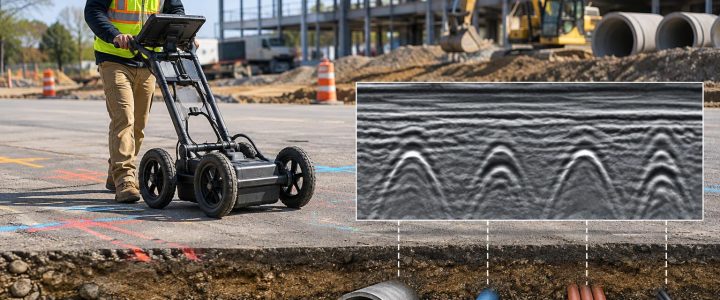
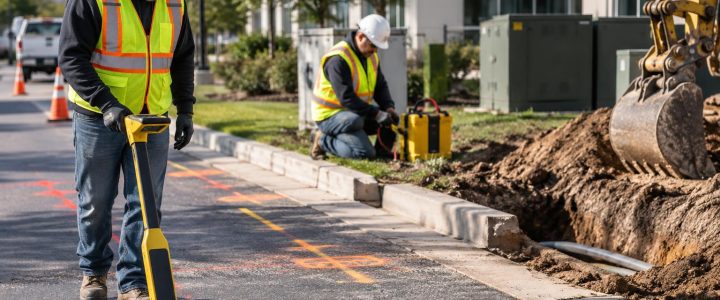
For projects involving excavation, utility installation, or uncertain underground conditions, traffic control should also support a safe investigation and work area. If you need help planning subsurface information before excavation begins, contact Visionary Subsurface Solutions to discuss your project and the field support that may be appropriate.