Backing vehicles and mobile equipment are a routine part of construction work, but they create a high-risk moment for anyone on foot. Dump trucks, pickups, loaders, skid steers, forklifts, and other machines can have large blind areas behind and beside the equipment. Noise, dust, poor lighting, uneven ground, changing work areas, and multiple trades can make those blind areas even more dangerous.
Construction vehicle backing safety depends on more than a backup alarm or a spotter. The strongest approach is to reduce unnecessary reversing, separate people from equipment, establish clear travel routes, and make sure operators and ground crews use the same communication plan. Alarms, cameras, and high-visibility clothing are useful layers, but they do not replace control of the work area.
Before work begins, supervisors should decide where equipment will travel, where it will turn around, where workers may safely walk, and how drivers will receive direction when backing cannot be avoided.
Why backing incidents happen on construction sites
Most backing incidents are not caused by one careless act. They often develop when several normal jobsite conditions overlap. A driver may be focused on a tight delivery location while a laborer steps behind a truck to retrieve tools. A spotter may be assigned but becomes distracted by another task. An operator may assume the area is clear because it was clear a few seconds earlier.
Common contributors include:
- Blind spots caused by the size, body style, attachments, or load of a vehicle.
- Workers walking through active equipment routes to save time.
- Frequent changes in material staging, access routes, excavation limits, or delivery locations.
- Backup alarms that are hard to hear over tools, traffic, or other equipment.
- Unclear hand signals, radio channels, or spotter assignments.
- Dust, rain, darkness, glare, or dirty mirrors and camera lenses.
- Congested sites where several trucks and machines work in the same area.
- Operators moving equipment after losing sight of the assigned spotter.
A reliable plan recognizes that people move, conditions change, and visibility is limited. It should not depend on every person noticing every moving machine at exactly the right time.
Use the hierarchy of controls for backing hazards
The best construction safety controls remove or reduce exposure before relying on individual attention or personal protective equipment. This is especially important around mobile equipment because a person on foot has little protection in a vehicle strike event.
Eliminate or reduce reverse travel
First, ask whether the vehicle needs to back up at all. A one-way traffic pattern, a designated turnaround, a pull-through delivery route, or relocation of a material laydown area may eliminate many backing movements. These decisions are often easier and less costly to make during pre-task planning than after trucks are already queued at a congested gate.
For example, plan a truck route that allows drivers to enter, unload, and exit forward whenever site layout permits. Keep parked vehicles, stockpiles, and portable equipment out of turning areas so drivers do not need to make extra maneuvers.
Separate workers from equipment
Create physical and visual separation between pedestrian areas and equipment routes. Depending on the site, controls may include barriers, cones, temporary fencing, marked walkways, designated crossing points, gates, and controlled access zones. Keep break areas, tool storage, job boxes, and portable toilets away from active backing paths whenever practical.
An exclusion zone should be large enough for the equipment, its swing or tail movement, the load, and expected travel. The exact layout must reflect the machine, task, terrain, and site conditions. Do not treat a painted line or a row of cones as a substitute for active control where workers can still enter an equipment area.
Use administrative controls and trained communication
When reversing is necessary and people may be exposed, establish one clear method of communication. Identify who is directing the move, where that person will stand, what signals or radio language will be used, and what the operator must do if communication stops.
Good administrative controls also include delivery scheduling, site orientation for drivers, posted traffic routes, speed expectations, and coordination between trades. These measures need active supervision; a traffic plan posted at the gate is not enough if conditions on the site have changed.
Use equipment features and PPE as added layers
Mirrors, backup cameras, proximity detection systems, alarms, lighting, and high-visibility garments can improve awareness. They also have limits. A camera may be blocked by mud or glare. An alarm may blend into a noisy work area. High-visibility clothing helps a worker be seen, but it does not make the worker visible through a blind spot.
Inspect these features before use and follow the equipment manufacturer’s instructions. Treat them as additions to route planning, exclusion zones, and direct communication—not as reasons to allow people close to moving equipment.
Before you start: a backing safety checklist
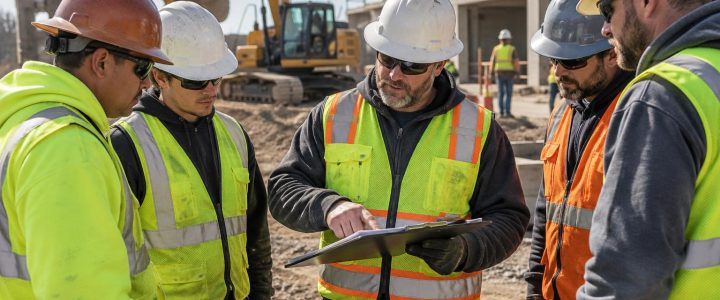
Use this short checklist during the daily huddle, equipment briefing, or job hazard analysis. Revisit it when deliveries increase, the work area changes, or conditions reduce visibility.
- Map the movement. Where will each vehicle enter, travel, stage, unload, turn, and exit?
- Look for pedestrians. Which crews, visitors, survey personnel, inspectors, and delivery drivers could enter the work area?
- Reduce backing. Can the route be changed so vehicles pull through or turn around?
- Set exclusion zones. Identify places workers must not enter while equipment is moving or backing.
- Assign a spotter when needed. Name the person, confirm the communication method, and keep that person free from conflicting tasks.
- Check visibility. Clean mirrors, windows, lights, and cameras. Consider dust, low sun, rain, night work, and uneven terrain.
- Confirm the stop rule. Operators stop immediately if they lose sight of the spotter or do not understand a signal.
- Coordinate deliveries. Tell drivers where to report, wait, travel, unload, and leave. Do not expect unfamiliar drivers to guess the site pattern.
How to use a spotter safely
A spotter can help direct a backing vehicle, but only if both people understand their roles. The spotter is not there to stand in the blind area and hope the driver sees them. The spotter must choose a visible position outside the vehicle’s path and outside pinch points, while retaining a view of the travel route.
Spotter practices that reduce risk
- Establish eye contact or radio contact before the vehicle moves.
- Stand where the operator can see the spotter directly, not only in a camera view.
- Stay clear of the vehicle path, tires, tracks, trailer swing, and fixed objects.
- Use agreed-upon signals. If radios are used, keep language brief and direct.
- Watch the route, not the operator. Look for workers, obstructions, changing ground conditions, and changing clearance.
- Give a clear stop signal whenever the path is uncertain or a person enters the area.
- Do not direct more than one moving machine at a time unless the site plan and staffing clearly support it.
The operator’s rule should be simple: if the spotter is not visible, communication is lost, or the instruction is unclear, stop the equipment. Do not continue backing based on an assumption that the spotter is still in position.
Common spotter mistakes to avoid
- Assigning a worker who is also carrying materials, checking grade, talking on a phone, or handling another task.
- Standing between the vehicle and a wall, stockpile, trench edge, parked vehicle, or other fixed object.
- Walking backward while watching the truck instead of selecting a stable, safe location.
- Using different hand signals across crews without a clear briefing.
- Assuming the spotter is responsible for keeping all other workers out of the area.
What OSHA requires and what good practice adds
OSHA construction standards address backing hazards for certain types of equipment. For example, OSHA’s standard for motor vehicles used within off-highway jobsites requires an audible reverse signal alarm distinguishable above surrounding noise, or that the vehicle be backed up only when an observer signals that it is safe to do so. OSHA’s earthmoving equipment standard also addresses reverse operation where the operator’s view to the rear is obstructed. The exact standard that applies can depend on the equipment and how it is being used.
Review the applicable requirements for the work and equipment rather than assuming one rule covers every vehicle. OSHA’s motor vehicle standard and material handling equipment standard are useful starting points. Employer rules, owner requirements, traffic-control plans, manufacturer instructions, and state or local requirements may add site-specific expectations.
As a practical matter, a compliant alarm alone may not control the hazard on a busy site. The National Institute for Occupational Safety and Health also emphasizes reducing vehicle-pedestrian interaction and using internal traffic control planning to prevent struck-by events. That approach supports a layered plan: reduce reverse travel, separate people and vehicles, then use observers and equipment technology where needed.
Plan for deliveries, not just equipment operators
Delivery drivers may visit many sites in one day and may not know your traffic pattern, unloading limits, or pedestrian routes. Treat deliveries as a planned operation, especially when trucks must enter tight areas, cross active work zones, or unload near excavations.
Provide drivers with a clear check-in point and direct them to wait until a competent site representative can guide them. Confirm the unload location is stable, clear of overhead and underground hazards, and large enough for the truck’s maneuvering needs. Keep ground crews out of the backing and unloading area until the truck is parked, secured, and the work can proceed safely.
For work near excavation, remember that vehicle travel can create added hazards beyond a struck-by event. Keep equipment and materials back from excavation edges as required by the applicable excavation plan and site conditions. A competent person should evaluate the excavation and surrounding activity.
Questions for a toolbox talk or daily huddle
- Where are today’s active equipment routes and pedestrian routes?
- Which deliveries or equipment moves could require backing?
- Who is authorized to direct a backing move?
- What signal or radio channel will the operator and spotter use?
- What does the operator do if the spotter disappears from view?
- Which areas are off limits to workers on foot?
- Have weather, lighting, staging, or site access conditions changed since yesterday?
- Who will brief subcontractors and delivery drivers before they enter the active work area?
Frequently asked questions about construction vehicle backing safety
Is a backup camera enough to protect workers behind equipment?
No. A camera can improve visibility, but it can have blind areas and can be affected by dirt, glare, weather, damage, or display limitations. Use cameras as one layer in a broader backing safety plan that includes route design, pedestrian separation, and clear communication.
Does every backing move need a spotter?
The need for a spotter depends on the equipment, visibility, site layout, pedestrian exposure, employer policy, and applicable requirements. The safer goal is to eliminate unnecessary backing and keep people out of the backing area. When a spotter is used, the person needs a defined role, safe location, and reliable communication with the operator.
What should a worker do if they need to pass near equipment?
Do not assume the operator sees you. Use designated walkways and crossing points. Make direct contact with the operator when required by the site plan, wait for acknowledgment, and stay outside marked or active equipment zones. Never walk behind equipment that is running, idling, or preparing to move unless the work plan specifically controls that exposure.
Make backing safety part of the daily work plan
Backing hazards change as a project changes. A route that worked during clearing may not work during concrete placement, utility installation, paving, or closeout. Review traffic flow whenever crews, equipment, material storage, access points, or visibility conditions change. Encourage workers to report close calls, blocked routes, missing signs, and unclear communications before those conditions lead to an injury.
Safe movement on a construction site comes from deliberate layout, separation, communication, and supervision—not from expecting workers to outrun a blind spot. Base each plan on site-specific conditions, applicable requirements, worker training, and the equipment manufacturer’s instructions.
If your project involves excavation, congested work areas, or uncertain underground conditions that affect equipment routing and safe work planning, contact Visionary Subsurface Solutions to discuss your project and the information needed before work begins.