Concrete, mortar, brick, block, stone, and many engineered materials contain crystalline silica. Cutting, drilling, grinding, chipping, and crushing these materials can create very fine dust that workers may breathe deep into their lungs. The dust can also travel beyond the immediate work area, exposing nearby trades and building occupants.
A strong silica dust safety plan does more than hand workers masks at the start of a shift. It identifies dust-producing tasks before work starts, selects tools and controls that reduce dust at its source, keeps unprotected people out of the area, and verifies that the plan still works as site conditions change.
For construction managers, foremen, and crews, the practical goal is straightforward: control dust where it is created rather than trying to manage a visible cloud after the fact.
Why respirable silica dust is a construction safety concern
Respirable crystalline silica is small enough to enter deep into the lungs. Repeated exposure can contribute to serious, permanent lung disease and other health problems. The risk is not limited to demolition crews or large concrete-cutting operations. A worker drilling a series of anchor holes, a mason dry-cutting block, or a laborer sweeping settled dust may all create exposure.
Dust levels are not always obvious. The finest particles can remain airborne after visible dust has settled, especially in enclosed rooms, stairwells, utility spaces, and areas with limited ventilation.
OSHA’s construction silica standard and guidance from the National Institute for Occupational Safety and Health both stress using effective dust controls, appropriate respiratory protection when needed, worker training, and exposure assessment or task-based control methods. Site-specific work plans should also account for local conditions, the equipment manufacturer’s instructions, and the employer’s safety program.
Before You Start: Ask these silica control questions
Silica controls should be part of pre-task planning, not a decision made after the first cut. Before the crew begins, the supervisor should be able to answer the following questions:
- What material will be cut, drilled, ground, broken, or cleaned up?
- Which tasks can generate respirable dust?
- Can the work be eliminated, prefabricated, or performed with a lower-dust method?
- Does the selected tool support integrated water delivery or a dust-collection shroud and vacuum?
- Are water, power, hoses, filters, and replacement consumables available and in working order?
- Will the work occur indoors, underground, in a tight area, or near occupied spaces?
- Who needs to be excluded from the work area?
- What respiratory protection, if any, is required by the task plan and exposure assessment?
- How will dust and slurry be cleaned up without dry sweeping or blowing it into the air?
If the answer to any of these questions is unclear, pause and resolve it before production starts. A few minutes of planning is generally easier than trying to redesign controls while a crew is waiting.
Use the hierarchy of controls for silica dust
Respirators and disposable masks may be necessary for some tasks, but they are not the first or only line of defense. The hierarchy of controls provides a better way to plan the work.
Eliminate or reduce the dust-producing work
Start by asking whether the work can be changed. Examples include ordering components cut to size, using cast-in anchors instead of drilling where design allows, selecting a fastening method that reduces drilling, or completing cutting in a controlled off-site area. These choices may not always be possible, but they can remove or reduce exposure before tools arrive on site.
Use engineering controls at the point of dust generation
For many common construction tasks, the best controls are wet methods and local exhaust ventilation.
- Wet methods: Water suppresses dust at the blade, bit, or impact point. The system must provide adequate water continuously during the task, not just an occasional spray.
- Local exhaust ventilation: A shroud connected to a properly selected vacuum captures dust close to where it is generated. The shroud must fit the tool and stay positioned correctly.
- Tool selection: Use tools designed for dust control when available. A grinder with an integrated shroud is not effective if it is used without a compatible vacuum.
- Enclosures and barriers: Temporary containment can help limit the spread of dust into occupied areas or other active work zones. It does not replace source control.
Check equipment before the shift. Look for damaged hoses, loose shrouds, clogged filters, worn seals, missing water nozzles, and an undersized or improperly maintained vacuum. These common issues can make an otherwise sound plan fail.
Use administrative controls to support the equipment
Administrative controls do not remove dust on their own, but they help engineering controls work consistently. Practical examples include scheduling high-dust tasks when fewer workers are present, keeping other trades out of the area, limiting the number of workers assigned to the task, and rotating work only when it is part of a qualified exposure-control plan.
Communicate the plan at the daily huddle. Tell workers where the exclusion area begins, which access routes remain open, who is responsible for maintaining the vacuum or water supply, and what to do if controls stop working.
Use respiratory protection correctly when it is required
Respiratory protection may be needed depending on the task, selected controls, duration, and exposure conditions. It should be selected and managed through the employer’s respiratory protection program, not treated as a personal preference or a substitute for water and ventilation.
A worker needs the right respirator for the hazard and must be trained to use it. Tight-fitting respirators also require an effective face seal; facial hair or a poor fit can prevent that seal. Follow the applicable OSHA requirements, employer program, and respirator manufacturer instructions for medical evaluation, fit testing, inspection, storage, and filter or cartridge changes.
Common silica-generating tasks and practical controls
Concrete cutting and saw work
Walk-behind and handheld saws can create substantial dust quickly. Confirm that the saw’s wet-cutting system is functioning before the blade enters the material. Protect hoses from traffic and sharp edges, and plan for slurry management so runoff does not create slip hazards, enter drains without authorization, or affect nearby work.
When a vacuum-equipped dry-cutting method is used, the vacuum must be matched to the tool and maintained according to the manufacturer’s instructions. Do not assume any shop vacuum is suitable for fine silica dust collection.
Drilling anchors and penetrations
Anchor drilling may look like a small task, but repeated holes can create meaningful exposure. Use a manufacturer-compatible dust-collection attachment or a wet-drilling method when appropriate. Empty collection systems carefully and keep the worker’s breathing zone away from dust released during disposal.
For overhead drilling, plan for falling dust and debris as well as airborne exposure. Protect workers below, control access, and confirm that the collection attachment remains secure throughout the task.
Grinding, scarifying, and surface preparation
Grinding concrete without a shroud and effective vacuum can spread dust through a large area. Keep the shroud close to the surface, use the specified vacuum and filter configuration, and inspect the collection setup regularly. In indoor renovation work, separate the grinding area from occupied spaces and coordinate with the owner or facility manager before work begins.
Demolition and cleanup
Breaking masonry, concrete, and tile can generate dust at the impact point and during debris handling. Use wet suppression where feasible, establish controlled drop zones, and avoid tossing dry debris from height. Dust often becomes airborne again during cleanup, so the cleanup plan matters as much as the demolition method.
Cleanup mistakes that create a second exposure
Many crews control dust during the main task, then undo much of that effort during cleanup. Dry sweeping and using compressed air can lift settled fine dust back into the breathing zone.
Instead, use methods that keep dust contained:
- Use a vacuum designed and maintained for fine-dust collection when vacuuming is appropriate.
- Use wet sweeping or wet cleanup methods when they suit the material and surface.
- Collect debris in containers or bags that can be closed before moving them through the site.
- Clean workers’ clothing and equipment without blowing dust with compressed air.
- Remove slurry and wet waste promptly so it does not become a slip, trip, or drainage problem.
Never treat cleanup as unskilled work with no safety planning. Assign it, explain the method, provide the proper equipment, and inspect the area before reopening it to other trades.
Warning signs that the silica control plan is failing
Supervisors and workers should act when they see signs that dust is escaping the intended controls. Common warning signs include:
- A visible dust plume at the blade, bit, grinder edge, or shroud.
- Water flow that is weak, intermittent, or directed away from the cutting point.
- Dust collecting on nearby surfaces outside the work area.
- A vacuum that changes sound, loses suction, overheats, or has a full collection container.
- Workers removing respirators because they are uncomfortable, wet, damaged, or difficult to breathe through.
- Other trades walking through the work zone without knowing that dust-producing work is underway.
- Dust being swept dry or blown from tools, clothing, or floors.
When controls fail, stop the dust-producing task if necessary, correct the problem, and communicate the restart plan. Continuing with ineffective controls because the task is nearly complete is a poor tradeoff.
A field checklist for silica dust safety
- Identify silica-containing materials and dust-generating tasks.
- Select a lower-dust method whenever feasible.
- Inspect water-delivery systems, shrouds, hoses, filters, and vacuums before use.
- Set a work-zone boundary and keep nonessential personnel out.
- Confirm the applicable task controls, exposure plan, and respiratory protection requirements.
- Brief the crew on the work sequence, equipment checks, cleanup method, and stop-work triggers.
- Monitor controls during the task instead of checking only at startup.
- Clean up using controlled vacuuming or wet methods, not dry sweeping or compressed air.
- Document equipment problems and correct them before the next shift.
Frequently asked questions
Is visible dust the only sign of a silica hazard?
No. The particles that can reach deep into the lungs may be too small to see clearly. Visible dust is a warning sign, but the absence of a visible cloud does not prove that exposure is controlled.
Can a disposable dust mask replace water or vacuum controls?
No. Respiratory protection may be part of the plan for certain tasks, but it does not replace source controls such as wet cutting or local exhaust ventilation. Respirator use must be managed under the employer’s applicable respiratory protection program.
Can we use compressed air to clean concrete dust from clothing or equipment?
Using compressed air can put settled dust back into the air. Use controlled vacuuming, wet methods, or another approved cleanup method that does not create a new airborne dust hazard.
Make dust control part of production planning
Good silica control is not separate from productive work. When the right tools, water supply, vacuum capacity, access controls, and cleanup method are planned in advance, crews spend less time improvising and nearby trades face fewer disruptions. The job is safer, cleaner, and easier to manage.
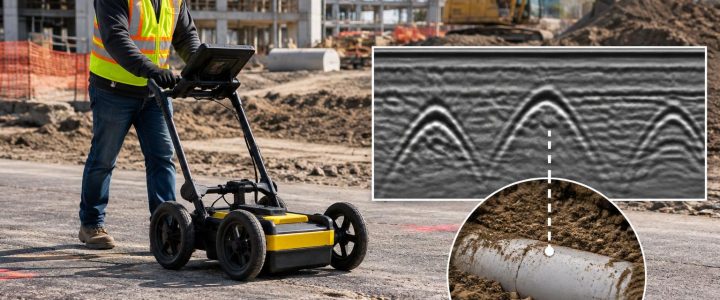
For projects involving concrete cutting, subsurface work, or unknown conditions around existing infrastructure, Visionary Subsurface Solutions’ private utility locating services can help support informed planning before intrusive work begins. Contact Visionary Subsurface Solutions to discuss your project and the field information that may help your team plan work more safely.
This article provides general safety information, not legal advice. Apply site-specific conditions, applicable OSHA and other requirements, employer policies, equipment manufacturer instructions, and the judgment of qualified safety professionals.