A job hazard analysis (JHA), sometimes called a job safety analysis (JSA) or activity hazard analysis (AHA), is a structured way to look at a task before work begins. The crew breaks the work into steps, identifies what could cause harm at each step, and agrees on controls before people, equipment, and materials are in motion.
For construction teams, a useful JHA is not paperwork completed in the trailer and filed away. It is a short, task-specific planning tool that helps a foreman, operator, and crew recognize changing conditions and make safer choices in the field. It is especially valuable when work involves excavation, mobile equipment, elevated work, energized systems, lifting, changing site access, or multiple trades working in the same area.
Good pre-task planning will not remove every construction hazard. It can, however, expose gaps before they become incidents: a delivery route that crosses a pedestrian path, an excavation edge too close to equipment, an unprotected floor opening, an incomplete utility markout, or a task that is outside the crew’s training or equipment limits.
What a construction JHA should accomplish
A JHA should answer three practical questions:
- What are we doing, step by step?
- What could go wrong during each step?
- What controls will be in place before the work starts?
The goal is not to predict every possible event. The goal is to identify the hazards that are reasonably foreseeable for the work, the site, the people involved, and the conditions expected that day.
OSHA’s construction standards require employers to provide appropriate personal protective equipment when hazards are present or likely to be present. A JHA is one practical method for identifying those hazards, but PPE should not be the only answer. OSHA and NIOSH both emphasize controlling hazards as close to their source as possible rather than relying only on worker behavior or protective gear.
For example, if a crew is exposed to moving dump trucks, a high-visibility vest is helpful but does not prevent a vehicle from entering a work area. A better plan may include a designated haul route, physical separation, controlled backing areas, a spotter when needed, and clear radio or hand-signal procedures.
Before You Start: a pre-task planning checklist
Use this short checklist before beginning a new activity, changing work areas, or restarting after conditions have changed.
- Confirm the day’s scope, sequence, and expected production activities.
- Walk the work area instead of relying only on plans or yesterday’s conditions.
- Identify who will be in the area, including other trades, visitors, delivery drivers, and the public.
- Check the condition and limits of equipment, tools, rigging, guards, alarms, and required safety devices.
- Review weather, lighting, ground conditions, visibility, and site access.
- Discuss energy sources: electrical, hydraulic, pneumatic, mechanical, chemical, gravity, and stored energy.
- Confirm the crew has the required training, authorization, and supervision for the task.
- Identify emergency access, first-aid resources, communication methods, and the process for stopping work.
- Confirm that permits, utility coordination, traffic control, or other project-specific controls are in place when applicable.
If the answers change during the shift, stop and update the plan. A JHA prepared for dry, open ground may no longer fit after rain, a delivery arrives, a new subcontractor enters the area, or excavation advances into a congested zone.
How to build a useful JHA in the field
1. Define the task clearly
Start with a specific activity, not a vague description. “Install storm pipe” is too broad. “Unload pipe from trailer, stage it, excavate the connection area, set pipe, and backfill” gives the crew workable steps.
A task should be narrow enough that the hazards and controls can be discussed in a few minutes. If the work includes several different operations, create separate sections or separate JHAs. The hazards involved in unloading pipe are not the same as those involved in entering an excavation or compacting backfill.
2. Break the work into basic steps
List the normal sequence. Keep it simple and use the words workers use in the field. Typical steps might include:
- Set up the work zone and inspect access.
- Deliver and stage materials.
- Position equipment.
- Perform the main work activity.
- Inspect the completed work.
- Clean up and secure the area.
Do not overlook setup and cleanup. Many injuries occur while crews are walking around equipment, handling materials, removing temporary controls, or rushing to finish at the end of a shift.
3. Identify hazards for each step
Ask what can injure someone, damage property, or create an uncontrolled release of energy. Look beyond the obvious hazard directly in front of the crew.
Common construction jobsite hazards to discuss include:
- Struck-by hazards from vehicles, equipment, suspended loads, falling objects, or moving materials.
- Caught-between hazards at pinch points, rotating parts, unstable loads, walls, and equipment swing areas.
- Falls from elevations, ladders, openings, uneven ground, or slippery surfaces.
- Electrical hazards from temporary power, damaged cords, underground utilities, overhead lines, or energized equipment.
- Excavation hazards such as cave-ins, water accumulation, falling materials, unsafe access, and equipment near edges.
- Exposure hazards from silica, welding fumes, chemicals, noise, heat, cold, or poor air quality.
- Ergonomic hazards from awkward lifts, repetitive work, poor material staging, and hand-tool use.
- Work-interface hazards created when separate crews occupy the same space or work in sequence.
A field walk is often more valuable than a generic checklist. Look for actual travel paths, grade changes, blind corners, overhead obstructions, soft ground, incomplete barricades, and new conditions created by other work.
4. Choose controls in the right order
When possible, use the hierarchy of controls. This means first looking for ways to remove or reduce the hazard through planning, design, isolation, or equipment changes before relying on procedures or PPE.
- Eliminate: Remove the hazard or avoid the work method. For example, relocate stored material away from an excavation edge.
- Substitute: Use a less hazardous material, method, or piece of equipment when it is suitable for the job.
- Engineering controls: Use physical measures such as machine guarding, trench protective systems, barriers, dust collection, guardrails, or equipment cameras.
- Administrative controls: Establish work sequencing, exclusion zones, spotter procedures, inspections, training, scheduling, and communication rules.
- PPE: Select and use PPE appropriate to the remaining risk, such as eye protection, hearing protection, gloves, respiratory protection, or fall-arrest equipment.
Many tasks need several layers of control. For example, a cutting operation may need wet cutting or local dust collection, restricted access to the cutting area, a trained operator, equipment inspection, and suitable respiratory protection when required by the exposure-control plan and applicable requirements.
5. Assign ownership and verify the controls
Every control needs an owner. “Use a spotter” is incomplete unless the team identifies who will spot, where that person will stand, how communication will work, and when the operator must stop.
Before work starts, supervisors should verify that needed controls are actually available and functioning. A plan that calls for barricades, a lifting device, utility information, or a trained operator is not ready if those resources are absent.
Questions supervisors should ask during the JHA discussion
A short conversation can uncover issues that a form misses. Consider asking:
- What is different about this task, location, crew, or equipment today?
- Where could someone be struck, pinned, fall, or contact an energy source?
- Who else could enter this area while we work?
- What is our equipment and pedestrian separation plan?
- What condition would make us stop work and reassess?
- What does the crew do if the planned method is not working?
- Who has authority to stop the activity?
Workers should be encouraged to raise concerns early. Stop-work authority is most effective when crews know they will be supported for identifying a real hazard, even when the concern leads to a brief delay or a change in plan.
Common JHA mistakes that reduce its value
Using generic language
Statements such as “be careful,” “wear PPE,” and “watch your surroundings” are not controls by themselves. Replace them with specific actions: “Install rigid barriers along the equipment swing area,” “keep pedestrians outside the marked exclusion zone,” or “inspect the sling and verify capacity before the lift.”
Completing the form after work begins
Once equipment is running and production pressure increases, it is harder to pause and make thoughtful decisions. Plan before the crew mobilizes, then revisit the JHA as conditions change.
Leaving out affected workers
The supervisor may understand the plan, but the workers performing the task often see practical issues first. Include operators, laborers, trade partners, and others affected by the activity in the discussion.
Failing to coordinate between trades
Construction hazards frequently develop at the interface between activities. A crew may have a safe plan for its own task but create a hazard for another crew working below, beside, or behind it. Daily coordination should address shared access, overhead work, material staging, equipment routes, lockout points, and changing work zones.
When underground conditions belong in the JHA
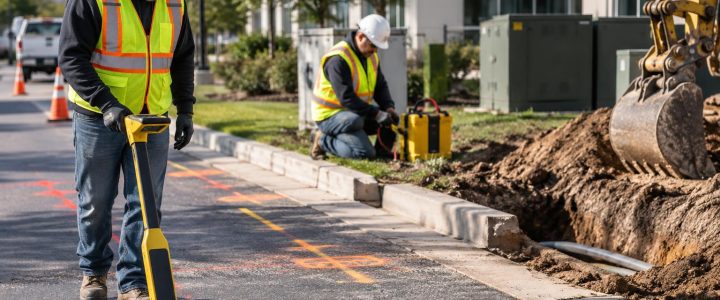
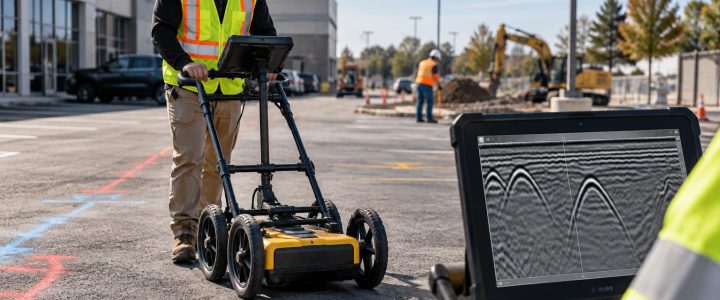
Excavation, drilling, pavement removal, pile work, and installation of signs or foundations can introduce underground hazards. Available records and public utility markings may not show every privately owned line or accurately define a utility’s horizontal or vertical position. Treat unknown subsurface conditions as a planning issue, not an assumption to manage with caution alone.
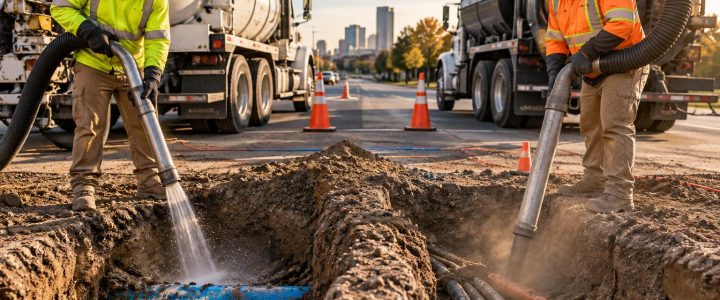
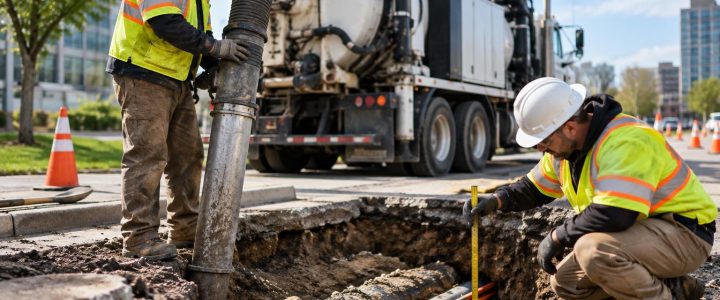
Before ground disturbance, the project team should establish the required notification, utility coordination, marking, verification, and safe-dig process for the location. Where conditions are complex or utility conflicts could affect the planned work, professional Subsurface Utility Engineering and QL-B investigation can help teams develop better information for design and construction planning. When physical verification is needed, properly planned vacuum excavation can expose a utility with less disturbance than mechanical excavation.
Do not treat marks, drawings, or electronic detection results as permission to excavate without the site-specific precautions required by the project and applicable rules.
A simple JHA example: unloading and staging pipe
Consider a crew unloading concrete or plastic pipe from a delivery truck. A useful JHA may identify these hazards:
- Unstable ground or inadequate room for the truck and lifting equipment.
- Workers entering the line of fire near suspended or rolling pipe.
- Rigging damage, incorrect capacity, or improper attachment.
- Equipment swing conflicts with traffic or pedestrians.
- Pipe rolling after it is placed on the ground.
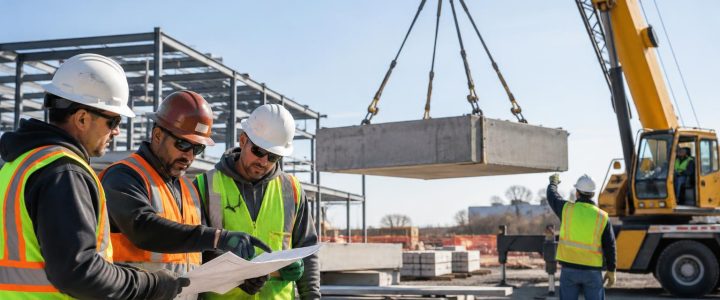
Controls may include selecting a level staging area, establishing an exclusion zone, using inspected and correctly rated rigging, assigning a qualified signal person when needed, keeping workers clear of suspended loads, using chocks or stable dunnage, and confirming that equipment capacity and setup match the planned lift. The exact plan depends on the pipe, equipment, ground, manufacturer instructions, and site conditions.
Make the JHA a living part of construction safety
The best JHAs are brief enough to use and specific enough to matter. They are discussed at the point of work, updated when conditions change, and supported by supervisors who act on what the crew identifies.
For additional guidance, review OSHA’s hazard identification resources and NIOSH’s hierarchy of controls. Site-specific regulations, owner requirements, employer policies, equipment instructions, and competent safety professionals may require additional measures.
When a project involves uncertain underground conditions, utility conflicts, or a need for physical utility verification, contact Visionary Subsurface Solutions to discuss the investigation approach that fits your project.