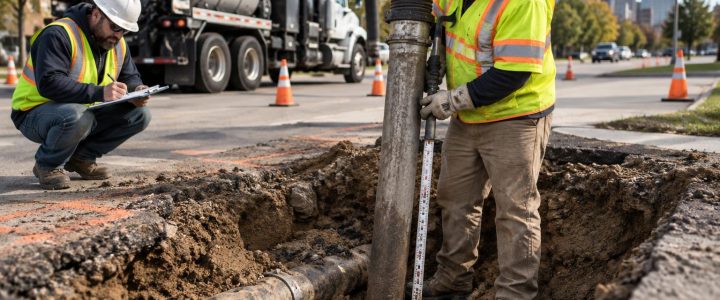
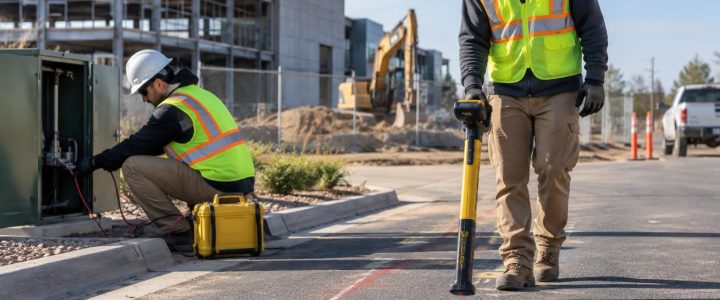
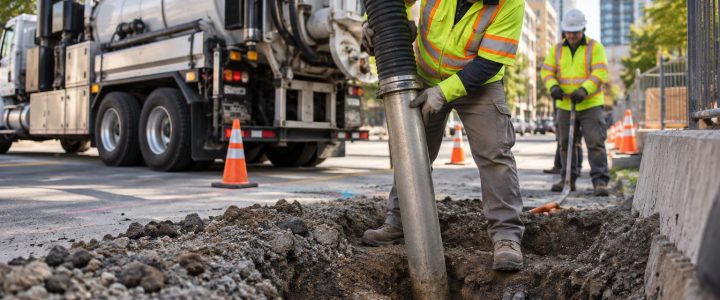
Confined-space incidents can develop quickly and leave little room for recovery. A worker may enter a manhole, vault, tank, pit, or similar space for a task that seems routine, then encounter low oxygen, toxic gas, flooding, an engulfment hazard, or a difficult exit. Construction confined space safety starts before anyone removes a cover, climbs a ladder, or crosses the opening.
The practical goal is simple: determine whether entry is necessary, identify the hazards, establish controls, and make sure the entry team can communicate and respond if conditions change. A permit, meter, ventilation fan, or harness is not a substitute for a complete plan.
For construction work, OSHA’s confined-spaces standard is found in Subpart AA of 29 CFR 1926. OSHA and NIOSH both emphasize that confined spaces may contain atmospheric, engulfment, mechanical, and access-related hazards that require evaluation before entry. Requirements and employer procedures can vary by site and task, so the competent safety professional should apply the applicable rules and the project’s written program.
What makes a space a confined space?
A confined space is not simply a small or underground area. Under OSHA’s construction definition, it is a space that is large enough for a worker to enter and perform work, has limited or restricted means of entry or exit, and is not designed for continuous occupancy.
Examples on construction sites can include:
- Storm, sanitary, and utility manholes
- Electrical or communications vaults
- Wet wells, valve vaults, and lift stations
- Underground tanks and pits
- Process vessels, boilers, and large pipe sections
- Excavations with restricted access and conditions that meet the definition
Some confined spaces are also permit-required confined spaces. OSHA identifies permit-space conditions such as a potentially hazardous atmosphere, a material that could engulf an entrant, inwardly converging walls or a floor that slopes downward into a smaller area, or another recognized serious safety or health hazard.
Do not assume that an open manhole is safe because the cover has been off for a while, or that a newly built vault is safe because it has never been in service. Conditions can change with weather, nearby work, connected piping, chemicals, sewer gases, generator exhaust, welding fumes, water flow, or product releases from another area.
Why confined-space incidents happen
Many incidents begin with a reasonable but unsafe assumption: “It will only take a minute.” Short-duration tasks such as checking a valve, measuring an invert, clearing debris, or retrieving a dropped tool can still expose workers to a life-threatening hazard.
Common breakdowns include:
- Entering before the space has been evaluated and classified.
- Testing the air only at the opening rather than throughout the space.
- Using a gas monitor that is not suitable, charged, bump-tested, calibrated, or understood by the user.
- Failing to isolate lines, equipment, traffic, electrical sources, or flowing materials connected to the space.
- Starting hot work, cleaning, coating, or chemical work without reassessing the atmosphere.
- Leaving the attendant with other duties that pull attention away from the entry.
- Attempting an unplanned rescue without the equipment, training, or backup needed for safe retrieval.
A second entrant is often at risk when they enter to help a collapsed coworker. That is why the rescue plan must be real, site-specific, and understood before entry begins.
Before You Start: questions for the entry team
Before beginning the task, the entry supervisor, competent person, and crew should pause long enough to answer the questions below. This discussion should be part of the pre-task plan, not paperwork completed after the work has started.
- Can the work be done without entry? Consider cameras, remote tools, extended-handled tools, cleaning from outside the space, or other methods that remove workers from the hazard.
- What is connected to the space? Identify pipes, ducts, drains, electrical equipment, process lines, pumps, conveyors, nearby traffic, and other systems that could introduce energy, liquid, gas, or materials.
- What can change during the work? Consider rain, pumping operations, utility work, truck exhaust, adjacent concrete work, chemical use, hot work, and operations elsewhere on the property.
- Who has each role? Clearly designate the entry supervisor, authorized entrants, attendant, and rescue resources required by the applicable entry program.
- How will workers communicate? Agree on voice, radio, visual, or other signals. Confirm that the method works at the actual work location.
- How will a worker be removed? Plan retrieval and emergency response before entry. Do not rely on improvisation after an incident occurs.
Control the hazard before relying on PPE
The strongest controls remove the exposure or physically prevent it. Personal protective equipment remains important, but PPE should not be the first or only control for a confined-space hazard.
1. Eliminate entry where feasible
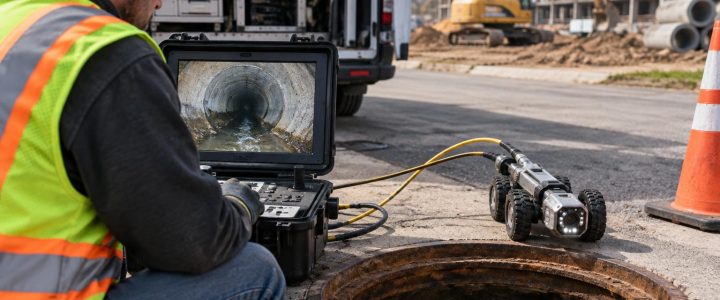
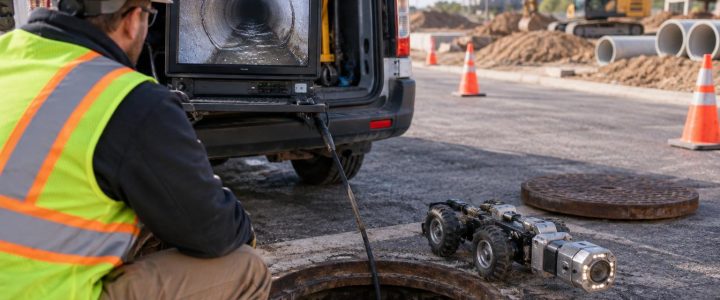
Remote inspection and remote cleaning methods may reduce the need for entry. For example, a properly planned video pipe inspection can help assess accessible pipe conditions from an entry point rather than sending a worker into a connected structure. This does not eliminate every hazard or replace a site evaluation, but it can help teams choose a safer work method.
2. Isolate energy and hazardous materials
Before entry, isolate hazards that can enter or develop in the space. Depending on the task, this may include blanking or disconnecting lines, closing and securing valves, de-energizing and locking out equipment, blocking moving components, controlling upstream flow, and protecting the opening from vehicle traffic and falling objects.
Isolation must be verified, not assumed. A closed valve alone may not provide adequate protection where leakage, bypasses, cross-connections, or valve failure are possible. Follow the site-specific energy-control procedure and manufacturer instructions.
3. Ventilate when the hazard assessment calls for it
Mechanical ventilation can help control atmospheric hazards, but it must be selected and placed for the actual space. Air supplied at the opening may not reach low points, dead legs, chambers, or the worker’s breathing zone. Ventilation equipment also must not introduce contaminants, such as engine exhaust, into the space.
Ventilation should be established before entry when required by the entry plan and maintained as conditions demand. If readings change, ventilation fails, or an alarm activates, entrants should exit as directed by the permit and entry procedure.
4. Test and monitor the atmosphere correctly
Atmospheric testing is a critical control, not a box to check. OSHA requires evaluation of atmospheric conditions in permit spaces using properly calibrated direct-reading instruments before entry, as applicable to the hazards identified. Follow the equipment manufacturer’s instructions and the employer’s program for functional checks, calibration, sampling methods, alarm settings, and monitoring frequency.
In many spaces, the sequence of testing matters. Test oxygen first because it affects both worker health and combustible-gas readings. Then test for flammable gases or vapors and for expected toxic contaminants. Sample at multiple elevations when conditions could layer, because some gases rise while others may collect in low areas.
Workers should know what their monitor measures and what it does not measure. A standard four-gas meter may not detect every solvent, refrigerant, or process chemical that could be present. Review safety data sheets, process information, connected systems, and the work scope when selecting monitoring equipment.
Set clear roles: entrant, attendant, and entry supervisor
Confined-space work fails when roles are vague. A worker should not be expected to enter, watch the opening, direct traffic, and coordinate an emergency at the same time.
Authorized entrants
Entrants need to understand the hazards, required equipment, communication methods, evacuation signals, and when to leave. They should exit immediately when they recognize a warning sign or prohibited condition, an alarm sounds, the attendant orders evacuation, or they cannot perform the task safely.
Attendants
The attendant’s focus is the entry. They monitor entrants and conditions outside the space, maintain communication, prevent unauthorized entry, and initiate the planned response when needed. Assigning unrelated duties to the attendant can create a dangerous gap in coverage.
Entry supervisors
The entry supervisor verifies that required measures are in place before authorizing entry and ends or suspends the entry when conditions no longer support safe work. On a busy project, that includes coordinating with other contractors whose work could affect the space.
A practical confined-space entry checklist
Use this field checklist as a discussion guide. Your employer’s program and the permit requirements for the space may require additional steps.
- Work scope reviewed and entry avoided where practical.
- Space evaluated, classified, and marked or secured as needed.
- Permit completed when the space and work require one.
- Connected energy, flow, equipment, and process hazards identified and isolated.
- Traffic, overhead, falling-object, and opening hazards controlled.
- Atmospheric meter selected, checked, and used by a trained worker.
- Pre-entry readings documented where required; monitoring plan established.
- Ventilation installed and verified where needed.
- Entrant, attendant, entry supervisor, and rescue roles assigned.
- Communication method tested.
- Retrieval equipment and rescue arrangements verified for the entry.
- Adjacent crews informed of work that could affect the space.
- Stop-work and evacuation triggers reviewed with the team.
Common mistakes to avoid
- Do not treat a permit as the safety plan. The permit records the plan; it does not create isolation, ventilation, or rescue capability by itself.
- Do not defeat or ignore a monitor alarm. Stop, evacuate as required, and determine why the condition changed.
- Do not use gasoline-powered equipment near an intake or opening. Carbon monoxide and exhaust can create a dangerous atmosphere.
- Do not allow casual “just a quick look” entries. The same evaluation process applies even when the task is brief.
- Do not send an untrained coworker inside for a rescue. Activate the planned rescue response and use non-entry retrieval only when it can be done safely and as planned.
FAQ: construction confined space safety
Is every manhole a permit-required confined space?
No. A manhole often meets the definition of a confined space, but whether it is permit-required depends on the hazards present or potentially present. Evaluate the specific structure, connected systems, atmosphere, and planned work rather than relying on the name of the space.
Can a worker enter if the gas monitor shows normal readings?
Normal readings are important, but they are only one part of the evaluation. The team still needs to control engulfment, mechanical, electrical, access, traffic, heat, and changing-condition hazards. The meter also must be appropriate for the contaminants that may be present.
Does a harness make confined-space entry safe?
No. A full-body harness and retrieval system may be part of a planned entry, but they do not control atmospheric or engulfment hazards. Equipment must be selected, anchored, used, and inspected according to the entry plan and manufacturer requirements.
Make entry planning part of normal jobsite safety
Strong confined-space safety is built through deliberate planning, clear roles, and the willingness to stop when conditions change. Review the space before each entry, coordinate with adjacent work, and make sure the crew understands that no task is too small to justify bypassing the plan.
For projects involving utility structures, manholes, or underground pipe systems, Visionary Subsurface Solutions can help teams gather useful information with methods such as 3D manhole LiDAR scanning where appropriate. Contact Visionary Subsurface Solutions to discuss your project, site conditions, and practical ways to reduce uncertainty before work begins.
Safety decisions should always be based on site-specific conditions, applicable OSHA and local requirements, employer procedures, equipment manufacturer instructions, and the judgment of qualified safety professionals. For additional regulatory guidance, consult OSHA’s Construction Confined Spaces standard and NIOSH resources on working in confined spaces.