
If you’ve ever planned a construction project, you’ve likely heard the familiar advice: “Call Virginia 811 before you dig.” It’s simple, widely promoted, and absolutely essential—but it’s also widely misunderstood. Many contractors, project managers, and property owners assume that one call guarantees a fully marked site with every underground utility accounted for. That assumption can be costly. The reality is that Virginia 811 is a critical first step, but it is not a comprehensive solution. Beneath your project site lies a complex network of utilities owned by different parties, installed over decades, and often undocumented. Understanding the limitations of 811 is the difference between a smooth project and a major utility strike.
The Illusion of Complete Coverage
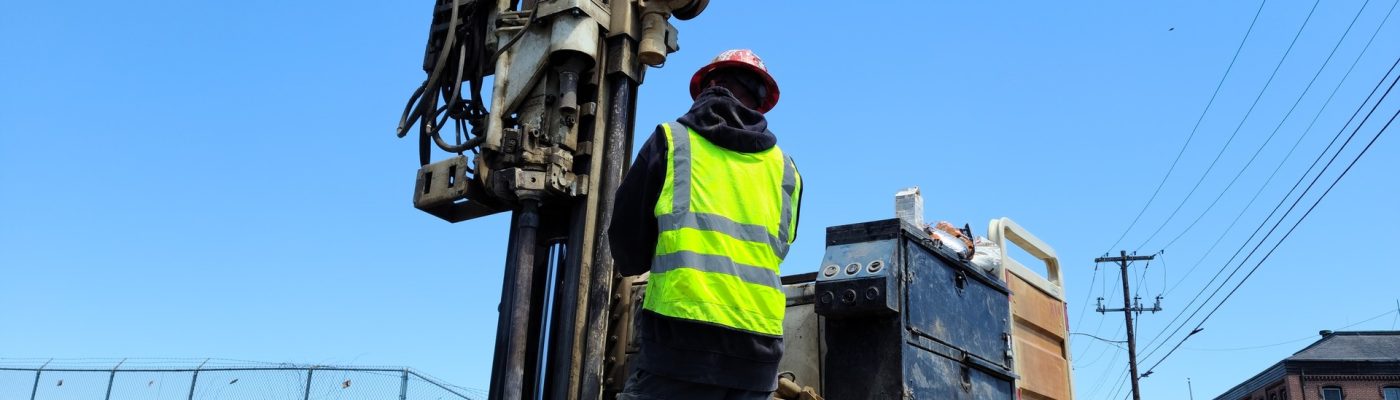
Calling 811 feels like checking a box that says “utilities handled,” but that confidence can be misleading. The system is designed to notify utility companies of planned excavation so they can mark the approximate location of the lines they own and maintain. That last part is where the gap begins. Utility companies are only responsible for their infrastructure, and they will only mark what falls within that responsibility. Anything outside of their ownership simply isn’t their concern, and it won’t be marked.
On a typical commercial project site, there can be a mix of public and private utilities interwoven beneath the surface. Public utilities might include electric distribution lines, municipal water mains, or gas lines owned by major providers. But private utilities—such as service lines running from the meter into a building, privately installed electric feeds, site lighting circuits, irrigation systems, or abandoned infrastructure—are not included in the 811 scope. These private lines are often the very utilities most likely to be struck because they are undocumented, aging, or installed without consistent standards. The result is a dangerous blind spot where contractors believe they have full visibility, but in reality, large portions of the underground environment remain unmarked and unknown.
Utility Ownership Defines Responsibility—And Limits It

At the heart of the issue is a simple but critical principle: Virginia utility companies only mark what they own. Ownership defines responsibility, and responsibility defines what gets located. If a utility company does not own a line, they are not obligated to locate it, mark it, or even acknowledge its existence. This creates a fragmented system where multiple entities may have infrastructure on the same site, but no single party is responsible for identifying everything.
Consider a typical Virginian commercial property with multiple phases of development over several decades. The original utilities may have been installed by one contractor, while expansions added new lines under different ownership. Tenants may have installed their own private services, and renovations may have rerouted or abandoned existing lines without proper documentation. None of these privately owned or legacy systems fall under the responsibility of the utility companies responding to an 811 ticket. Even within a single category like electrical infrastructure, there can be a clear divide between what the utility company owns up to the meter and what the property owner owns beyond that point. That dividing line is where 811 coverage ends, and where risk begins.
This limitation is not a flaw in the system—it’s a reflection of how utility ownership works. Utility companies cannot assume liability for infrastructure they do not control, and they cannot accurately mark lines they did not install or maintain. For project stakeholders, this means that relying solely on 811 is equivalent to working with partial information. It’s a starting point, not a complete picture.
The Subcontract Pitfall No One Talks About

Another common misconception is that the personnel marking utilities after a Virginia 811 call are employees of the utility companies themselves. In many cases, this is not true. Utility companies frequently subcontract their locating responsibilities to third-party firms that specialize in utility marking services. These contractors are tasked with responding to 811 tickets and marking the utilities on behalf of the companies they represent.
While third-party locators play an important role in keeping projects moving, their scope is still limited to the assets owned by the utility companies that hired them. They work from available records, mapping data, and detectable signals using standard locating equipment. If a line is not documented, not owned by their client, or not detectable using conventional methods, it will not be marked. This is particularly problematic for non-metallic utilities like plastic water lines or PVC conduits, which often cannot be located using traditional electromagnetic methods without additional techniques.
The reliance on subcontracted locators also introduces variability. Different technicians may have different levels of experience, and the quality of markings can depend on site conditions, available records, and time constraints. While many locators are highly skilled, the process is still inherently limited by the information and authority they have. They are not performing a comprehensive subsurface investigation; they are fulfilling a specific obligation to mark certain utilities within a defined scope. Expecting them to identify every underground asset on a complex project site is unrealistic and can lead to a false sense of security.
No Ownership Means No Liability
![Parking_lot_stormwater_detention_system[1]](https://visionaryss.com/wp-content/uploads/elementor/thumbs/Parking_lot_stormwater_detention_system1-scaled-qzzxyjcgq9qfdbbomacx9t88xqilp5g7oulp8cxjmo.jpg "Parking_lot_stormwater_detention_system[1]")
One of the most important—and often overlooked—realities of the 811 system is how liability is handled. Utility companies are only liable for the accuracy of the markings related to the infrastructure they own. If a contractor damages a line that was not marked because it is privately owned or outside the utility company’s responsibility, the liability typically falls on the contractor or project owner.
This is where misunderstandings can quickly turn into costly consequences. Many assume that calling 811 provides a level of legal protection against utility strikes, but that protection is limited. It demonstrates that you followed due process by notifying utility companies, but it does not guarantee that all utilities have been identified. If an unmarked private line is struck, the fact that an 811 ticket was submitted does not shift responsibility away from the party performing the excavation.
Utility companies reinforce this boundary by clearly stating that they will not take responsibility for lines they do not own. This is both a legal and practical necessity. They cannot verify the existence, location, or condition of infrastructure installed by others, and they cannot be held accountable for something outside their control. For contractors, this means that risk management extends far beyond making the call to 811. It requires a deeper understanding of the site and a proactive approach to identifying all potential underground hazards.
The Hidden World of Private and Undocumented Utilities

What makes the limitations of Virginia 811 particularly challenging is the sheer volume of private and undocumented utilities that exist on many project sites. Over time, properties evolve. Buildings are expanded, systems are upgraded, and temporary solutions become permanent. In many cases, records are incomplete or nonexistent, especially for older installations. This creates a subsurface environment that is far more complex than what is reflected in official utility maps.
Private utilities can include everything from electric lines feeding detached structures to communication cables installed by previous tenants. Irrigation systems, stormwater connections, and abandoned lines can all remain buried long after their original purpose has been forgotten. These utilities often lack tracer wires or other features that would make them easily detectable, further complicating the locating process.
Because these lines are not part of the Virginia public utility network, they fall entirely outside the 811 system. They won’t be marked, and in many cases, their presence won’t even be suspected until they are exposed—or damaged. This is why projects that rely solely on 811 markings are inherently vulnerable. The absence of markings does not mean the absence of utilities; it simply means that no responsible party has identified them within the scope of the 811 process.
Why 811 Is Just the Beginning, Not the Solution
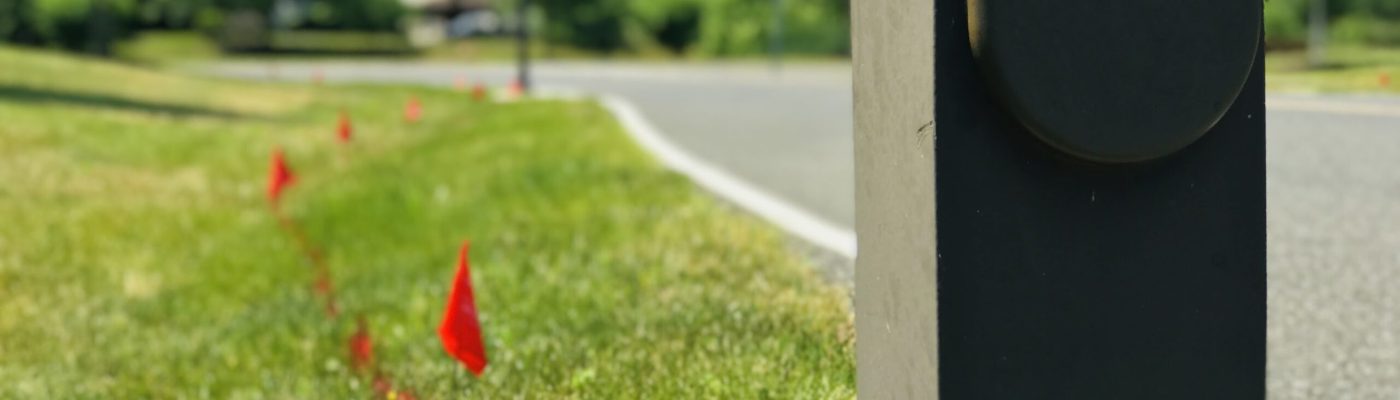
None of this diminishes the importance of calling Virginia 811. It remains a critical step in preventing damage to public utilities and ensuring compliance with regulations. However, it must be understood for what it is: a notification system, not a comprehensive subsurface investigation. It alerts utility companies to your intent to dig and prompts them to mark their assets, but it does not account for the full complexity of underground infrastructure on most project sites.
For construction professionals, this distinction is essential. Treating Virginia 811 as a complete solution can lead to gaps in planning, increased risk, and unexpected costs. A more effective approach recognizes 811 as one component of a broader strategy that includes additional investigation methods when necessary. This might involve advanced locating techniques, detailed records research, or physical verification through methods like test holes. The goal is to move from a partial understanding of the subsurface environment to a more complete and reliable picture.
Know the Limits Before You Break Ground

Virginia 811 plays a vital role in protecting critical infrastructure and promoting safe excavation practices, but it cannot—and was never designed to—mark every utility on a project site. The system is bound by ownership, limited by scope, and dependent on the information available to the utility companies and their subcontracted locators. Private utilities, undocumented lines, and non-detectable infrastructure remain outside its reach, creating potential risks for anyone relying on it as a standalone solution.
Understanding these limitations is not just a matter of technical knowledge; it’s a matter of protecting your project, your budget, and your reputation. The safest and most successful projects are those that recognize what 811 can do—and what it cannot. By approaching subsurface risk with a more comprehensive mindset, you can avoid costly surprises and ensure that what lies beneath your site doesn’t derail what you’re building above it.


