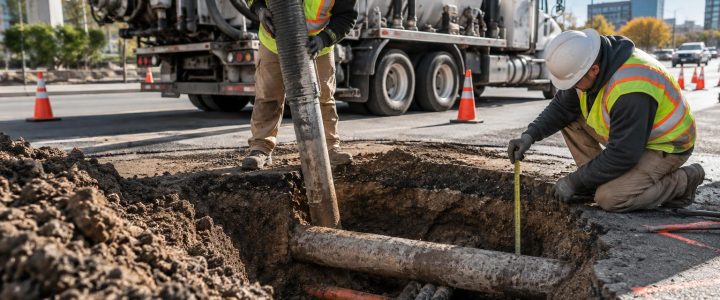
Before lining, spot repairs, pipe bursting, replacement, or other sewer rehabilitation work begins, the project team needs a dependable picture of the existing system. A CCTV inspection before sewer rehabilitation can document visible defects, identify accessible connections, show where sediment or roots are limiting flow, and help separate pipes that may be candidates for rehabilitation from pipes that need a different solution.
For contractors, engineers, municipalities, and facility managers, the value is not simply getting pipe video. The goal is to collect usable field evidence for scoping, design, bidding, sequencing, and quality control. A professional video pipe inspection can reduce assumptions about an aging storm sewer or sanitary sewer system, but it should be used alongside records review, locating, cleaning, survey work, testing, and engineering evaluation when the project requires them.
Why inspect a pipe before rehabilitation?
Rehabilitation methods are selected around real field conditions. A pipe that appears to be a straightforward lining candidate may have heavy deposits, significant offset joints, multiple laterals, active infiltration, an inaccessible reach, or a localized collapse. Those conditions can affect the method, preparation needs, cost, schedule, and feasibility of the proposed work.
Pre-rehabilitation CCTV sewer inspection gives the team an opportunity to identify visible concerns before a contractor mobilizes rehabilitation equipment or a design package is finalized. It can help answer practical questions such as:
- Which manholes, cleanouts, inlets, or other structures provide access?
- Is the pipe passable with available inspection equipment?
- Where are the visible cracks, fractures, holes, joint defects, or deformed sections?
- Are roots, grease, sediment, debris, or other obstructions affecting the usable pipe area?
- Are lateral connections or branch connections visible?
- Are there apparent active leaks, infiltration pathways, or signs of material entering or leaving the pipe?
- Where should cleaning, point repair, bypass planning, or further investigation be considered?
This information is useful for municipal sewer programs, commercial campuses, industrial facilities, redevelopment sites, and roadway or utility projects throughout Pennsylvania, New Jersey, Delaware, Maryland, New York, and the Washington, D.C. to New York City corridor.
What a CCTV pipe inspection can show
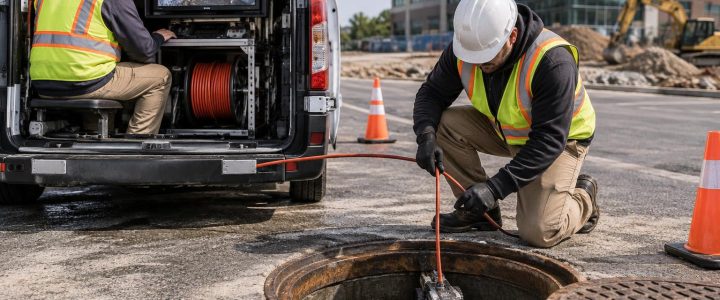
A robotic pipe inspection system typically moves a camera through an accessible pipe from a manhole, inlet, cleanout, or other available entry point. The operator records observations as the camera travels through the system. Depending on pipe size, access, configuration, and site conditions, the inspection may document the pipe interior, joints, connections, deposits, and visible defects.
Visible defects and deterioration
Video may show conditions that warrant closer review, including cracks, fractures, breaks, holes, displaced joints, open joints, missing wall sections, surface deterioration, deformation, and partial collapse. The footage can also show whether defects are isolated or appear repeatedly within a reach.
However, seeing a defect is not the same as determining its cause or structural significance. For example, a crack may be associated with installation damage, ground movement, loading, material aging, or another condition that cannot be confirmed from video alone. An engineer or qualified asset-management professional should determine how observed conditions affect rehabilitation design or remaining service life.
Obstructions and flow restrictions
A stormwater pipe inspection or sewer pipe inspection may reveal roots, sediment, debris, grease buildup, protruding service connections, or construction material. These observations can help teams plan cleaning and identify portions of the system that need maintenance before a rehabilitation method can proceed.
In newly constructed or recently modified systems, video can also reveal leftover grout, aggregate, timber, trash, or other construction debris. In older systems, accumulated sediment may indicate low-flow areas, flat grades, damaged sections, or upstream sources of material. Video alone does not establish the underlying cause, but it provides evidence for targeted follow-up.
Connections and pipe configuration
Camera footage may identify visible lateral connections, branch lines, junctions, transitions, and changes in pipe material or diameter. This is particularly useful where drawings are incomplete or where an existing system must remain active during construction.
Still, a camera does not automatically produce a precise surveyed route or elevation. A video inspection can help establish the apparent route of an accessible pipe between known structures and document identifiable features. If the project needs reliable horizontal coordinates, elevations, depths, or utility conflict data, it may require electronic sonde locating, surface survey, record research, test holes, or other subsurface investigation.
Pipe inspection, locating, and condition assessment are different tasks
These services often work together, but they answer different questions.
- Video pipe inspection looks inside an accessible pipe to document visible conditions, connections, and obstructions.
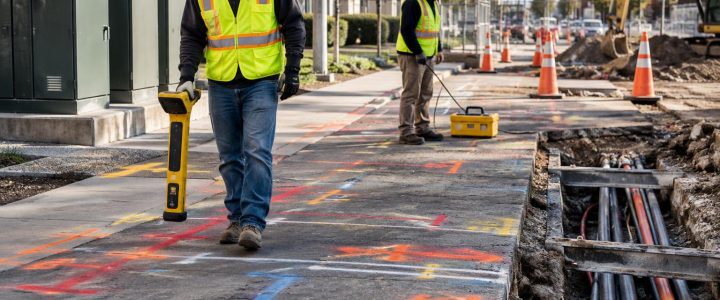
- Pipe locating helps estimate or establish the position of a pipe or a camera sonde from the surface. Results can be affected by access, depth, soil conditions, congestion, signal quality, and field setup.
- Condition assessment organizes observations into a consistent framework so an owner or engineer can prioritize maintenance, rehabilitation, or further investigation.
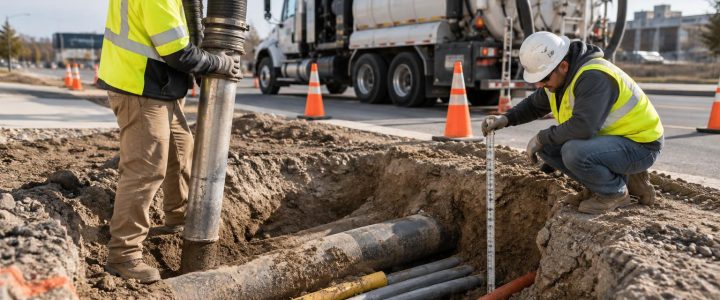
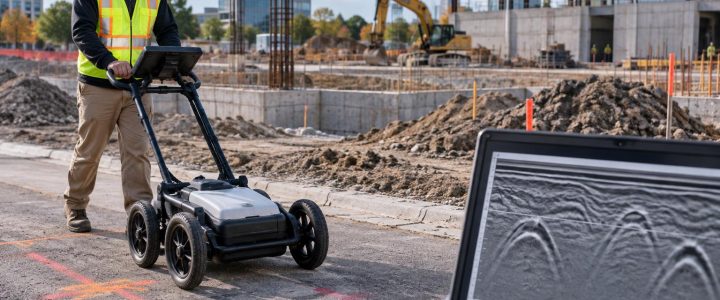
For a rehabilitation project with unknown alignments, surface conflicts, or uncertain tie-in points, it can be practical to combine video work with private utility locating. Where critical elevations, materials, or physical connections must be confirmed, carefully planned vacuum excavation and test holes may be appropriate. The right scope depends on the decisions the project team needs to make.
How standardized coding supports better rehabilitation decisions
For larger sewer and stormwater programs, standardized inspection coding can make the information more useful across many pipe segments. The National Association of Sewer Service Companies publishes the Pipeline Assessment Certification Program (PACP) for pipeline condition assessment and the Lateral Assessment Certification Program (LACP) for laterals. These frameworks provide consistent terminology and coding concepts for observed conditions.
Standardized coding can help owners compare similar observations, track recurring defect types, prioritize follow-up work, and import inspection data into asset-management workflows. It can also provide a clearer record for engineers developing rehabilitation packages.
Not every camera inspection is a PACP or LACP assessment. If a project requires NASSCO-based coding, specified deliverables, or a particular data format, those requirements should be defined in the scope before fieldwork begins. The project team should also confirm whether the owner requires a certified operator, particular software output, defect coding conventions, or a specific acceptance standard.
What to document before rehabilitation work begins
A pre-rehabilitation inspection is most useful when it is planned around the anticipated work. The following information commonly supports design and construction decisions:
- Access points and reach limits. Identify the structures used for entry, the direction of travel, and any point where the camera could not proceed.
- Pipe identification. Record known segment names, upstream and downstream structures, approximate pipe size, and visible material where it can be reasonably identified.
- Observed conditions. Document defect type, apparent location within the run, and severity descriptions consistent with the agreed inspection method.
- Connections. Note visible laterals, junctions, tie-ins, and service connections that may affect lining, bypassing, or repair work.
- Cleaning needs. Identify sediment, roots, grease, debris, or standing water that prevents a meaningful view or may interfere with rehabilitation.
- Flow and access constraints. Document active flow, surcharge, traffic limitations, restricted access, and other conditions that may affect field operations.
- Video and reporting files. Maintain clear links between the footage, pipe segment, observations, and any locating or survey information collected separately.
When cleaning and preparation should come first
Camera inspection is only as useful as the visible interior of the pipe. Heavy sediment, grease, roots, debris, turbid water, or a blockage can limit what the operator can see and how far the equipment can travel. A pipe that is fully obstructed, severely collapsed, or inaccessible may not be inspectable through conventional CCTV methods.
Cleaning before inspection is often appropriate when the project needs a reliable condition baseline, defect coding, or a detailed rehabilitation scope. It is also useful to distinguish an obstruction that can be removed through maintenance from a condition that may require repair or excavation. Cleaning should be coordinated with the owner and project team, especially where material handling, bypassing, discharge control, or maintenance-of-flow planning is necessary.
A practical pre-rehabilitation inspection workflow
A focused workflow helps avoid collecting video that cannot be tied back to the project decisions.
- Define the decision. Determine whether the inspection will support repair selection, bid documents, asset planning, construction verification, or an investigation of a known problem.
- Review available records. Gather utility maps, as-builts, maintenance records, prior videos, drainage plans, and structure information. Treat records as reference material, not final confirmation.
- Confirm access and field constraints. Identify entry structures, traffic control needs, access restrictions, active flows, and safety requirements.
- Clean where needed. Plan cleaning when deposits or obstructions would prevent a meaningful inspection.
- Perform and document the inspection. Capture clear video, segment information, observations, and field limitations.
- Locate or survey critical features separately. Use appropriate locating and survey methods when rehabilitation design depends on defensible positions or elevations.
- Review findings with the design and construction team. Use the evidence to identify segments for further study, point repair, cleaning, rehabilitation, replacement, or monitoring.
Common mistakes that create rehabilitation risk
Assuming every visible defect needs the same repair
Similar-looking defects can have different causes and consequences. A video observation should support further evaluation, not replace engineering judgment about structural capacity, soil conditions, hydraulic performance, or repair design.
Using old footage without confirming current conditions
Pipe conditions can change after heavy storms, cleaning, construction activity, root growth, or continued deterioration. Older video can be valuable background information, but an updated inspection may be needed before finalizing a rehabilitation scope.
Ignoring laterals and branch connections
Connections can affect lining plans, bypass requirements, reinstatement work, and operational continuity. Where laterals are important to the project, the inspection scope should clearly address how they will be identified and documented.
Treating camera footage as a survey
Video can support route understanding, but it does not by itself confirm precise depth, alignment, ownership, or surveyed coordinates. Bring in locating, survey, records review, or test-hole verification when those details drive design or excavation decisions.
FAQ: CCTV inspection before sewer rehabilitation
Can CCTV determine whether a pipe should be lined or replaced?
CCTV can document visible interior conditions that inform the decision. Selecting lining, spot repair, replacement, or another method also requires consideration of pipe geometry, access, soil and structural factors, hydraulic needs, connections, construction constraints, and owner requirements.
Can a sewer camera locate a pipe underground?
A camera system with a traceable transmitter may help a qualified operator locate an accessible pipe or a feature from the surface. Accuracy and completeness depend on field conditions. Surveying or additional investigation may be necessary where exact position or depth matters.
Does every rehabilitation project need PACP coding?
No. PACP-style coding is especially useful for programs that need consistent condition data across many assets. For a smaller, targeted repair, a well-documented video inspection and clear observations may be sufficient if that meets the owner’s and engineer’s needs.
What if the camera cannot get through the pipe?
The report should document the point and apparent reason for the limitation when observable. Cleaning, root cutting, debris removal, access improvements, a different inspection approach, or excavation may be considered depending on the condition and project goals.
Plan the inspection around the rehabilitation decision
A professional video pipe inspection provides the strongest value when it is connected to a clear construction or asset-management decision. Before rehabilitation, it can document existing pipe conditions, identify visible barriers to the proposed work, and show where further locating, cleaning, testing, or engineering review may be warranted.
Visionary Subsurface Solutions provides video pipe inspection for accessible stormwater, sanitary sewer, drainage, and other underground piping systems. Contact our team to discuss the inspection information your rehabilitation, maintenance, or construction project needs.