Struck-by hazards are a daily concern on active construction sites. A worker can be struck by a backing dump truck, a swinging excavator counterweight, a loader traveling through a laydown area, a falling load, or material released during handling. These events can happen quickly, particularly where work areas, vehicle routes, deliveries, and pedestrian access overlap.
OSHA includes struck-by hazards among construction’s Focus Four hazards, and the Center for Construction Research and Training also identifies struck-by incidents as a major source of serious construction injuries and fatalities. The practical goal is simple: keep people and moving equipment, vehicles, and suspended loads apart whenever possible.
This is not accomplished by telling workers to “be careful.” Effective control starts with site layout and work planning, then uses communication, trained personnel, and personal protective equipment to support that plan.
What are struck-by hazards on a construction site?
A struck-by incident occurs when a moving or falling object, vehicle, piece of equipment, or load hits a worker. It is different from a caught-between incident, where a person is crushed, pinched, or trapped between objects. In the field, however, the same poor conditions can contribute to both: limited space, poor visibility, unclear travel paths, rushed work, and unclear communication.
Common construction struck-by scenarios
- A worker enters the blind area behind a truck, loader, roller, or skid steer.
- An excavator swings into a laborer working inside its operating radius.
- A delivery truck arrives without a designated route, staging location, or unloading plan.
- A worker walks beneath a suspended load or inside the fall zone during a lift.
- Loose tools or materials fall from an elevated work area.
- Traffic passes too close to workers in a roadway, parking lot, or work zone.
- Workers and equipment share a narrow access road with no physical separation.
Equipment alarms, cameras, mirrors, high-visibility garments, and spotters can help. But they should not be the only barrier between workers and a serious hazard. Blind spots still exist, alarms may be masked by jobsite noise, and a spotter can lose sight of either the worker or the operator.
Start with separation, not warning devices
The most reliable way to reduce struck-by exposure is to eliminate unnecessary interaction between people and moving equipment. This follows the hierarchy of controls: first change the work area or work process, then support it with administrative controls and PPE.
Plan separate routes before activity begins
During preconstruction planning and at the start of each new phase, identify how workers, construction equipment, supplier vehicles, and the public will move through the site. The plan does not need to be complicated, but it needs to be visible, understood, and updated as site conditions change.
Where practical, establish:
- Dedicated pedestrian walkways from parking, trailers, gates, break areas, and work fronts.
- Separate equipment travel routes and turning areas.
- Clearly identified delivery entrances, check-in points, and unloading areas.
- One-way traffic patterns where two-way movement would create congestion.
- Physical barriers, fencing, cones, drums, or barricades that keep workers out of equipment paths.
- Controlled crossing points where pedestrians must cross a vehicle route.
- Equipment-free zones around office trailers, break areas, and commonly used access points.
Cones and caution tape can be useful visual cues, but they may not stop an equipment operator or pedestrian from crossing into a danger area. Use more substantial barriers when the risk calls for them, especially around active haul routes, swing areas, and public-facing work zones.
Designate exclusion zones around operating equipment
Every machine has a danger area. For an excavator, that may include the full swing radius, the bucket’s work area, and the travel path. For a loader or haul truck, it includes blind areas around the machine as well as the turning path. For a crane, it includes the area beneath suspended loads and other lift-specific exclusion zones.
The operator should know who is working nearby before moving the machine. Ground personnel should stay outside the designated zone unless their task requires them to enter and the operator has acknowledged them. If eye contact or positive communication cannot be established, workers should assume the operator does not know they are there.
Before You Start: struck-by hazard checklist
Supervisors, foremen, and crews can use these questions during a pre-task meeting or daily planning discussion:
- What equipment, trucks, deliveries, or lifting activities will occur today?
- Where will each machine travel, turn, stage, fuel, and park?
- Where will workers walk, stage materials, and perform ground-level tasks?
- Can pedestrians and equipment be physically separated?
- Which areas have restricted visibility, tight clearances, slopes, overhead obstructions, or poor lighting?
- Are there planned deliveries, concrete trucks, dumpsters, or subcontractor vehicles that need a route and staging area?
- Does a spotter need to be assigned for a specific task? What signals or communication method will be used?
- Has the crew identified the equipment swing radius and no-entry areas?
- What changes in weather, ground conditions, traffic, or work sequencing could change the plan?
- Does every new worker, visitor, and driver know the site access and pedestrian rules?
Repeat this review when the work area changes. A safe route in the morning may become unsafe after excavation begins, materials arrive, or multiple trades move into the same area.
Manage backing, blind spots, and deliveries
Backing is a high-risk movement because operators may have limited visibility behind and alongside their equipment. A reverse alarm, camera, or proximity system can improve awareness, but these devices do not remove the need for a controlled backing plan.
Use a spotter when the task requires one
A spotter should be used when visibility is restricted or when site conditions make backing difficult. The spotter’s job is to guide the operator and protect the travel path—not to perform another task at the same time.
For spotter-assisted movement:
- Assign one spotter with a clear role before the equipment moves.
- Agree on hand signals, radio protocol, or another communication method that both people understand.
- Keep the spotter where the operator can see them and outside the machine’s path.
- Require the operator to stop immediately if visual contact or communication is lost.
- Keep other workers out of the backing area; a spotter cannot safely manage uncontrolled foot traffic.
A common mistake is treating the spotter as a substitute for access control. It is not. The best approach is to keep nonessential people out of the backing zone altogether.
Control deliveries instead of fitting them into the work
Delivery drivers may be unfamiliar with the project, site rules, travel routes, and active hazards. A delivery management process should tell drivers where to enter, where to wait, who will direct them, and where unloading will occur.
Do not ask a driver to back through a crowded work area because materials are urgently needed. Pause, clear the area, establish a route, and assign direction. If the planned unloading area is no longer safe, move the delivery or revise the work sequence.
Protect workers around excavators and mobile equipment
Excavators, loaders, skid steers, dozers, rollers, and telehandlers create different hazards, but the basic controls are alike: define the work zone, restrict entry, and maintain communication.
Excavator work zones
Workers should not enter an excavator’s swing radius simply because the machine appears stationary. The operator may be preparing to swing, reposition, or dump material. Establish the boundary before digging begins, and keep ground personnel clear unless there is a necessary, coordinated task.
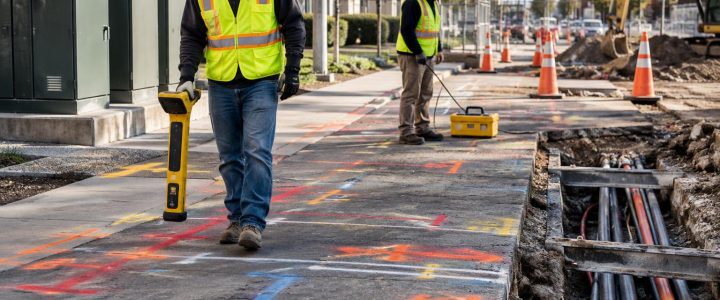
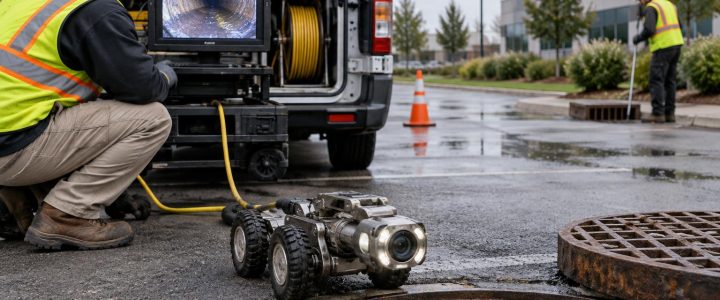
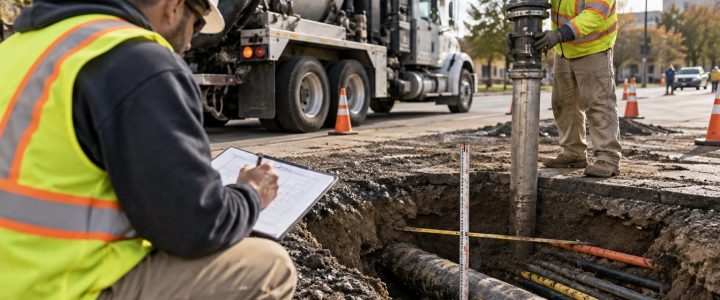
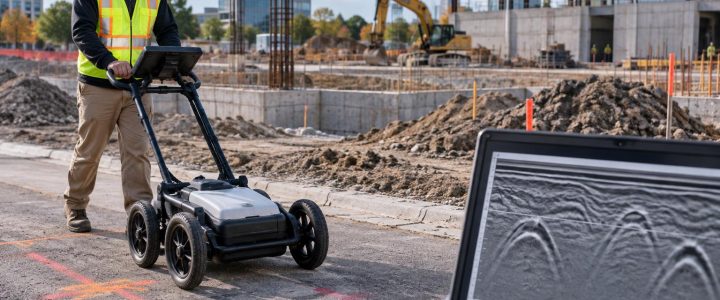
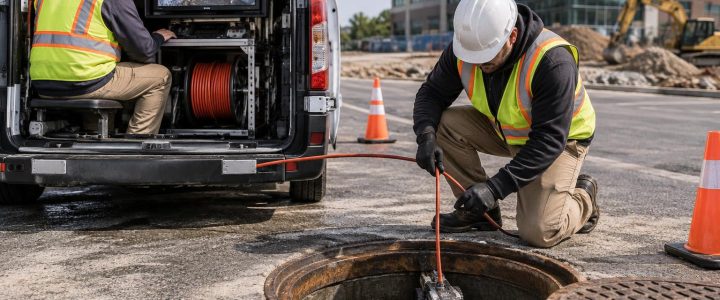
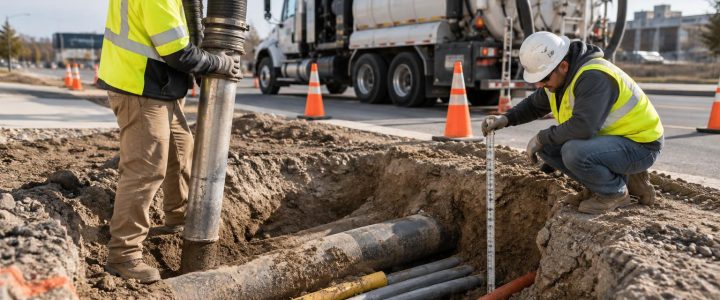
When excavation work occurs near existing underground facilities, the operator, spotter, and crew also need a shared understanding of marked areas, exposure limits, and the planned excavation method. Unknown or unverified utility locations can complicate equipment movements and increase risk. When conditions warrant, professional private utility locating and verification methods can help project teams make better decisions before excavation proceeds.
Traveling equipment
Equipment operators should travel at a speed appropriate for visibility, grade, surface conditions, congestion, and the manufacturer’s instructions. Workers should avoid walking beside moving equipment or attempting to “squeeze by” in a narrow corridor. If space is limited, stop the machine, establish communication, and allow one movement at a time.
Pay special attention at transitions: entering or leaving a site, moving around stockpiles, crossing ramps, approaching gates, and working near fuel stations or maintenance areas. These are places where normal travel patterns often break down.
Prevent struck-by incidents from falling or released objects
Not every struck-by hazard involves a vehicle. Tools, materials, rigging components, concrete forms, and loads can fall or shift without warning. The controls begin with planning the work area and securing materials.
Keep people out of the line of fire
Do not allow workers to stand beneath suspended loads. Establish and enforce a controlled area for lifting operations. Use qualified personnel, appropriate rigging, and the equipment manufacturer’s instructions. Before a lift, confirm that the load path does not pass over workers, occupied areas, or unnecessary site traffic whenever a safer route is available.
At elevated work areas, secure tools and materials where feasible. Maintain toe boards, debris containment, and controlled access as required by the work setup. Do not stage loose material near edges where vibration, wind, or routine movement can dislodge it.
Make communication direct and repeatable
Many incidents begin with assumptions: “I thought the operator saw me,” “I thought the truck was leaving,” or “I thought that area was closed.” Good communication replaces assumptions with a known process.
Useful practices include:
- Discussing equipment movements during daily huddles.
- Using a single, identified signal person for a specific maneuver.
- Posting site traffic routes at the entrance and in the trailer.
- Briefing new subcontractors and delivery drivers before they enter active areas.
- Using radios where distance, noise, or obstructions prevent reliable hand signals.
- Giving workers clear stop-work authority when the plan is not being followed or conditions have changed.
High-visibility apparel can improve recognition, but it does not make a worker visible in every lighting condition or blind spot. Treat it as PPE that supports separation and communication, not as the primary control.
Common mistakes that increase struck-by risk
- Relying on alarms alone: Alarms alert people but do not create a protected route or exclusion zone.
- Allowing informal shortcuts: A shortcut through an active haul route can become routine unless access is physically controlled.
- Using an untrained or distracted spotter: Spotting requires attention, position awareness, and agreed communication.
- Changing the site layout without updating the plan: New stockpiles, fencing, trenches, and trailers can create blind corners and force new travel paths.
- Letting workers stand in the line of fire: Workers should not position themselves where a machine, load, or material can move toward them unexpectedly.
- Failing to coordinate trades: Multiple crews may each have a reasonable plan, but their activities can conflict when they share the same space.
FAQ: construction struck-by hazards
Is a backup camera enough to prevent a struck-by incident?
No. Cameras can improve visibility, but image quality, glare, weather, blind areas, screen attention, and changing conditions can limit their effectiveness. A controlled backing area, clear communication, and separation of pedestrians from equipment remain important.
Who is responsible for staying clear of equipment?
Safe movement is a shared responsibility. Operators must follow the site plan, inspect their equipment, and stop when visibility or communication is inadequate. Workers must stay out of restricted areas and use designated routes. Supervisors and project management must provide a workable layout, coordination, and enforcement.
What should a worker do if an operator cannot see them?
Stay out of the equipment’s path and danger zone. Do not assume the operator knows your location. Move to a safe, visible position and establish positive communication before approaching or entering a work area.
Build the plan into daily jobsite safety
Struck-by prevention works best when it is part of production planning rather than a separate safety message. Review the day’s deliveries, equipment movements, lifting activities, and pedestrian routes before work begins. Then adjust when conditions change.
For work involving excavation near potentially unknown or congested underground facilities, early investigation can also support safer planning. Visionary Subsurface Solutions provides Subsurface Utility Engineering and QL-B services to help project teams understand subsurface conditions before they become field conflicts. Contact Visionary Subsurface Solutions to discuss your project and the information needed to support a safer work plan.