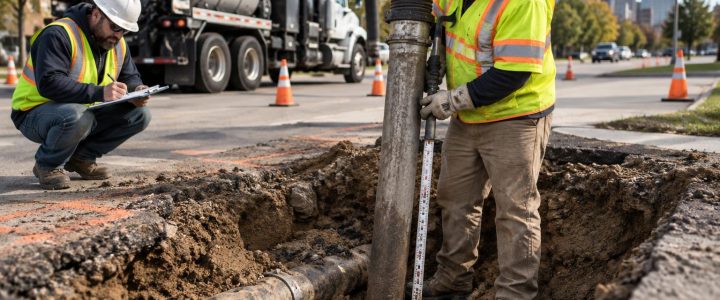
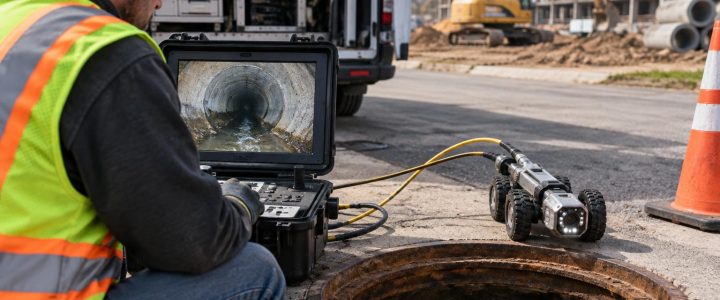
A CCTV pipe inspection is only as useful as the camera’s view. When sediment, debris, grease, roots, standing water, or construction material blocks that view, an inspection may confirm that a problem exists without showing its full extent, location, or cause.
For contractors, engineers, and facility teams, the question is not whether every pipe must be cleaned before a camera enters. The practical question is whether current pipe conditions will allow the inspection team to collect the information the project needs. A pipe being investigated for a blockage may need a different level of preparation than a newly installed storm sewer being documented for acceptance.
Cleaning and preparation can make a major difference in the quality of a video pipe inspection. It can expose joints, laterals, pipe-wall defects, connection points, and obstructions that would otherwise remain hidden. It can also help a crew move equipment farther through an accessible line. However, cleaning is not a substitute for inspection, and inspection alone does not establish a surveyed pipe alignment, exact elevation, or the structural significance of every observed defect.
Why pipe cleaning matters before CCTV inspection
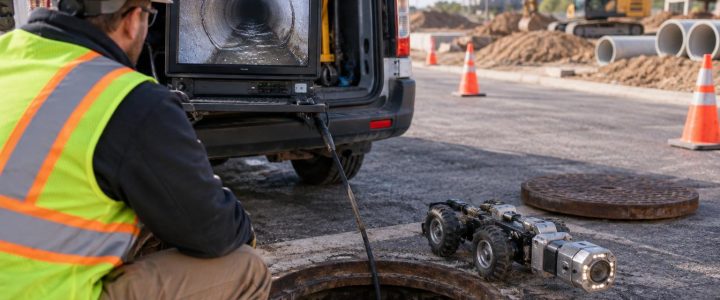
Professional CCTV sewer inspection and storm drain inspection rely on a clear enough view of the pipe interior. The camera records what is visible at the time of the work. If material covers the pipe invert, walls, joints, or connections, the resulting video may be incomplete.
Common conditions that can limit a camera inspection include:
- Sediment and silt in stormwater pipes, inlets, catch basins, and culverts
- Leaves, trash, aggregate, wood, geotextile, or other construction debris
- Grease deposits and solids in sanitary sewer lines
- Root intrusion at joints or service connections
- Standing water that obscures the lower portion of the pipe
- Heavy scale, tuberculation, or mineral deposits in aging pipe
- A collapsed, offset, or severely deformed section that stops equipment
These conditions may themselves be important findings. For example, heavy sediment can explain reduced capacity in a storm sewer. Construction debris inside a new line can raise a quality-control question. But if the objective is to assess pipe condition behind the material, verify a connection, or determine whether a defect continues downstream, cleaning may be needed before a meaningful follow-up inspection.
When should a pipe be cleaned before camera work?
Cleaning should be planned based on the inspection objective, pipe type, access, and visible field conditions. A preliminary camera pass may be useful when the condition is unknown. It can identify whether cleaning is needed, where the line becomes obstructed, and which maintenance method may be appropriate.
Post-installation inspection and construction acceptance
New storm sewer and sanitary sewer systems should generally be free enough of debris to allow the inspection team to view the pipe walls, joints, and connections. A camera cannot reliably evaluate areas hidden by soil, aggregate, slurry, packaging, or standing debris.
Before a post-installation pipe inspection, project teams may want to confirm that:
- Manholes, cleanouts, inlets, and other access points are available and safe to use
- The line is not holding enough sediment or water to conceal the lower pipe section
- Construction debris has been removed to the extent needed for the inspection purpose
- The pipe can be accessed from the intended upstream and downstream structures
- Required bypassing, traffic control, permits, or site coordination have been addressed by the responsible parties
A clean inspection does not by itself prove that installation meets every project specification. It does, however, create a clearer record of visible conditions, accessible connections, and obvious defects at the time of inspection.
Recurring backups or poor drainage performance
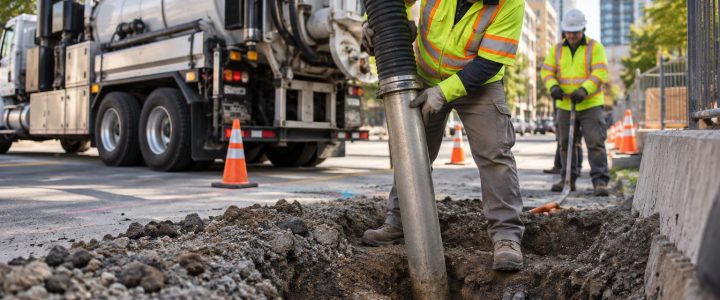
When a sanitary line repeatedly backs up or a storm drainage system drains slowly, cleaning and CCTV investigation often work together. Cleaning may restore temporary flow, while the follow-up camera inspection helps identify why material accumulated in the first place.
Potential visible contributors can include root intrusion, protruding laterals, displaced joints, pipe deformation, low areas holding sediment, intruding debris, or a partial collapse. Video can document these conditions, but determining the root cause of a persistent performance issue may require additional review, flow information, locating, surveying, test holes, or engineering analysis.
Pre-rehabilitation or maintenance planning
Before lining, spot repair, replacement, or a major cleaning program, the project team needs usable information about the accessible system. Cleaning can allow a better view of defects and help determine whether equipment can pass through the pipe. It also helps avoid basing rehabilitation decisions on a video where large portions of the pipe are concealed.
For municipal and facility asset-management work, consistent preparation and documentation make inspections more comparable over time. The National Association of Sewer Service Companies describes PACP and LACP as standardized systems for recording observed pipeline and lateral conditions. A standardized coding approach may be appropriate when the scope, owner requirements, and qualified personnel call for it; not every camera inspection is automatically a PACP or LACP assessment.
What cleaning can reveal—and what it cannot
Cleaning removes or redistributes material so the inspection crew can see more of the pipe. It may reveal conditions that were previously hidden, including:
- Open, offset, or defective joints
- Cracks, fractures, holes, and localized breaks
- Roots entering through joints or openings
- Connections, laterals, and abandoned branches
- Protruding taps or service connections
- Construction material left in a newly installed line
- Changes in pipe material, diameter, or internal configuration where visible
- Areas of recurring sediment accumulation or reduced open area
Still, a camera records visible interior conditions, not every fact about the pipe. A video may show a crack, for example, but it cannot by itself determine the crack’s cause, remaining structural capacity, exterior soil conditions, or whether the pipe is leaking. Likewise, a camera can help trace an accessible pipe from one structure toward another, but it does not always provide a precise horizontal or vertical location.
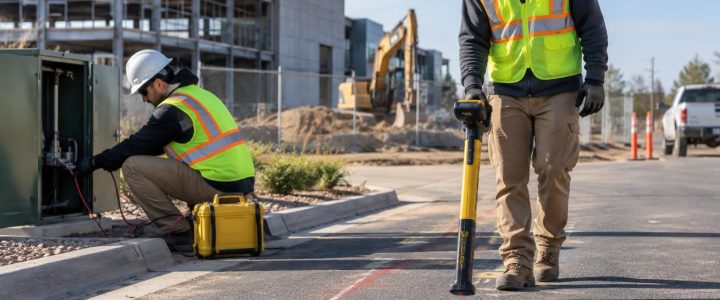
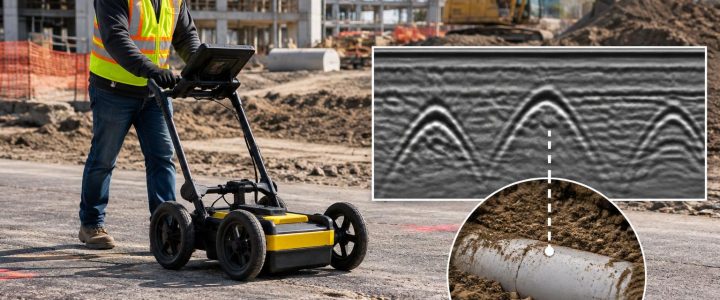
Where a project requires a defensible route, depth, rim-to-invert relationship, or utility conflict evaluation, the team may need pipe locating, survey control, 3D structure scanning, vacuum excavation, or other subsurface investigation. Visionary Subsurface Solutions can coordinate private utility locating with inspection findings when the project needs more than visual pipe condition data.
How to plan a productive storm sewer or sanitary sewer inspection
Early coordination reduces lost time in the field. Before scheduling a video sewer inspection, identify what decision the inspection must support. The desired deliverable should drive the preparation plan.
1. Define the inspection objective
Be specific. Useful objectives include documenting existing conditions before nearby excavation, investigating a blocked storm drain, verifying accessible connections in a new system, assessing an aging sewer before rehabilitation, or creating records for maintenance planning.
2. Gather available system information
Provide available plans, utility records, prior inspection reports, maintenance history, and known access locations. Records can help the crew plan, but they should be treated as reference information until field observations confirm what is accessible and visible.
3. Identify access and operating constraints
Camera equipment needs suitable access through manholes, cleanouts, catch basins, inlets, or other openings. Pipe diameter, bend configuration, water level, traffic exposure, active flows, and site safety conditions all affect what can be inspected. Some small, heavily obstructed, collapsed, or inaccessible pipes cannot be fully inspected with standard CCTV equipment.
4. Decide whether pre-cleaning is warranted
If the known condition includes heavy debris, roots, grease, or sediment, schedule cleaning before the detailed inspection when feasible. If conditions are unknown, a reconnaissance pass can help define the cleaning need. The right sequence depends on the pipe, the objective, and operational constraints.
5. Agree on deliverables before fieldwork starts
For a construction or engineering project, useful deliverables may include labeled video files, still images, observed defect locations referenced to the inspection run, pipe size and material where visibly identifiable, connection observations, and a summary of limitations. If standardized PACP or LACP coding is required, establish that requirement in the scope and confirm the appropriate qualifications and reporting format.
Cleaning and inspection for stormwater systems
Storm sewer inspection often presents different challenges than sanitary sewer inspection. Storm systems collect sediment, leaves, roadway debris, and runoff-driven material. A pipe that looks clear during dry weather may carry substantial material after a storm event. Inlets and catch basins can also hold debris that affects access and flow.
For a stormwater pipe inspection, crews should consider whether the goal is to investigate a localized blockage, document a drainage route, inspect a culvert, assess recurring sediment accumulation, or support a repair design. The timing of the work matters. Recent rain, high water levels, and active discharge can limit visibility and access.
The U.S. Environmental Protection Agency and NASSCO both recognize inspection and condition information as parts of organized sewer-system assessment and maintenance programs. Their resources support a practical principle for project teams: collect observations in a consistent, usable form, then use those observations with other site information to prioritize next steps.
Common misconceptions about camera inspection preparation
“If the camera can get through, the inspection is complete.”
Not necessarily. A camera may pass through a line while sediment or water still hides key defects or connections. Passing through the pipe is useful, but it is not the same as obtaining a complete visual assessment.
“Cleaning proves the pipe is in good condition.”
No. Cleaning can improve flow and visibility. It may also expose defects that were not visible before. Condition should be based on documented observations and, when necessary, further evaluation.
“A CCTV camera gives an exact pipe location.”
A camera can help establish the route of an accessible line and identify features along that route. Precise location and elevation information generally require additional locating, surveying, or verification methods appropriate to the project.
“Every pipe can be camera inspected.”
No. Full inspection depends on access, diameter, bends, water level, debris, internal damage, and equipment capability. A completely collapsed line or an inaccessible segment may require another investigation method.
Frequently asked questions
Should a newly installed storm sewer be inspected before final acceptance?
Many project teams use CCTV inspection to document accessible pipe condition, visible joints, connections, debris, and installation-related damage before acceptance. The project specifications and owner requirements should define the acceptance process. Cleaning may be necessary if debris or sediment prevents a useful inspection.
Can CCTV find the reason a storm drain is blocked?
It can often identify visible obstructions such as sediment, debris, roots, displaced joints, or collapsed sections, provided the camera can reach and see the area. The video may not establish every underlying cause without further investigation.
Can a sewer camera locate underground pipes?
Video inspection can help trace accessible pipe runs and identify manholes, inlets, connections, and other visible features. For precise pipe location, depth, or mapping, pair the inspection with appropriate locating and survey work.
What happens if the pipe is too dirty to inspect?
The inspection may document the obstruction and its approximate reachable extent. The project team can then consider cleaning, root cutting, debris removal, bypass planning, or another method before attempting a follow-up inspection.
Plan the inspection around the decision you need to make
A clear CCTV inspection begins before the camera enters the pipe. Define the project question, assess access, plan cleaning when visibility will be limited, and specify the records needed for construction, maintenance, or design decisions. This approach helps avoid videos that confirm only that a pipe is dirty while leaving the important question unanswered.
Visionary Subsurface Solutions provides video pipe inspection for accessible stormwater, sanitary sewer, drainage, and other underground piping systems across Pennsylvania, New Jersey, Delaware, Maryland, New York, and the Washington, D.C. to New York City corridor. Contact our team to discuss the pipe condition, access constraints, cleaning needs, and documentation requirements for your project.
References: NASSCO PACP, LACP, and MACP resources; U.S. EPA capacity, management, operation, and maintenance resources.