When an aging storm sewer or sanitary sewer system is causing backups, ponding, sinkholes, maintenance calls, or repeated cleaning costs, the immediate question is often: should the pipe be repaired, rehabilitated, or replaced?
A professional CCTV pipe inspection is often one of the first practical steps toward answering that question. Video inspection can document accessible pipe interiors, show where visible defects occur, identify obstructions and connections, and create records that help a project team develop a targeted scope of work. It is especially useful before rehabilitation design, capital planning, maintenance decisions, or construction in areas served by existing piping.
However, video inspection is not the same as a complete engineering evaluation. A camera can show an open joint, crack, root mass, deformation, sediment buildup, or visible hole. It cannot, by itself, establish why that condition developed, prove the remaining structural capacity of every pipe, or provide a precise surveyed location. Good rehabilitation planning uses CCTV findings alongside records, cleaning history, surface observations, pipe locating, surveying, testing, and engineering review when the project calls for them.
What video pipe inspection contributes to rehabilitation planning
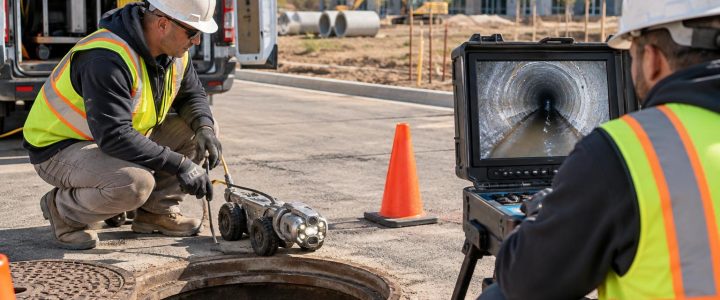
Video pipe inspection uses a camera system introduced through an available access point, such as a manhole, cleanout, inlet, vault, or other suitable opening. Depending on pipe size, configuration, access, and conditions, the work may use a push camera, a crawler, or another robotic pipe inspection platform.
The operator records video and observations as the equipment travels through the accessible portion of the pipe. A professional deliverable may include footage, still images, inspection logs, distances recorded along the line, pipe segment identifiers, observed features, and a summary of limitations or blocked reaches.
For a rehabilitation project, this information can help the team answer practical questions:
- Which pipe runs appear to have recurring obstructions or substantial deposits?
- Where are visible cracks, fractures, holes, broken sections, or displaced joints?
- Are roots entering through joints, connections, or damaged pipe walls?
- Do visible lateral connections, taps, or junctions affect the proposed repair method?
- Can a cleaning-and-maintenance approach address the problem, or is a closer repair investigation warranted?
- Which lines should be prioritized for additional testing, design review, or physical verification?
For sanitary and stormwater systems, CCTV findings can turn a broad concern about “failing pipes” into a list of specific pipe segments and observable conditions. That makes conversations between owners, contractors, engineers, and maintenance staff more productive.
Separate observation from the repair decision
One of the most important distinctions in an underground pipe condition assessment is the difference between observing a defect and determining its cause or structural significance.
For example, a camera may document a longitudinal crack, a section of standing water, or soil visible through a defect. Those are important observations. Yet video alone may not establish whether the pipe is actively moving, whether external groundwater is entering at a particular rate, whether voids exist outside the pipe, or whether a localized repair will solve the underlying problem.
Similarly, a pipe that looks generally intact on video may still have capacity, grade, hydraulic, or structural issues that need other forms of evaluation. Conversely, a visually concerning condition may be limited to one accessible location rather than the entire system.
Use the inspection to identify questions that need to be resolved, then match the next step to the decision at hand. That next step may include:
- Cleaning and a follow-up CCTV sewer inspection where debris or roots blocked visibility.
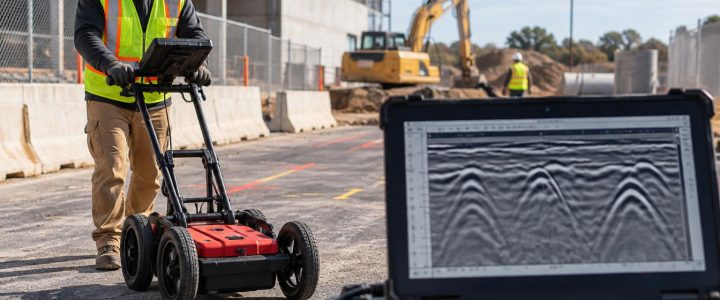
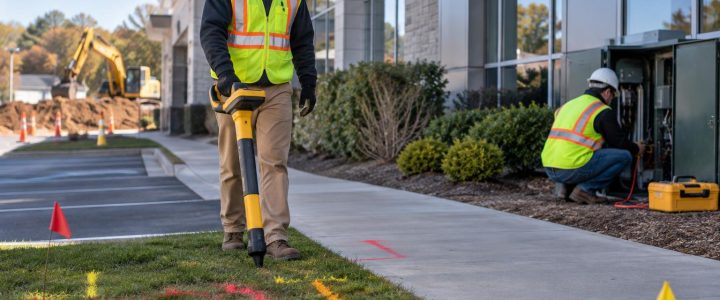
- Pipe locating or surveying to tie observed features into project control.
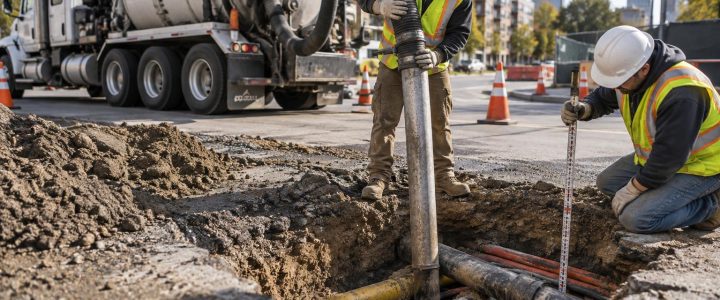
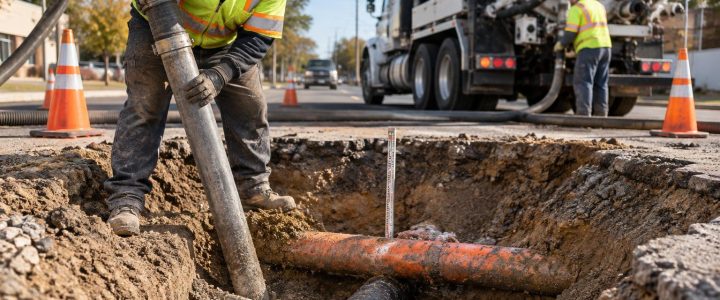
- Vacuum excavation where a critical connection, crossing, or suspected damaged area needs physical verification.
- Flow, leakage, or other project-specific testing where performance must be evaluated.
- Engineering analysis when repair selection depends on structural, hydraulic, geotechnical, or environmental factors.
Visionary Subsurface Solutions can coordinate video findings with private utility locating when a project needs more than an interior view of the pipe.
Conditions that commonly affect rehabilitation scope
Different visible conditions point to different project questions. The right response depends on pipe material, size, age, use, access, maintenance history, surrounding soil conditions, and the consequences of failure.
Structural and joint-related observations
Cracks, fractures, breaks, holes, offset or displaced joints, open joints, deformation, and partial collapse can indicate that a pipe segment deserves closer attention. Video inspection can document the apparent location and extent of what is visible from inside the pipe.
For a contractor or engineer, these observations may help define where a spot repair, lining evaluation, replacement reach, or test excavation should be considered. They should not be treated as a final structural determination without appropriate professional review.
Roots, sediment, grease, and construction debris
Roots can enter through joints, cracks, defective connections, or other openings. Sediment, debris, grease, grout, asphalt, wood, trash, and other material may reduce flow area or prevent the camera from reaching the full pipe run.
In a new system, debris can raise quality-control questions. In an older system, repeated deposits may point toward a maintenance issue, a poor grade, an upstream source, or another condition that needs investigation. Cleaning may be needed before a meaningful video pipe inspection can be completed.
Connections, laterals, and flow-path questions
A camera inspection can show visible junctions, laterals, taps, and connections. It can also help confirm whether accessible pipes appear to connect as expected. This is valuable when planning rehabilitation around active services, drainage structures, or unknown branches.
Still, a camera cannot reliably prove every connection in a buried network, particularly where a line is blocked, inaccessible, submerged, or configured with difficult bends. It also does not automatically provide a precise horizontal alignment or elevation. If design or excavation decisions depend on exact position, the observed route should be supplemented with appropriate locating, survey control, and, where necessary, verification.
How standardized condition coding helps project teams
For larger municipal, campus, industrial, or portfolio-based programs, consistent inspection records matter as much as the video itself. The National Association of Sewer Service Companies maintains the Pipeline Assessment Certification Program (PACP) for coding observations in gravity sewer pipes and the Lateral Assessment Certification Program (LACP) for laterals. These frameworks provide standardized terminology and coding concepts that can make inspection information more comparable across pipe segments and over time.
A PACP- or LACP-style deliverable can support a repeatable condition-assessment workflow when it is performed and specified appropriately. It should not be assumed that every inspection video is a certified PACP or LACP assessment. Before work begins, define whether the project requires standardized coding, what pipe assets are included, required report fields, video naming conventions, data format, and how findings will be reviewed.
Standardized coding does not replace engineering judgment. It does, however, help owners and engineers sort observations, compare segments, identify recurring defect types, and prioritize follow-up work using a common language.
A practical workflow before selecting repair, lining, or replacement
The most useful inspection program begins with a clear decision goal. “Inspect the system” is a starting point, but it is not a complete scope. A better approach is to identify the assets, concerns, and decisions the inspection must support.
- Define the problem. Document recurring backups, surface flooding, settlement, odor complaints, maintenance locations, construction impacts, or planned rehabilitation limits.
- Gather available information. Review utility records, prior inspection footage, as-builts, maintenance logs, drainage plans, and known access points. Treat records as useful references, not confirmation of current field conditions.
- Plan access and preparation. Identify manholes, inlets, cleanouts, traffic-control needs, bypass requirements, and whether cleaning is needed. High water, sediment, grease, roots, debris, and inaccessible structures can limit results.
- Inspect and document the accessible pipe. Request clear segment identification and notes about incomplete runs, obstructions, and other field limitations.
- Review findings by consequence and urgency. A defect beneath a critical roadway, building entrance, rail crossing, or active loading area may deserve different priority than a similar observation in a low-consequence area.
- Select follow-up investigation. Use locating, surveying, cleaning, testing, test holes, or engineering review where the repair decision requires information that video cannot provide.
- Develop a repair strategy and baseline record. Retain the footage and report to support design, bidding, construction documentation, and future maintenance comparisons.
When a post-repair inspection is useful
CCTV inspection is also valuable after a targeted repair or rehabilitation activity. The purpose is not simply to create more video. It is to document the accessible result and confirm that the repaired segment, connection, or cleaned reach appears consistent with the project’s inspection requirements.
For example, a post-work inspection may document whether visible construction debris remains, whether a connection is open, whether a repair transition is apparent, or whether the camera can now pass a reach that was previously blocked. Acceptance requirements should be established by the owner, engineer, and contract documents; video results should be reviewed within that project-specific context.
For deeper structures, unusual manholes, or rehabilitation planning that benefits from accurate interior geometry, 3D manhole LiDAR scanning may provide useful complementary information. It does not replace pipe CCTV, but it can improve documentation of accessible structures.
FAQ: CCTV inspection for sewer and stormwater rehabilitation
Can a CCTV inspection tell us whether to repair or replace a pipe?
It can provide important evidence for that decision by documenting visible conditions and their locations along an accessible pipe. The final repair-versus-replacement decision may also require engineering review, cleaning history, hydraulic information, locating, survey data, physical verification, and an understanding of project risk.
Can a sewer camera locate the pipe accurately?
A camera inspection can help establish the route of an accessible pipe and identify features along the route. It does not, by itself, guarantee a precise surveyed horizontal or vertical location. Professional locating and survey methods may be appropriate when excavation, design, or utility coordination depends on reliable position information.
Why can’t the camera inspect the entire line?
Complete inspection may be limited by access, pipe diameter, tight bends, active flow, standing water, heavy sediment, roots, debris, severe defects, or collapse. Cleaning, alternate access, or a different investigation method may be needed.
What should an engineer request in a pipe inspection report?
At a minimum, request clear pipe segment identification, access points, video files, observed conditions, footage or distance references where available, still images of significant observations, and an explanation of inaccessible or incomplete portions. For asset-management or rehabilitation programs, also define whether standardized coding, a specific data format, and a condition-ranking method are required.
Use inspection evidence to make the next decision clearer
A professional storm sewer inspection or CCTV sewer inspection does not eliminate every uncertainty below grade. It gives the project team direct visual evidence of accessible conditions, separates known observations from assumptions, and helps focus additional investigation where it will have the most value.
Whether you are planning rehabilitation, investigating a recurring problem, documenting conditions before work, or prioritizing capital repairs, Visionary Subsurface Solutions can help you plan and perform a practical video pipe inspection program for projects across Pennsylvania, New Jersey, Delaware, Maryland, New York, and the Washington, D.C. to New York City corridor. Contact our team to discuss your pipe access, project goals, and required deliverables.