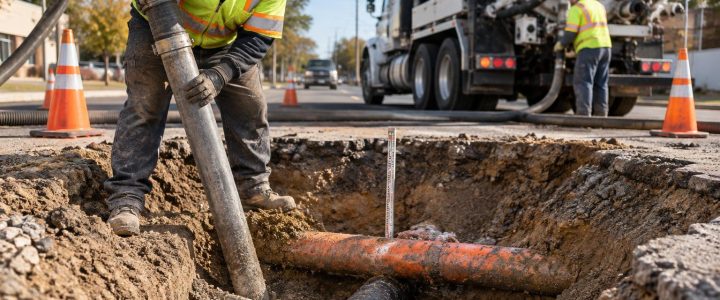
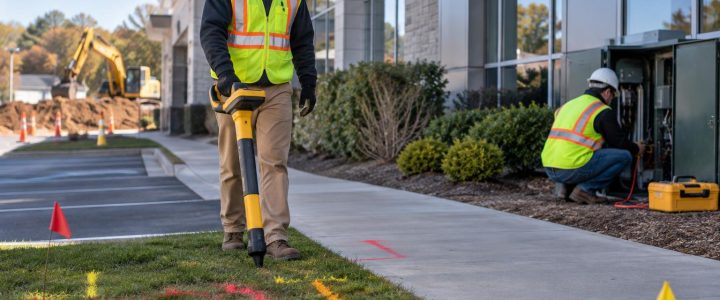
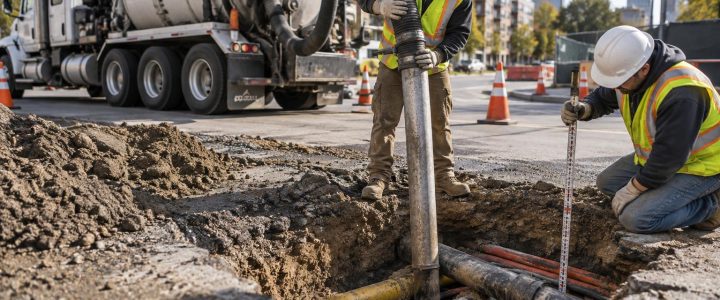
Existing underground pipes can create major uncertainty during property acquisition and redevelopment. A site may have aging storm drains, abandoned laterals, undocumented connections, damaged culverts, or sanitary sewer lines that are still serving active buildings. Surface observations and record drawings may not show whether those pipes are connected, accessible, flowing, or in usable condition.
A professional CCTV pipe inspection gives the project team a direct view inside accessible piping systems. It can help identify visible defects, obstructions, connections, construction debris, and other conditions that may affect redevelopment planning. For a buyer, developer, engineer, or contractor, that information can support earlier and better-informed decisions about design, rehabilitation, replacement, and construction sequencing.
Video inspection is not a substitute for engineering analysis, pipe cleaning, surveying, or physical verification in every situation. It is, however, a practical way to reduce unknowns before existing underground infrastructure becomes a field problem.
Why existing pipes deserve attention during redevelopment
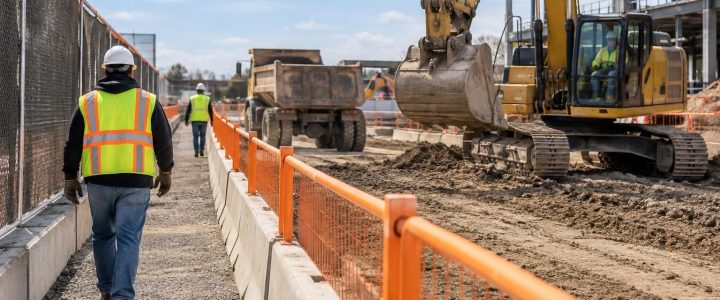
Redevelopment often changes how a property drains, how much runoff it produces, and how sanitary services are routed. Existing pipes may need to remain in service during construction, receive new connections, be rehabilitated, or be removed. If their route and condition are unknown, the design team may be working from assumptions.
Common reasons to order an underground pipe inspection before purchase or design include:
- Recurring ponding, backups, or slow drainage at the site
- Unclear storm sewer or sanitary sewer routes on older properties
- Plans to tie new work into an existing manhole, inlet, lateral, or main
- Evidence of settlement, sinkholes, pavement failure, or washout near drainage structures
- Known aging infrastructure with little condition documentation
- Questions about whether existing pipes can remain in service
- Potential conflict between planned foundations, utilities, grading, or pavement and existing pipe runs
- Due-diligence concerns before acquiring a commercial, industrial, institutional, or municipal property
Finding a problem early does not automatically establish the repair scope or cost. It does allow the project team to investigate before finalizing a design, mobilizing excavation equipment, or committing to a construction schedule.
What a video pipe inspection can show
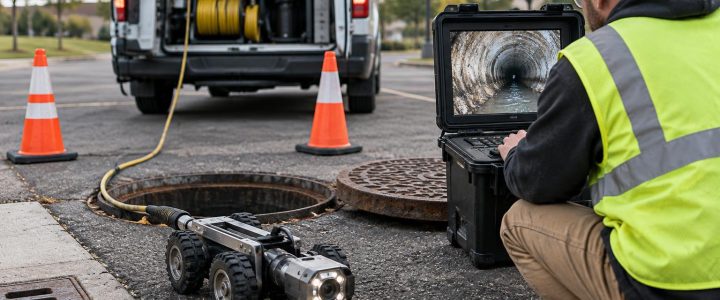
During a sewer camera inspection or storm drain inspection, a camera is introduced through a suitable access point, such as a manhole, cleanout, inlet, or other accessible structure. The inspection team records observations as the camera travels through the pipe, subject to the pipe’s condition and field constraints.
Depending on access, cleanliness, pipe size, flow, and configuration, video may show:
- Pipe walls, joints, fittings, and visible changes in material or diameter
- Connections, laterals, branches, and junction structures
- Cracks, fractures, holes, missing wall sections, or visible deformation
- Open, offset, displaced, or otherwise defective joints
- Root intrusion, grease, sediment, debris, or construction material
- Standing water, evidence of restricted flow, and visible obstructions
- Intruding connections or unknown tie-ins
- Areas where the camera cannot continue because of a blockage, collapse, sharp bend, heavy deposits, or another limitation
For redevelopment work, the value is often in combining these observations with plans, field notes, and surface features. A camera may show that a drain line continues beyond an inlet, that several pipes join at a structure, or that a suspected connection does not appear to be open and functional.
What video alone cannot confirm
Camera footage is valuable evidence, but it has limits. A visible crack does not by itself establish the cause, the remaining structural capacity of the pipe, or the correct rehabilitation method. Likewise, a camera’s route does not automatically provide a surveyed horizontal alignment or a precise elevation.
Video inspection alone may not reliably establish:
- Exact pipe depth, invert elevation, or surveyed coordinates
- Full pipe material identification, especially where surfaces are coated, obscured, or deteriorated
- Utility ownership or responsibility
- Whether a defect is structurally critical without appropriate engineering review
- The condition of inaccessible, fully submerged, heavily blocked, or collapsed portions of pipe
- The route of every pipe on a site
When the project requires defensible pipe coordinates, field locating and survey support may be appropriate. If a buried connection or pipe depth must be physically verified, vacuum excavation and QL-A can provide direct confirmation at selected locations.
Pipe inspection, pipe locating, and condition assessment are different tasks
These services often work together, but they answer different questions. Separating them helps a project team request the right scope.
Pipe inspection: What is visible inside?
Video pipe inspection documents accessible interior conditions. It can identify visible connections, defects, deposits, and obstructions. It is especially useful when a team needs to understand why a system is not performing as expected or whether an existing pipe appears suitable for further evaluation.
Pipe locating: Where does the pipe run?
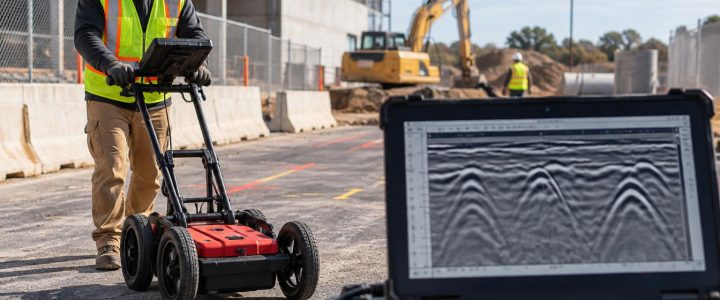
Pipe locating focuses on establishing the likely route of a pipe or associated feature. A sonde used with a camera or other locating methods may help trace an accessible pipe from the surface. Accuracy depends on conditions, equipment, access, interference, and the project’s required level of confidence. Survey control may be needed when the information will be used for design or record mapping.
For broader site investigation, private utility locating may help identify other private underground utilities and reduce conflicts as the pipe investigation moves forward.
Condition assessment: What do the observations mean?
Condition assessment organizes inspection observations so owners and engineers can prioritize maintenance, rehabilitation, replacement, or further investigation. Standardized approaches can improve consistency. The National Association of Sewer Service Companies maintains the Pipeline Assessment Certification Program, commonly called PACP, for coding observed defects in gravity sewer systems. LACP provides related coding for laterals.
A project should not assume that every camera inspection is a PACP or LACP assessment. If standardized coding is needed for an asset-management program, rehabilitation planning, or an owner’s required deliverable, confirm that requirement in the inspection scope before work begins.
A practical redevelopment workflow
The best inspection scope depends on the property, planned improvements, available records, and known drainage or sewer issues. The following workflow helps teams use inspection results before they are under schedule pressure.
- Define the decision the inspection must support. Examples include evaluating a potential acquisition, confirming whether an existing storm line can remain, investigating recurring backups, or planning a tie-in for a proposed building.
- Gather available information. Collect utility plans, as-builts, maintenance records, drainage complaints, prior CCTV footage, and site photographs. Treat records as useful starting points, not proof of present conditions.
- Identify likely access points. Manholes, inlets, cleanouts, vaults, and exposed pipe ends can affect whether an inspection is feasible and which direction the camera can travel.
- Plan cleaning or preparation if needed. Heavy sediment, grease, roots, debris, or standing water can block the view. Cleaning may be necessary before a meaningful inspection can be completed.
- Inspect and document field limitations. A professional report should identify inspected segments, direction of travel, accessible structures, observations, and areas that could not be fully viewed.
- Compare the findings with the proposed work. Review pipe routes and conditions against grading, foundations, pavement, utilities, and proposed connections.
- Select follow-up investigation where warranted. This may include pipe locating, survey, cleaning, testing, targeted test holes, engineering review, or additional inspection from a different access point.
Questions to ask before scheduling a storm sewer or sewer camera inspection
Good project information helps the inspection crew prepare the right equipment and helps avoid incomplete results. Before requesting pipe inspection services, provide what is known about the system.
- What type of system is involved: stormwater, sanitary sewer, roof drain, culvert, process drain, or another line?
- Where are the known access structures, and are they safe and available for access?
- What pipe diameters, materials, and approximate lengths are expected?
- Is there active flow, known standing water, sediment, grease, roots, or a suspected blockage?
- Does the team need a simple visual investigation, a condition report, standardized coding, location support, or all of these?
- Are there project plans or prior records that should be reviewed alongside the inspection?
- Will findings be used for property due diligence, design, construction acceptance, maintenance planning, or a repair decision?
Answering these questions does not eliminate field uncertainty, but it helps match the equipment and deliverables to the project’s actual needs.
What to expect in a useful inspection deliverable
A useful video inspection deliverable should do more than provide a video file. For redevelopment planning, the project team needs enough context to understand what was inspected and what the footage represents.
Depending on the scope, a report may include:
- Identification of access points and inspected pipe segments
- Video files and still images of notable observations
- Distance references recorded during the inspection, where applicable
- Observed connections, junctions, changes in pipe condition, and obstructions
- Notes on segments that could not be inspected or were only partially visible
- Location-support information when included in the scope
- Standardized defect coding when specifically requested and appropriate
- Recommendations for additional investigation, stated as next steps rather than unsupported conclusions
For example, footage may support a finding that sediment obscures the lower portion of a storm pipe. The appropriate next step might be cleaning and reinspection, not an assumption that the pipe is sound or failed beneath the deposits.
Using findings without overinterpreting them
Inspection results are most useful when they are reviewed by the right people. A civil engineer may compare observed pipe connections with proposed drainage design. A contractor may use the information to plan access, bypass needs, or excavation sequencing. A facility manager may use it to prioritize maintenance. An owner may use it to decide whether a suspected issue needs further evaluation before acquisition.
When footage shows significant defects, the next step may range from cleaning and reinspection to a targeted excavation, survey, hydraulic review, or engineering evaluation. The appropriate response depends on the defect, the pipe’s role, the site plan, and the project’s risk tolerance.
Plan the investigation before redevelopment starts
Unknown storm and sanitary infrastructure does not have to remain a late-stage surprise. A well-scoped CCTV pipe inspection can document accessible pipe conditions, reveal visible connections and obstructions, and identify where additional locating, cleaning, surveying, or engineering review is needed.
Visionary Subsurface Solutions provides professional video pipe inspection for stormwater, sanitary sewer, drainage, and accessible underground piping systems throughout Pennsylvania, New Jersey, Delaware, Maryland, New York, and the Washington, D.C. to New York City corridor. Contact our team to discuss the pipe investigation needs for your acquisition, design, redevelopment, or construction project.
Reference resources
For background on standardized visual assessment, review the NASSCO Pipeline Assessment Certification Program. The U.S. Environmental Protection Agency also discusses condition assessment and asset-management planning for wastewater infrastructure in its asset management resources.