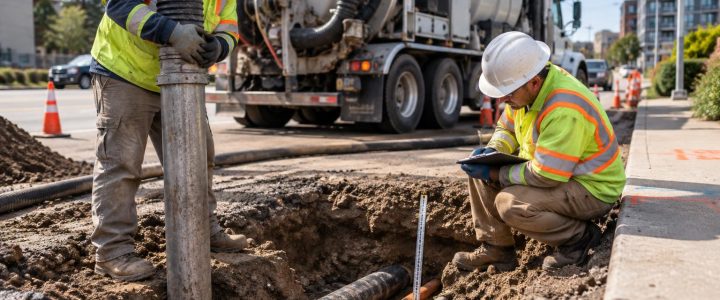
A storm drain that repeatedly backs up, ponds water, or drains slowly is rarely solved by guessing. Cleaning may restore flow for a time, but the underlying issue can remain hidden: sediment may be returning from upstream, a pipe may have a displaced joint, an unknown connection may be feeding the system, or a damaged section may be trapping debris.
Professional CCTV pipe inspection gives project teams visual information from inside an accessible storm drainage system. It can help identify where flow is restricted, document visible pipe defects, confirm observed connections, and support a more targeted repair, maintenance, or engineering decision. For contractors and facility managers, that can reduce unnecessary excavation and help focus work where evidence supports it.
A camera inspection is not a cure-all. It does not automatically provide a surveyed pipe alignment or prove the structural cause of every observed defect. But when it is planned around the drainage problem, it is often one of the most useful first steps in investigating recurring stormwater issues.
Why recurring storm drain problems need a structured investigation
Recurring drainage failures often show up after heavy rain, during seasonal leaf drop, or after site changes. Common symptoms include water standing at inlets, overflowing catch basins, pavement flooding, erosion near a discharge point, sinkholes, and repeated calls for drain cleaning.
These symptoms do not identify the cause by themselves. A blocked inlet grate may be the immediate issue, while a downstream pipe restriction, separated joint, poor outlet condition, or damaged structure is the reason the problem keeps coming back.
A practical investigation begins by defining what is happening and when. The team should identify the affected inlets, manholes, pipe runs, outfalls, and low areas; review available drawings; and note whether the problem occurs in light rain, major storms, or dry weather. This background helps the inspection provider select likely access points and prioritize the portions of the system most likely to affect performance.
What a storm drain CCTV inspection can reveal
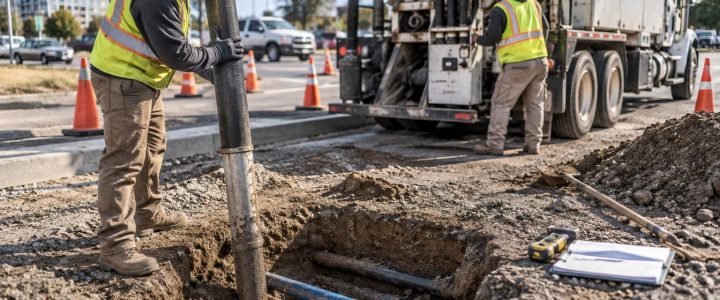
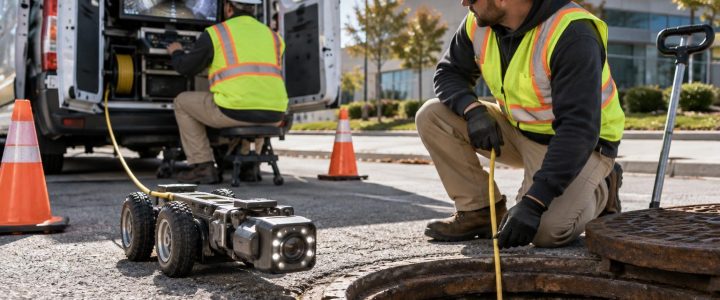
During a video pipe inspection, a camera is introduced through a suitable access point, such as a manhole, catch basin, cleanout, or other accessible structure. Depending on the pipe size, configuration, and access, the inspection may use a push camera, crawler, or robotic camera system. The operator records visual observations as the camera travels through the accessible portion of the pipe.
For a recurring storm drain issue, the inspection may reveal:
- Sediment, trash, leaves, construction debris, or other material restricting flow
- Roots entering through joints or damaged pipe sections
- Cracks, fractures, holes, or broken pipe
- Open, offset, displaced, or defective joints
- Deformation, sagging, or sections with standing water
- Evidence of pipe collapse or severe restrictions that prevent camera passage
- Laterals, branch connections, tie-ins, and changes in pipe direction
- Unknown connections that may affect drainage patterns
- Outlet conditions or obstructions within the accessible inspection path
- Visible signs of infiltration, such as water entering at a joint or defect during the observation
These observations can guide next steps, but they need appropriate interpretation. For example, a camera may show an open joint or a crack. Determining whether that condition is causing settlement, soil loss, inflow, or a structural capacity concern may require additional investigation by the project engineer. Likewise, water standing in a pipe may indicate a sag, but confirming elevations and the extent of a grade issue may require survey data, cleaning, or other field verification.
Pipe inspection, pipe locating, and condition assessment are different tasks
It is important to match the investigation method to the project question. These services may work together, but they do not produce the same result.
Video inspection looks inside the pipe
Video inspection documents the visible interior condition of an accessible pipe. It can show obstructions, defects, joints, branch connections, and features encountered along the inspection path. This is especially useful when a team needs to understand why a particular run is not draining as expected.
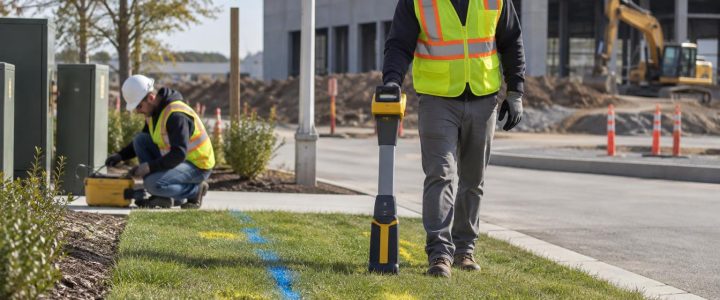
Pipe locating traces the probable route from the surface
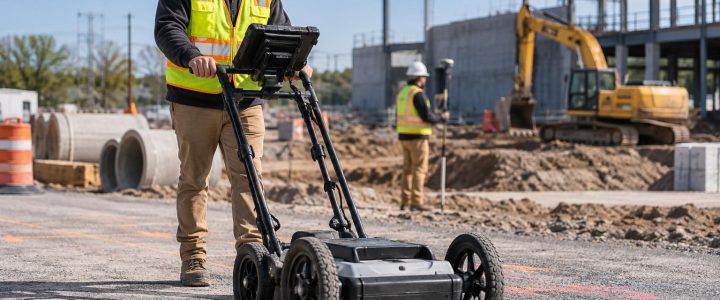
When locating equipment is used with a camera sonde or other traceable signal, it may help establish the approximate surface position of the camera at selected points. This can assist with tracing an unknown drainage route or identifying the general location of a blockage or feature. However, signal quality, depth, access, soil conditions, congestion, and pipe material can affect results. Camera locating alone should not be treated as a substitute for a surveyed as-built utility map when design-grade horizontal or vertical information is required.
For projects that need a coordinated investigation of private underground systems, private utility locating may be appropriate alongside pipe inspection.
Condition assessment organizes what was observed
A condition assessment converts inspection observations into useful maintenance, rehabilitation, or asset-management information. The report may identify defect locations, describe severity, and prioritize areas for follow-up. Where a client requests a standardized assessment, the scope should clearly state the applicable methodology and reporting requirements.
NASSCO’s Pipeline Assessment Certification Program, commonly called PACP, provides a standardized coding approach for assessing sewer and stormwater pipelines. LACP is used for lateral pipelines. Not every camera inspection is a PACP or LACP assessment, and a video alone does not replace engineering evaluation. Still, standardized coding can help owners compare observations across a system and plan repairs using more consistent information.
A field workflow for investigating a recurring drainage problem
The best CCTV sewer inspection work starts before the camera enters the pipe. The following workflow helps align field effort with the actual problem.
- Define the failure pattern. Record where ponding, backups, overflows, erosion, or recurring cleaning occurs. Note rainfall conditions and whether the issue is isolated or affects multiple structures.
- Collect available records. Review utility plans, stormwater drawings, prior inspection videos, maintenance logs, and site changes. Treat records as useful background, not final proof of current field conditions.
- Walk accessible structures. Identify catch basins, manholes, cleanouts, headwalls, and outfalls. Observe debris accumulation, inlet condition, damaged frames or grates, and visible signs of surcharge or erosion.
- Plan access and flow control. Confirm safe access points, pipe direction, anticipated diameters, traffic-control needs, and whether active flow affects the planned inspection. Site conditions may require coordination with the owner or facility operations staff.
- Clean when needed. Heavy sediment, roots, grease, trash, or standing water can block the camera view and prevent meaningful inspection. Jetting, vacuum removal, or other cleaning may be needed before or during the investigation.
- Perform and document the inspection. Record the pipe segment inspected, direction of travel, access structures, observations, connections, restrictions, and points where the camera cannot proceed.
- Compare findings to the drainage symptom. Determine whether the observed condition is reasonably located upstream or downstream of the failure area and whether it could affect flow. Avoid assuming that every visible defect is the primary cause.
- Select follow-up work based on evidence. The next step may be cleaning, repair, additional inspection, locating, survey, vacuum excavation, flow investigation, or engineering review.
Common findings and what they may mean
Sediment and debris buildup
Sediment is a frequent reason storm pipes lose capacity. It may result from poor inlet maintenance, construction runoff, deteriorated upstream surfaces, unprotected soil, or a low spot where material settles. CCTV can show the extent of material that is visible, but cleaning is often necessary before the full pipe condition can be seen. If buildup returns quickly after cleaning, the team should investigate the source rather than treating cleaning as the only solution.
Roots at joints or defects
Roots can restrict flow and catch debris. Their presence may indicate a pathway into the pipe, often at a joint or damaged section. Root cutting may improve flow, but the opening that allowed the roots to enter may need separate repair planning.
Offset joints, cracks, and fractures
These conditions may snag debris, allow soil or water movement, or indicate movement in the pipe system. Video can document their appearance and location along the inspected run. Whether the pipe needs spot repair, rehabilitation, monitoring, or further investigation depends on pipe material, defect extent, drainage demand, surrounding conditions, and engineering judgment.
Standing water or an apparent sag
A low area can collect sediment and reduce hydraulic performance. A camera may reveal standing water or repeated sediment deposition, but accurate grade evaluation usually requires additional measurements. Surveying, cleaning, and access conditions all affect what can be confirmed.
An obstruction the camera cannot pass
A no-go point is still valuable information. It may be caused by debris, a sharp bend, a collapsed segment, a protruding connection, water level, or a pipe configuration that is unsuitable for the selected equipment. The report should clearly distinguish an observed obstruction from a confirmed collapse unless the evidence supports that conclusion.
When to order a stormwater pipe inspection
Contractors, engineers, municipalities, and property managers may benefit from a storm sewer inspection when they face:
- Repeated ponding near catch basins, parking areas, loading zones, or roadways
- Blocked or slow-draining storm lines after routine cleaning
- Uncertain pipe routes, connections, or discharge paths on an existing site
- Suspected damage from excavation, heavy equipment, settlement, or nearby construction
- Drainage complaints before a paving, redevelopment, or utility project
- Maintenance planning for aging private or municipal stormwater infrastructure
- Questions about whether a pipe section should be cleaned, repaired, rehabilitated, or replaced
- Due diligence for a property acquisition, facility expansion, or site redevelopment
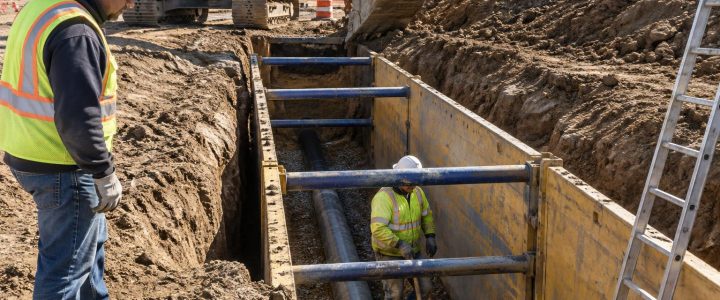
Early inspection is particularly useful before a repair scope is finalized. Excavating based only on surface symptoms may expose the wrong area, while a documented inspection can help narrow the repair target and identify where further verification is needed.
What to expect in a useful inspection deliverable
A professional video pipe inspection report should be organized so that the owner, contractor, and engineer can use it. At a minimum, the deliverable should identify the accessible structures and pipe segments inspected, inspection direction, visible observations, distances or reference points where available, camera limitations, and locations where travel stopped.
The deliverable may also include video files, still images, a segment log, defect descriptions, pipe diameter and material as observed or reported, and recommendations for further evaluation. Reports should clearly separate observed conditions from interpretations that require design or engineering review.
For a complex site, the inspection record can be paired with mapping, surface locating, or structure documentation. Visionary Subsurface Solutions also provides 3D Manhole LiDAR Scanning when detailed information about accessible structures may support planning or asset documentation.
Frequently asked questions
Can CCTV inspection locate an underground storm pipe?
It can help trace the accessible path of a pipe and identify connections or other internal features. When a camera sonde can be detected at the surface, the operator may obtain approximate positions for selected points. Precise mapping and elevations may require additional locating, surveying, or subsurface verification.
Does a clear camera run prove the storm system is working properly?
No. A clear run shows that the camera traveled through the inspected portion at that time. It does not by itself confirm design capacity, pipe slope, storm performance under peak flow, or the condition of sections the camera could not access.
Should storm pipes be cleaned before inspection?
Often, yes. Cleaning can remove material that hides defects or prevents camera travel. The need for cleaning depends on the observed condition, pipe size, water level, debris, and project goal. In some cases, an initial camera attempt helps determine where cleaning is needed.
Can video inspection determine whether a crack requires replacement?
Video can document a visible crack and its location in the inspected line. Deciding whether repair or replacement is necessary may require consideration of the pipe’s function, defect type, extent, soil conditions, loads, hydraulic needs, and engineering evaluation.
Turn recurring drainage symptoms into actionable information
Recurring storm drain problems deserve more than repeated emergency cleaning. A properly planned CCTV pipe inspection can create a record of accessible pipe conditions, reveal restrictions and connections, and give the project team a sound basis for the next decision. It also makes clear where the available evidence ends and where locating, cleaning, surveying, excavation, or engineering review should begin.
If your project involves a blocked storm line, recurring site drainage issue, unknown pipe connection, or aging stormwater infrastructure, contact Visionary Subsurface Solutions to discuss professional video pipe inspection services for your site in Pennsylvania, New Jersey, Delaware, Maryland, New York, or the Washington, D.C. to New York City corridor.