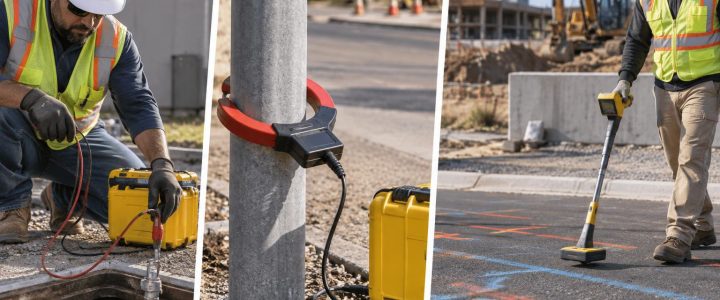
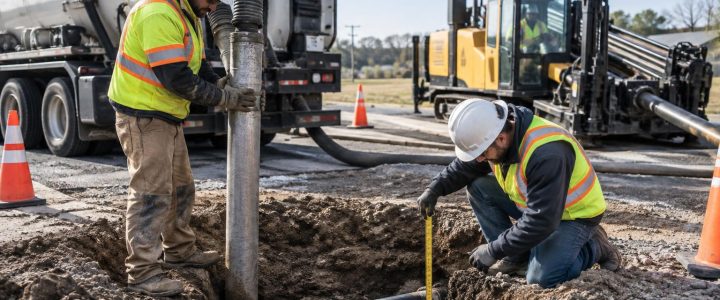
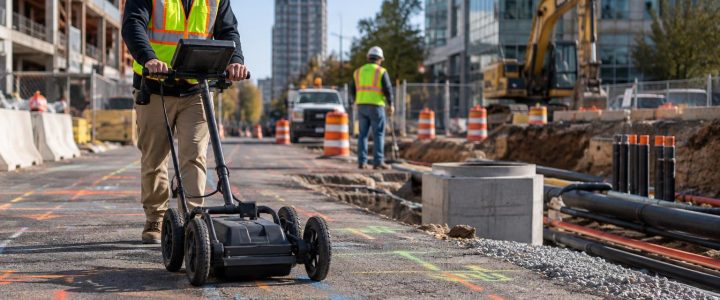
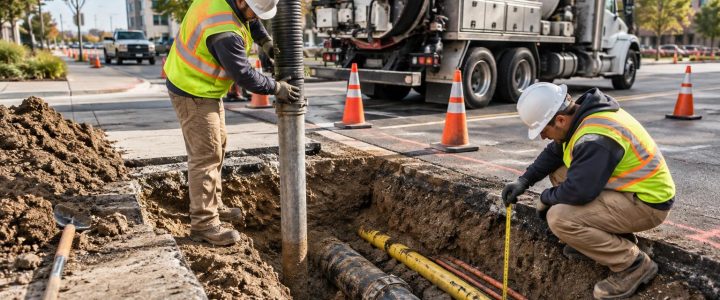
Confined spaces show up on construction sites more often than many crews expect. Manholes, vaults, tanks, pits, crawl spaces, utility structures, wet wells, culverts, and some process equipment may all create confined-space hazards. The risk is not limited to workers who enter. A supervisor, laborer, or equipment operator can become part of an emergency when a rushed rescue attempt puts an unprotected person into the same hazardous space.
Good confined space safety starts before anyone removes a cover, climbs a ladder, or lowers equipment into an opening. The crew needs to identify the space, understand the work to be done, assess the hazards, and use controls that match the actual conditions.
For construction work, OSHA defines a confined space as one that is large enough for a worker to enter and perform work, has limited or restricted means of entry or exit, and is not designed for continuous employee occupancy. A permit-required confined space has one or more serious hazards, such as a hazardous atmosphere, engulfment potential, an inwardly converging configuration, or another recognized serious safety or health hazard. See OSHA’s Construction Confined Spaces standard and the corresponding federal regulatory text for the applicable definitions and requirements.
Why confined spaces can become dangerous quickly
A confined space is not automatically a permit-required space, but it should never be treated as routine just because it has been entered before. Conditions can change with weather, nearby work, equipment operation, material flow, or a change in the task.
Atmospheric hazards are a major concern. Oxygen can be displaced or consumed. Flammable vapors may collect. Toxic gases can enter from sewers, adjacent processes, solvents, welding, cutting, engines, or decomposition of organic material. Because some hazardous gases cannot be reliably seen or smelled, workers should not use odor as a decision tool.
Other hazards can be just as serious:
- Water, soil, slurry, grain, or other material entering the space and engulfing a worker.
- Unexpected flow from a pipe, valve, pump, or drainage system.
- Energy from electrical, hydraulic, pneumatic, mechanical, or gravity sources.
- Moving equipment, rotating components, or agitators.
- Heat, poor ventilation, poor visibility, and difficult footing.
- A narrow opening or internal shape that makes exit or rescue difficult.
- Vehicle traffic, falling objects, or open-hole hazards at the surface.
Many severe confined-space incidents become worse when a coworker enters without protection to attempt a rescue. A capable rescue plan is part of the entry plan, not a step to improvise after something goes wrong.
Before You Start: decide whether entry is necessary
The best confined-space entry is the one that does not have to happen. Before planning workers inside a structure, ask whether the work can be completed from outside the space.
Look for ways to eliminate entry
Examples may include camera inspection, remote cleaning tools, remote shutoffs, external isolation, long-handled tools, or surface-based measurements. For underground structures, remote assessment may help a project team better understand access constraints and visible conditions before considering entry. It does not remove the need for a site-specific hazard assessment when entry is still required.
When a manhole or structure needs dimensional documentation, 3D manhole LiDAR scanning can sometimes gather useful information without sending a worker into the structure. The right method depends on the structure, its condition, the information needed, and the project plan.
Ask these pre-task questions
- What work must be done inside the space, and can any part be completed from outside?
- What is connected to the space: pipes, pumps, electrical systems, process lines, drainage routes, or adjacent structures?
- Could water, wastewater, gas, vapor, or material enter while work is underway?
- What energy sources must be isolated, locked out, blocked, blanked, disconnected, or otherwise controlled?
- What atmospheric hazards are reasonably anticipated based on the space and nearby work?
- Who is authorized for entry, who will attend the entry, and who will supervise it?
- How will the crew communicate? What happens if communication fails?
- What is the rescue method, who provides it, and how will responders be summoned?
- Will weather, rain, flooding, traffic, heat, or changing site operations affect the plan?
Recognize when a permit-required confined space may be present
Do not classify a space based on its name alone. A “vault,” “pit,” or “manhole” may have very different hazards from one location to another. Review available drawings and operating information, then inspect the area without entering.
Warning signs that deserve further evaluation include:
- Connections to sanitary sewer, stormwater, chemical process, fuel, or gas systems.
- Standing water, sludge, corrosion, staining, or unusual residue.
- Active piping, valves, pumps, conveyors, or electrical equipment.
- Evidence of poor airflow, such as a deep structure with one small opening.
- Nearby welding, coating, cleaning chemicals, fuel-powered equipment, or other sources that could affect the atmosphere.
- An opening that makes a quick exit unrealistic, especially if a worker must climb, crawl, or pass through a restricted section.
When the space has, or may have, permit-space hazards, the employer should follow the applicable construction confined-space requirements and the project’s written entry procedures. A competent safety professional can help evaluate unusual or changing conditions.
Build the entry plan around controls, not PPE alone
Personal protective equipment matters, but it is the last line of defense. Strong confined-space planning follows the hierarchy of controls: eliminate the entry or hazard where possible, use engineering controls, establish clear procedures, then select PPE that supports the work.
1. Isolate hazardous energy and flow
Identify every source that could introduce energy or material into the space. This can include electrical circuits, pumps, gravity-fed piping, pneumatic lines, hydraulics, moving equipment, and drainage systems. Isolation methods must be appropriate to the system and task. Simply telling another crew not to operate equipment is not a dependable control by itself.
Coordinate closely when several employers are on site. The excavation contractor, mechanical contractor, building owner, utility operator, and general contractor may each control part of the system or work area. Everyone needs the same understanding of what is isolated, what remains active, and who has authority to change the setup.
2. Test the atmosphere with suitable equipment
Atmospheric testing is not a one-time box to check. The testing approach, equipment, calibration, bump-testing practices, sampling method, and monitoring frequency should follow the applicable requirements, manufacturer instructions, and the entry plan.
Because gases can layer or move through a structure, sampling should consider the full space, not just the air at the opening. If work activities, ventilation, weather, or nearby operations can change the atmosphere, continuous or periodic monitoring may be necessary under the entry plan. OSHA explains that atmospheric hazards and effective communication are central concerns in construction confined spaces in its confined spaces safety resources; NIOSH also emphasizes atmospheric testing, ventilation, and rescue planning in its confined spaces guidance.
3. Ventilate when ventilation is an appropriate control
Mechanical ventilation can help control some atmospheric hazards, but it must be planned and verified. Position equipment so it delivers suitable air to the work area rather than recirculating contaminated air. Keep engine exhaust and other contamination sources away from air intakes. Continue monitoring to confirm conditions remain acceptable; ventilation should not be assumed effective without verification.
4. Control the surface area
The opening is part of the work zone. Barricade or guard it, manage vehicle and pedestrian traffic, protect workers from falling objects, and keep hoses, cords, tools, and spoil piles from creating trip hazards or blocking access. Maintain a clear path for retrieval equipment and emergency responders.
Assign clear roles before entry begins
Confined-space work fails when everyone assumes someone else is watching the job. The entry plan should identify responsibilities and make them clear during the pre-task briefing.
- Entry supervisor: Verifies that the entry plan, controls, conditions, and authorization process are in place. This role should be assigned according to the applicable standard and employer procedures.
- Authorized entrant: Understands the hazards, follows the entry procedure, stays in communication, recognizes warning signs, and exits when ordered or when conditions change.
- Attendant: Remains outside the space, monitors entrants and conditions, keeps unauthorized people out, communicates with the crew, and initiates the emergency response process when needed. The attendant should not take on side tasks that interfere with monitoring.
- Rescue provider: Is identified before entry and has a realistic ability to respond. The plan should address notification, access, retrieval, medical response, and coordination with site emergency procedures.
Common confined-space mistakes to avoid
- “It is only a quick entry.” Short duration does not remove atmospheric, engulfment, or access hazards.
- Opening the cover and immediately climbing down. Opening a structure can release or draw in hazardous air. Evaluate and test before entry.
- Using a worker as the rescue plan. Unplanned entry by a coworker is a common path to multiple victims. Use the established rescue process.
- Assuming yesterday’s conditions are still safe. Rain, system use, adjacent work, or process changes can alter the hazards.
- Letting the attendant perform other work. A distracted attendant cannot reliably monitor entrants or respond to changes.
- Using equipment outside its instructions. Gas monitors, blowers, harnesses, tripods, retrieval devices, and respiratory protection each have limitations and manufacturer requirements.
A practical confined-space safety checklist
Use this as a discussion guide, not as a replacement for a site-specific permit, training, or required procedure.
- Confirm whether entry can be eliminated or reduced through remote methods.
- Identify the space, task, connected systems, and likely hazards.
- Determine whether the space is permit-required under the applicable rules.
- Coordinate responsibilities with the controlling contractor, owner, and other affected employers.
- Isolate energy, flow, and equipment hazards using methods suited to the system.
- Set up barriers, traffic control, lighting, access, and surface housekeeping.
- Inspect and function-check ventilation, communications, retrieval, and monitoring equipment according to the plan and manufacturer instructions.
- Test the atmosphere and document or communicate results as required by the procedure.
- Confirm entry roles, stop-work authority, emergency communications, and rescue arrangements.
- Reassess conditions whenever the task, weather, system status, crew, or nearby work changes.
Make stop-work authority real
Every crew member should be able to call a pause when a condition does not match the plan. Examples include an alarm from the monitor, a loss of ventilation, changing water level, unexplained odor, failed communication, a damaged retrieval setup, or equipment that has not been isolated as expected.
A stop-work decision is not a failure to perform. It is how crews prevent a manageable concern from becoming an emergency. Supervisors should treat these reports as useful information, correct the condition, and communicate the revised plan before restarting.
Final reminder for construction teams
Confined-space safety depends on preparation, competent people, reliable controls, and continuous attention to changing conditions. The applicable OSHA requirements, project specifications, employer procedures, equipment instructions, and site conditions may require steps beyond this guide. When in doubt, pause the work and obtain qualified safety direction before entry.
For projects involving manholes, vaults, buried structures, or uncertain underground conditions, contact Visionary Subsurface Solutions to discuss how field investigation and documentation can support safer planning before work begins.