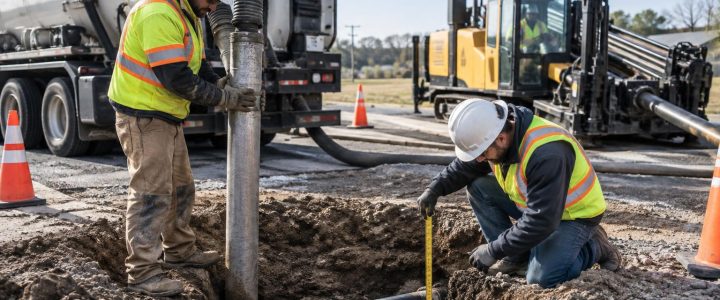
A professional CCTV pipe inspection is most useful when it is planned as a project investigation, not simply a camera run. Before mobilizing, the project team should define the question the inspection needs to answer: Is a storm drain blocked? Does a new sewer line have debris or defective connections? Where does an accessible pipe appear to run? Is an older pipe a candidate for repair, rehabilitation, or replacement?
Those questions affect access planning, cleaning needs, inspection direction, reporting requirements, and whether other services such as pipe locating, surveying, vacuum excavation, or engineering review may be needed. Good preparation helps produce video and field data that a contractor, engineer, owner, or facility manager can actually use.
For storm sewer, sanitary sewer, drainage, and other accessible piping systems, the most important preparation steps are confirming access, assessing cleaning needs, managing flow and safety, and agreeing on the required deliverables before work begins.
Start with the decision the inspection must support
Different project decisions require different levels of detail. A brief investigation of a suspected blockage is not the same as a documented condition assessment for municipal maintenance planning or construction acceptance.
Before scheduling video pipe inspection, identify the primary purpose:
- Investigate slow drainage, ponding, or a blocked storm inlet.
- Determine why a sanitary line is experiencing recurring backups.
- Document existing pipe conditions before nearby excavation, paving, demolition, or utility work.
- Check a newly installed storm sewer or sanitary sewer for visible debris, damage, and connection issues.
- Assess an accessible pipe before rehabilitation planning.
- Support due diligence for a commercial property acquisition, redevelopment, or facility improvement.
- Develop a maintenance priority list for drainage or sewer assets.
Provide available plans, prior videos, maintenance records, as-built drawings, and known structure locations. These records may be incomplete, but they give the inspection crew a starting point and help identify expected pipe sizes, access structures, flow direction, and possible connections.
Understand what CCTV inspection can and cannot establish
CCTV sewer inspection places a camera into an accessible pipe through a manhole, cleanout, inlet, catch basin, or other suitable entry point. Depending on pipe size and field conditions, the equipment may be pushed from one access point or carried by a crawler or robotic pipe inspection system.
The inspection can often document visible conditions such as sediment, roots, grease, debris, displaced joints, open joints, cracks, fractures, holes, deformation, pipe breaks, intruding laterals, and visible connection features. It may also help trace the apparent route of an accessible pipe between known structures and identify locations that warrant closer investigation.
However, a camera image alone does not always establish a precise horizontal alignment or elevation. It also cannot reliably determine pipe material, ownership, exact depth, or the structural significance of every visible defect without supporting information and professional interpretation. A partially submerged pipe, heavy sediment, debris, sharp bends, inaccessible laterals, or a severe collapse can limit what the camera can see.
When the project requires a defensible surface alignment, depth, or coordinates, consider combining the inspection with private utility locating, survey control, or other subsurface investigation. When a conflict, depth, size, material, or physical configuration must be confirmed, vacuum excavation may be appropriate.
Confirm access points and pipe suitability before mobilization
Access is often the first practical constraint. A pipe may exist on a plan but have paved-over structures, buried cleanouts, damaged frames, unsafe access, or no reachable downstream outlet. The crew needs a realistic entry and exit plan before inspection begins.
Information to confirm in advance
- Known manholes, inlets, cleanouts, headwalls, outfalls, and junction structures.
- Estimated pipe diameter, material, and expected length between access points.
- Whether access structures are in travel lanes, loading areas, landscaped areas, secured facilities, or active work zones.
- Traffic control, permits, site escorts, lock access, and shutdown requirements.
- Known pipe bends, drops, reducers, tide gates, backflow devices, or unusual configurations.
- Whether there is a safe downstream recovery point for a push camera or crawler.
- Whether confined-space hazards or other site-specific safety procedures apply.
Pipe diameter and configuration matter. A small drain line may be suitable for a push camera, while larger storm sewer or sanitary sewer systems may require a crawler-mounted camera. A long run with multiple bends, substantial debris, or a damaged section may not be passable from the available access point.
Inspection teams should not force equipment through an obstruction or unstable pipe simply to complete a run. If a pipe is inaccessible or severely compromised, the inspection may need to stop at the limiting condition. That finding can still be useful, but it should be reported clearly as an inspection limitation rather than treated as proof of the condition beyond the visible point.
Decide whether cleaning is needed first
Cleaning is often the difference between a usable underground pipe inspection and a video that only shows water, sediment, or debris. A camera can document an obstruction, but it may not be able to see the pipe wall, joints, or connection details behind it.
Consider cleaning or preparation before the camera work when the system is known or suspected to contain:
- Heavy sediment, gravel, leaves, or construction debris.
- Grease accumulation in a sanitary or food-service-related line.
- Root intrusion that blocks the camera path or obscures the wall.
- High water levels that hide the lower portion of the pipe.
- Debris from new construction, such as grout, concrete, wood, geotextile, or packaging.
- Material left after a collapse, repair, or prior maintenance event.
Cleaning should be coordinated with the inspection objective. For example, if the goal is to document an active blockage before maintenance, the team may first inspect as far as conditions allow, then clean the line, then perform a follow-up inspection. If the goal is a post-installation pipe inspection for acceptance, cleaning before the final camera run may be necessary to give the owner and engineer a clear view of the installed system.
Industry condition-assessment programs emphasize consistent observation and documentation. NASSCO’s PACP framework and the U.S. Environmental Protection Agency’s capacity, management, operation, and maintenance resources both support the broader practice of using organized inspection information to understand system condition and plan follow-up work. A clear view of the pipe is essential to making that information meaningful.
Plan around flow, weather, and active site operations
Stormwater and sanitary systems do not always provide ideal inspection conditions. Rainfall can rapidly increase storm sewer flow and water level. Sanitary flow can vary by time of day, facility operations, and upstream connections. Active construction may also introduce trucks, equipment, and changing access conditions.
Questions to address during scheduling
- Could rain or snowmelt make the storm system unsafe or difficult to inspect?
- Are there planned discharges, washdowns, production activities, or peak-use periods that affect sanitary flow?
- Can the inspection be scheduled when traffic and site operations are lower?
- Will flow control, bypass pumping, cleaning, or coordination with facility staff be needed?
- Will new paving, landscaping, or construction staging block access if the inspection is delayed?
For construction projects, plan the final inspection before access structures become difficult to reach. It is much easier to investigate a questionable connection while crews and equipment are still available than after final pavement, restoration, or occupancy.
Specify the deliverables before the work starts
A video alone may be enough for a quick troubleshooting task, but larger projects usually need organized documentation. Define how the results will be named, located, and delivered so they can be matched to plans, assets, or construction pay items.
A professional CCTV pipe inspection report may include:
- Project and pipe segment identification.
- Upstream and downstream access structure identifiers.
- Pipe size and material when known from records or observed features, with appropriate qualification.
- Direction of travel and measured distance along the inspected run.
- Observations of visible defects, obstructions, connections, and limitations.
- Still images and video files linked to the inspected segment.
- Inspection date, site conditions, and any cleaning or access limitations.
- Recommendations for follow-up investigation where conditions could not be fully evaluated.
For asset-management, rehabilitation, or municipal work, ask whether a standardized coding approach is required. NASSCO’s Pipeline Assessment Certification Program, commonly called PACP, provides a standardized method for coding observations in gravity pipelines. LACP is the related approach for laterals. Not every camera inspection is a PACP or LACP assessment, and a report should state the method used rather than implying a standardized rating when one was not performed.
Standardized coding can help agencies and engineers compare pipe segments consistently over time. It does not replace engineering judgment. A coded crack, joint defect, or deformation identifies an observed condition; determining cause, remaining service life, hydraulic impact, or repair design may require engineering analysis and sometimes physical verification.
Use the findings to select the next investigation step
The value of a sewer camera inspection is often in narrowing the next decision. A visible obstruction may point to cleaning. A repeat defect at a joint may justify targeted repair planning. An unknown connection may require locating and survey work. A suspected void, missing pipe section, or depth conflict may call for carefully planned verification.
Common follow-up paths include:
- Cleaning and reinspection: when debris, grease, roots, or sediment prevented a full visual assessment.
- Pipe locating and survey: when the apparent route needs to be tied to surface control or coordinated with design plans.
- Vacuum excavation: when a critical pipe location, depth, configuration, or crossing needs physical confirmation.
- Engineering review: when defects may affect structural performance, rehabilitation selection, drainage function, or project acceptance.
- Maintenance or repair planning: when the inspection identifies a clear, accessible cause of poor performance.
For complex structures, dimensional documentation may also be useful. For example, 3D manhole LiDAR scanning can complement pipe inspection where accurate information about the structure, inverts, and connected openings is needed.
FAQ: Planning a video pipe inspection
Can CCTV inspection locate an underground pipe?
It can help establish the apparent route of an accessible pipe and identify known access structures, connections, and visible features. Precise horizontal location and depth generally require appropriate locating equipment, survey methods, or other investigation. Results depend on access, pipe material, depth, signal conditions, and site conditions.
Should a new storm sewer be inspected before project acceptance?
Many contractors, engineers, and owners use CCTV inspection as a quality-control and documentation step for accessible new pipe. The inspection may identify visible construction debris, damaged sections, displaced joints, connection concerns, or areas that need follow-up. The applicable contract documents and acceptance requirements should define the required scope and reporting format.
Can a camera determine whether a crack requires replacement?
A camera can document a visible crack or other condition, but video alone may not establish the cause, structural severity, or proper repair method. Those decisions may require engineering review, pipe history, loading conditions, soil information, and additional field investigation.
What if the camera cannot get through the pipe?
The crew can document the accessible portion and the point where travel stopped, when conditions allow. Cleaning, alternate access, a different camera setup, or targeted excavation may be considered depending on the project objective and the reason for the limitation.
Plan the inspection as part of the project, not an afterthought
A well-planned CCTV pipe inspection can turn an unknown underground condition into documented, usable information. Confirm access, prepare the pipe as needed, plan for flow and site operations, and specify the reporting standard before the field visit. This approach helps contractors avoid late surprises, gives engineers better information for decisions, and gives owners a clearer record of their underground infrastructure.
Visionary Subsurface Solutions provides professional video pipe inspection for stormwater, sanitary sewer, drainage, and accessible piping systems throughout Pennsylvania, New Jersey, Delaware, Maryland, New York, and the Washington, D.C. to New York City corridor. Contact our team to discuss access conditions, inspection goals, required documentation, and the right field approach for your project.