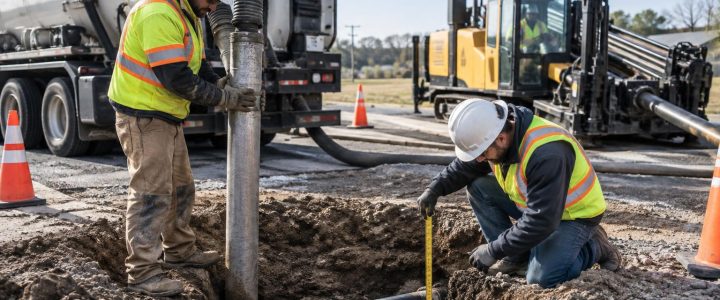
A construction job hazard analysis (JHA), sometimes called a job safety analysis (JSA), is a short, task-specific review of how work could go wrong and what the crew will do to prevent it. Done well, it is not paperwork for the trailer. It is a field tool that helps crews recognize hazards before people, equipment, tools, and changing site conditions come together.
A useful JHA breaks a job into basic steps, identifies the credible hazards at each step, and selects controls that fit the actual work. It should be reviewed with the people performing the task, especially when the work changes, a new crew arrives, weather shifts, or unexpected conditions appear.
OSHA provides job hazard analysis guidance as a recommended method for finding and controlling hazards. A JHA by itself is not a substitute for OSHA-required plans, training, inspections, or procedures that may apply to specific work. Employers should also follow applicable regulations, owner requirements, manufacturer instructions, and their own safety program.
Why pre-task planning matters on construction sites
Construction work changes quickly. A plan made at bid time may not account for a delivery truck blocking a travel route, muddy ground beside an excavation, a new overhead obstruction, another trade working nearby, or a utility found where no one expected it.
Many incidents begin with a routine task that becomes different from the one the crew expected. Common examples include:
- A laborer enters an equipment blind spot while trying to speed up loading.
- A crew uses a ladder for a quick task without checking the landing surface or tie-off point.
- A saw operator cuts material without a realistic plan for dust control, cords, and bystander access.
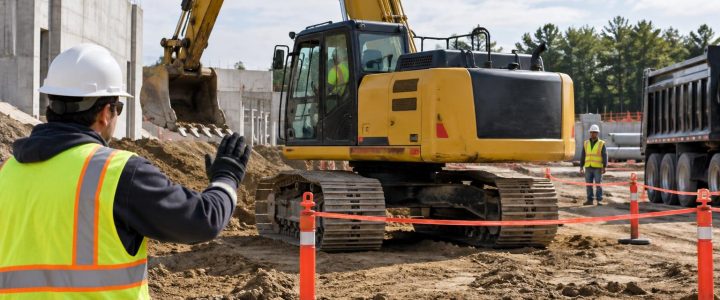
- An excavator begins work based on incomplete information about underground utilities.
- A lift is treated as ordinary even though the load is awkward, the ground is soft, or the route passes near people.
A JHA creates a pause before those conditions become an incident. It also gives the foreman a clear way to assign responsibilities, communicate changes, and make a stop-work decision when controls are not in place.
What a construction JHA should include
The best format is simple enough to use at the point of work. A thorough JHA does not need to predict every possible event. It should focus on the work steps and hazards that could reasonably cause serious injury, property damage, utility damage, or a loss of control.
1. Define the task and work area
Start with a plain description: what will be done, where it will occur, who is involved, what equipment will be used, and when the work will happen. Avoid broad labels such as “site work” or “concrete work.” A more useful description is “install precast structures using an excavator and lifting device along the east utility corridor.”
Include conditions that affect the work: nearby traffic, overhead lines, open excavations, slopes, adjacent operations, public access, restricted space, poor lighting, weather, and known or suspected underground facilities.
2. Break the work into steps
Use the sequence workers will actually follow. Most field tasks can be described in five to 10 steps. For example, a trench utility installation task might include:
- Set up the work zone and inspect the area.
- Locate and mark affected utilities; review available information.
- Mobilize excavation equipment and establish the travel path.
- Excavate and manage spoil, water, and access.
- Install the utility or structure.
- Backfill, compact, and restore the area.
Do not make the list so detailed that the real hazards get buried. The purpose is to reveal where a worker, machine, load, energy source, or changing condition can create exposure.
3. Identify hazards for each step
For each step, ask what can cause harm and how the exposure could occur. Consider more than PPE. Look first at the work environment, energy sources, equipment movement, and interaction with other crews.
Useful questions include:
- Could someone be struck by moving equipment, a swinging load, falling material, or a vehicle?
- Could someone be caught between equipment, a structure, a trench wall, or stored material?
- Is there a fall, slip, trip, collapse, or rollover risk?
- Are there electrical, hydraulic, pneumatic, mechanical, chemical, or stored-energy hazards?
- Will the task create dust, noise, heat, fumes, or a respiratory hazard?
- Could the work affect an occupied building, public area, active roadway, or another contractor?
- What can change during the shift that would make the original plan unsafe?
4. Select controls using the hierarchy of controls
Training, warnings, and PPE are important, but they are not always the strongest first choice. The hierarchy of controls is a practical way to improve a JHA. Start by asking whether the hazard can be removed or reduced through the work plan or physical setup before relying on individual behavior.
- Eliminate: Remove the exposure. For example, complete layout work before equipment enters a congested area, or schedule conflicting activities at different times.
- Substitute: Use a less hazardous method or material where feasible, such as using a lower-dust cutting method or a smaller piece that can be handled without an awkward manual lift.
- Engineering controls: Use physical protections such as barricades, trench protective systems, machine guards, dust collection, equipment cameras, rated lifting devices, or separation barriers.
- Administrative controls: Set exclusion zones, assign a spotter when appropriate, establish communication methods, limit access, sequence work, and conduct inspections.
- PPE: Select and use task-appropriate protection, such as eye protection, hearing protection, respiratory protection, gloves, high-visibility garments, or fall protection when required by the task and conditions.
Controls must be specific. “Use caution” is not a control. “Maintain a barricaded exclusion zone around the excavator swing area; only the designated signal person may enter after positive communication with the operator” is a usable control.
Before you start: a field-ready JHA checklist
Before the crew begins, the supervisor and workers should confirm that the plan still matches the site.
- Walk the work area rather than relying only on drawings or yesterday’s conditions.
- Identify who is in charge of the task and who has stop-work authority.
- Review the work sequence, equipment, hand signals or radio channel, and exclusion zones.
- Check ground conditions, weather, lighting, housekeeping, access routes, and escape paths.
- Confirm that equipment inspections, guards, attachments, and required maintenance are current for the task.
- Verify that workers have the training, qualifications, and task-specific instruction needed for their roles.
- Coordinate with other trades, delivery drivers, facility personnel, and the public where their activities could overlap.
- Identify emergency access, first-aid resources, and the method for reporting an incident or near miss.
- Pause work if an important control is missing, unclear, damaged, or no longer effective.
Example: turning a vague hazard into a workable control
Consider a crew preparing to excavate near an existing building. A weak JHA entry might state: “Hazard: utilities. Control: be careful.” That does not explain what the crew needs to do or when to stop.
A stronger pre-task plan could identify the work step, exposure, and control more clearly:
- Work step: Excavate for a new service connection near the building.
- Hazards: Contact with known or unknown underground facilities; damage to building services; workers entering the equipment operating area.
- Controls: Review available utility information and site markings; establish the planned excavation limits; use the required safe-dig process; maintain communication between the operator and designated spotter; restrict ground-crew access around the machine; stop and reassess if an unmarked line, structure, or conflicting condition is encountered.
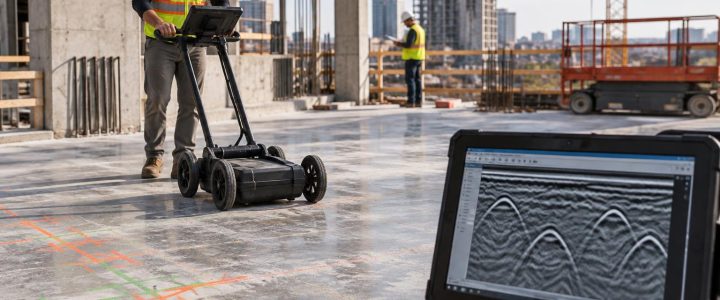
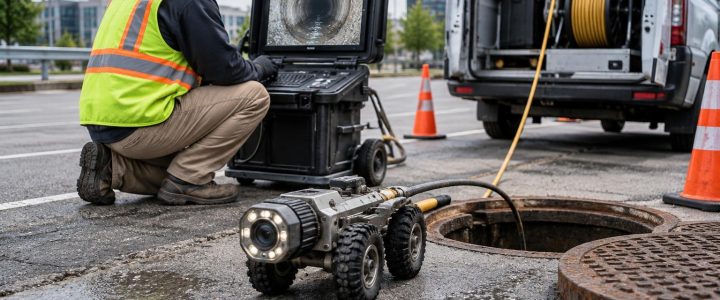
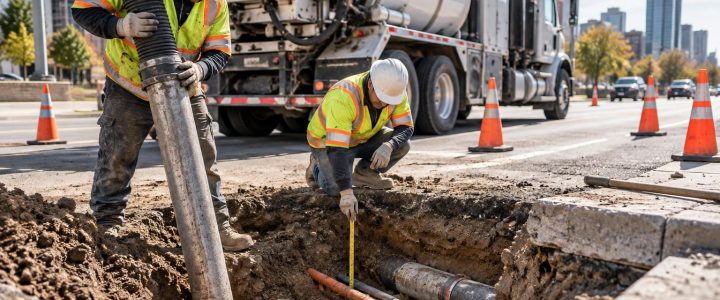
Where utility records, markings, or site conditions leave important uncertainty, a project team may need additional investigation before excavation. Professional private utility locating, subsurface utility engineering, or vacuum excavation can help develop more reliable information for planning. No locating method or record review should be treated as a guarantee that every underground feature has been identified.
Common JHA mistakes to avoid
Copying yesterday’s form
Repeated tasks can create repeated hazards, but conditions are rarely identical. A copied JHA may miss a changed traffic pattern, new subcontractor, damaged barricade, different lift, or weather-related exposure. Reuse the structure if it helps, but verify the conditions every day.
Writing broad, untestable controls
Terms such as “be aware,” “work safely,” and “wear PPE” do not tell the crew how the hazard will be controlled. Name the control, who will implement it, and what must be checked before work proceeds.
Leaving workers out of the discussion
Operators, laborers, and trade workers often know the practical points where the job can become unsafe. A foreman should lead the discussion, but the people doing the work should have a real chance to identify concerns and suggest controls.
Treating the signature as the goal
A signature may document that a discussion occurred, but it cannot prove that people understood the plan or that the controls were installed. Focus on the field conversation, the setup, and active verification during the work.
Failing to update the plan
A JHA is a living document. Stop and revisit it when the scope, crew, equipment, work location, weather, site access, or hazard level changes. An unexpected condition is not a reason to force the old plan forward.
How supervisors can make JHAs useful
Short, consistent pre-task meetings are more effective than long readings from a generic form. Supervisors can improve participation by asking direct questions:
- What is the most serious hazard in the next phase of work?
- Where will people be separated from moving equipment and suspended loads?
- What has changed since the last shift?
- What would make us stop work immediately?
- Who needs to be notified before the task begins?
- What is the backup plan if equipment, weather, access, or site conditions change?
Foremen and superintendents should also observe whether the planned controls are actually in use. If the exclusion zone disappears, a spotter is reassigned, or the work area becomes congested, the answer is not to continue with the original form. Reassess the task and restore effective controls.
Use near misses to strengthen the next plan
A near miss is useful information. A load that shifts without injury, a worker who steps into a blind spot, a damaged cord found before use, or an unmarked utility discovered during excavation can reveal a weakness in planning or communication.
Discuss the event without blame, identify what allowed the exposure, and adjust the next JHA accordingly. The goal is not to create more paperwork. It is to prevent the same gap from reaching someone under less favorable circumstances.
Make pre-task planning part of the work
A construction JHA works when it is brief, task-specific, and connected to visible action in the field. It helps crews make better decisions before deadlines, production pressure, and changing conditions narrow their attention. The strongest plans identify serious exposures early and use practical controls that workers can see, understand, and maintain.
Safety decisions should always reflect the actual site, applicable requirements, employer procedures, equipment manufacturer instructions, and the judgment of qualified personnel. For projects where uncertain underground conditions could affect excavation planning, contact Visionary Subsurface Solutions to discuss your project and the information needed before work begins.