Construction work zones are constantly changing. A delivery truck arrives while an excavator is loading out, a labor crew is moving material, and a foreman is trying to keep an access road open. Without a clear plan, people on foot and moving equipment can end up competing for the same limited space.
An internal traffic control plan is a practical way to manage that risk. It maps how vehicles, mobile equipment, materials, and workers will move inside the project limits. The goal is simple: separate people from vehicle and equipment paths whenever possible, then control the remaining interaction points.
This is not only a roadwork concern. Internal traffic hazards exist on commercial building sites, utility projects, demolition work, industrial facilities, laydown yards, and site-development projects. A good plan helps supervisors make safer decisions before traffic, mud, tight access, and schedule pressure turn a routine movement into a struck-by incident.
Why internal traffic control matters on construction sites
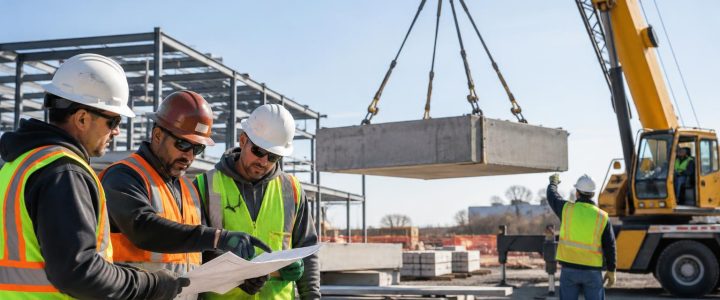
Workers on foot are exposed when trucks, loaders, skid steers, forklifts, excavators, cranes, and other equipment operate nearby. Drivers and operators may have limited visibility due to blind areas, elevated cabs, loads, dust, weather, glare, noise, or changing site grades.
Backing is a common high-risk activity, but forward movement can also create serious hazards. A worker may step from behind stored materials, walk through a swing area, or assume an operator has seen them. A delivery driver unfamiliar with the site may miss a designated route or turn around where ground crews are working.
OSHA’s work zone resources and NIOSH construction safety resources both emphasize planning, traffic control, worker visibility, and separation from moving vehicles as important ways to reduce struck-by risk. The strongest control is not a brighter vest or a louder alarm. It is arranging the work so that people do not need to share a travel path with moving equipment in the first place.
Start with the hierarchy of controls
High-visibility clothing, backup alarms, radios, and spotters are useful, but they depend on people noticing, hearing, and responding correctly every time. Use them as part of the plan, not as the entire plan.
1. Eliminate unnecessary movement
Ask whether a vehicle or piece of equipment needs to enter a congested area at all. Can material be staged closer to the work? Can a truck deliver outside peak pedestrian activity? Can crews use a different access point? Can a machine be positioned to avoid repeated backing?
Reducing trips, crossings, and reversals reduces opportunities for an incident.
2. Use physical separation
When possible, create separate routes for equipment and workers with barriers, fencing, concrete barrier, delineators, or other durable means suited to site conditions. Designated pedestrian routes should not simply be painted or discussed at the morning meeting; they should be visible and workable in the field.
Physical separation is especially important around:
- Site entrances and exits
- Truck loading and unloading areas
- Material laydown yards
- Equipment fueling and maintenance areas
- Concrete washout areas
- Excavation spoil piles and haul routes
- Building access points and temporary facilities
3. Build administrative controls around the site layout
Use a site map, signs, delivery instructions, traffic direction, pre-task briefings, and a defined communication method to support the layout. Update these controls when work phases change. A plan that matched earthwork operations may not work once steel, concrete, interior trades, or paving crews arrive.
4. Use PPE as the final layer
High-visibility garments may be required by the employer, owner, contract documents, or applicable rules for a particular task. They can help operators detect workers, but they do not make a person visible through a blind area or prevent a vehicle from entering a pedestrian route. Select and use PPE according to the employer’s hazard assessment and site requirements.
Before you start: build the plan around actual movement
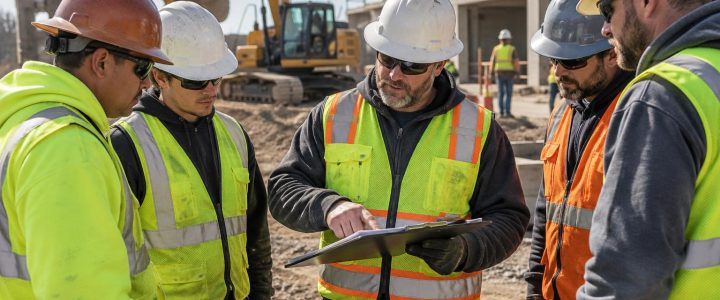
A useful internal traffic control plan begins with a walk-through, not a generic diagram. The superintendent, competent safety personnel, equipment leads, and key trade representatives should look at where people and equipment will actually travel.
Before major work begins, identify:
- All site entrances, exits, gates, and public-road connections
- Truck routes, equipment routes, pedestrian routes, and emergency access
- One-way paths that can limit backing and conflicts
- Delivery staging and check-in locations
- Loading, unloading, and material-handling areas
- Known tight turns, steep grades, soft ground, low clearances, and blind corners
- Areas where trucks and equipment must cross pedestrian paths
- Locations for flaggers, spotters, barriers, signs, and lighting
- Work zones that will move during the day, such as paving, excavation, or concrete placement
- Utility structures, open excavations, stockpiles, and other features that restrict travel
Show these items on a simple drawing. It does not need to be complicated to be useful. The plan should be clear enough that a new delivery driver, operator, or subcontractor can understand where to go, where not to go, and who to contact.
Designing safer routes for trucks and mobile equipment
Use one-way circulation where practical
One-way traffic can reduce conflicting movements and may eliminate some backing. It works best when the entry, route, unloading point, and exit are clearly marked and wide enough for the vehicles expected on site. Confirm that emergency access remains available.
If a one-way route is not possible, identify designated turnaround locations. Do not leave drivers to improvise a turnaround in a laydown area, beside an excavation, or near crews working on foot.
Keep pedestrian routes out of equipment paths
A pedestrian route should lead workers from parking, trailers, gates, and work areas without sending them through active haul roads or loading zones. Where a crossing cannot be avoided, make it a single, deliberate crossing point with clear sight lines and controls appropriate to the hazard.
Do not route pedestrians between a truck and a fixed object, behind parked equipment, or through an equipment swing area. These locations create caught-between and struck-by exposure even when a vehicle is moving slowly.
Plan deliveries instead of reacting to them
Many traffic conflicts begin when deliveries arrive without a defined appointment, route, or unloading plan. Provide delivery instructions before the truck reaches the gate. Include the correct gate, site contact, radio or phone procedure, speed expectations, route, waiting location, and unloading area.
Schedule large or unusual deliveries during periods with fewer people and less equipment movement when feasible. Coordinate crane picks, concrete trucks, fuel deliveries, and oversized loads with the day’s other operations.
Managing backing, spotters, and operator communication
Backing should be avoided where practical. When it cannot be avoided, the task needs a clear method for keeping people out of the travel path.
Use spotters deliberately
A spotter is not simply the nearest available worker. The spotter should understand the movement, stay visible to the operator, remain outside the vehicle path, and have a clear way to stop the movement. Establish hand signals or radio language before the vehicle moves.
The operator and spotter should agree on one non-negotiable rule: if visual contact or communication is lost, the operator stops. The operator should not continue based on an assumption that the spotter has moved to a safe location.
A spotter cannot manage every risk alone. Use barriers and exclusion zones to keep other workers out of the backing area. When the work area is highly congested, consider whether staging changes, traffic pauses, or a different equipment position can remove the need to back through people.
Set exclusion zones around active equipment
Define areas where pedestrians are not permitted while equipment is operating. The size and shape of the zone should reflect the equipment, attachment, load, travel direction, swing radius, terrain, and task. Marking a zone is helpful, but crews must also understand the rule behind it: do not enter until the operator acknowledges you and the equipment is in a safe condition for access.
Workers should never assume an operator sees them because they are wearing high-visibility clothing, making eye contact from a distance, or standing near the machine. Wait for positive acknowledgment and follow the site’s communication procedure.
Common mistakes that weaken construction work zone safety
- Using a plan that no longer matches the site. Routes often change after excavation, paving, utility work, or material deliveries. Review the plan whenever conditions change.
- Putting signs up without maintaining them. Signs hidden by parked equipment, mud, snow, or changing site access do not control traffic.
- Allowing informal shortcuts. A shortcut through a haul route can quickly become normal behavior. Close it physically or provide a better pedestrian route.
- Leaving delivery drivers without direction. Drivers may be skilled, but they do not know the day’s changing jobsite hazards without site-specific instructions.
- Relying only on backup alarms. Alarms may be hard to hear in noisy environments, and workers can become accustomed to them. They do not replace separation and controlled movement.
- Ignoring nighttime and poor-weather conditions. Rain, fog, darkness, snow, mud, and glare can change stopping distance, footing, visibility, and route usability.
A field checklist for supervisors and foremen
Use this quick review before the shift and whenever traffic conditions change:
- Are the day’s vehicle routes, pedestrian routes, and unloading areas still clear and usable?
- Have new subcontractors, visitors, and delivery drivers received site traffic instructions?
- Are barriers, cones, signs, and lighting in the right locations and in good condition?
- Are workers separated from active equipment wherever feasible?
- Are backing movements minimized, and are designated turnaround areas available?
- Have spotters and operators reviewed communication signals and stop-work expectations?
- Are stockpiles, parked equipment, containers, or open excavations creating new blind corners?
- Have weather, mud, ice, dust, or changing light affected route safety?
- Is emergency access open and known to the crew?
- Does the traffic plan account for the work planned later in the shift, not only the current setup?
Questions for a toolbox talk
Short, specific discussions can help crews recognize traffic hazards before a close call occurs. Ask:
- Where are the no-pedestrian areas today?
- Which equipment movements will require a spotter or a temporary traffic pause?
- What is the stop signal, and what should an operator do if they lose sight of a spotter?
- Where should delivery drivers wait before entering the work area?
- What new site condition could create a blind spot this afternoon?
- Who has authority to stop vehicle movement if a route becomes unsafe?
When underground conditions affect the traffic plan
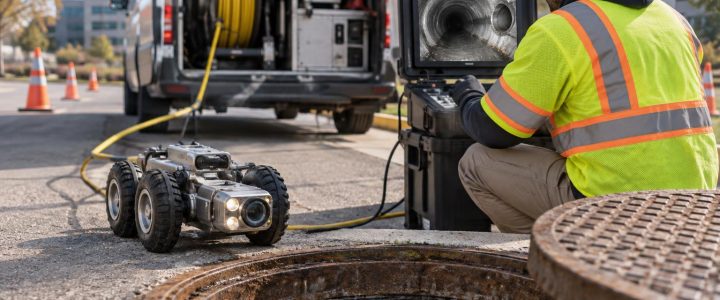
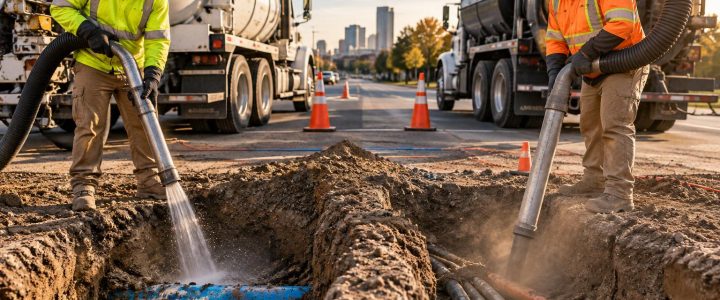
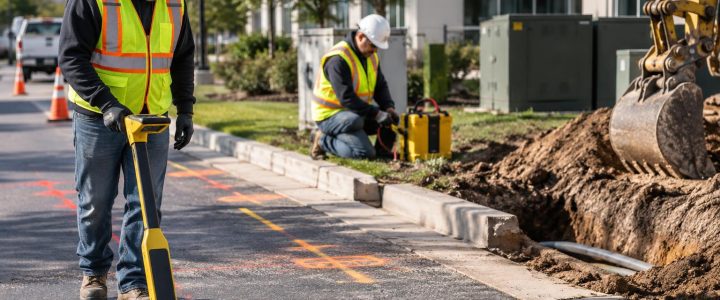
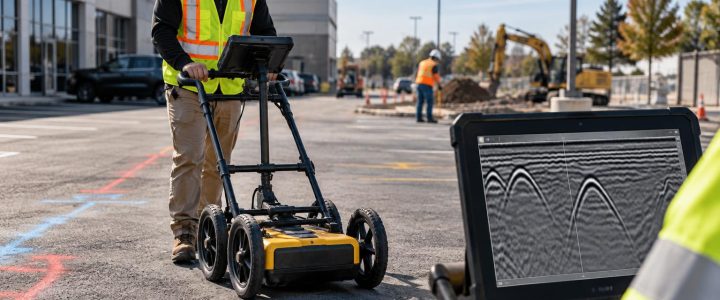
Haul routes, crane pads, equipment staging, and temporary access roads can be affected by vaults, manholes, shallow utilities, recently backfilled trenches, and unknown subsurface conditions. These features can affect both safe travel and where it is appropriate to stage heavy loads. Address known constraints during planning, and reassess when field conditions differ from drawings or expectations.
For projects with uncertain private utility infrastructure or congested subsurface areas, early investigation can support safer planning of access, excavation, and equipment staging. Visionary Subsurface Solutions can assist with Subsurface Utility Engineering and QL-B services when project teams need better utility information for design and construction decisions.
Make the plan active, not a document on a clipboard
An internal traffic control plan is most effective when it is used every day. Discuss it during orientation, review it in pre-task planning, communicate changes quickly, and empower workers to report blocked routes, unsafe backing, missing barriers, and new blind spots.
Site-specific conditions, employer procedures, equipment manufacturer instructions, contract requirements, and applicable regulations may require additional controls. When underground conditions, access constraints, or active construction traffic create difficult planning questions, contact Visionary Subsurface Solutions to discuss your project and the information needed to support safer work.