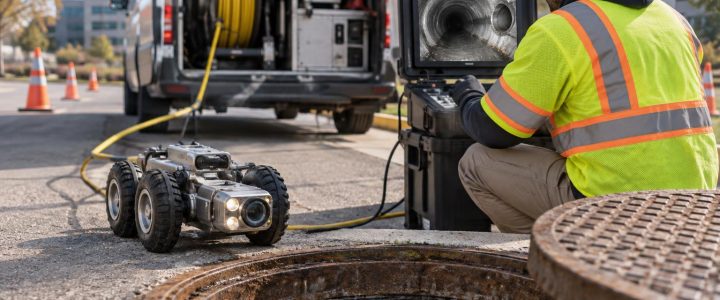
Trenching work can move quickly, but ground conditions can change even faster. A trench that looked acceptable at the start of a shift can become unsafe after rain, vibration, nearby equipment movement, or a change in soil. The most important trenching safety decision is simple: do not allow entry until the excavation has been evaluated and the needed protections are in place.
Cave-ins are the central concern, but they are not the only hazard. Workers may also face underground utilities, falling materials, water accumulation, unsafe access, mobile equipment, and hazardous atmospheres. A practical trench safety process looks at all of those hazards before work starts and again as conditions change.
In U.S. construction, OSHA excavation rules require a protective system in trenches 5 feet deep or greater unless the excavation is made entirely in stable rock. Trenches 20 feet deep or greater require a protective system designed by a registered professional engineer. OSHA and NIOSH both emphasize that a cave-in can occur with little warning and can be fatal. The checklist below supports, but does not replace, the applicable regulations, a competent person’s evaluation, manufacturer instructions, and the project-specific safety plan.
Why trenching hazards are often underestimated
Soil is not a fixed structure. It may have been disturbed by prior construction, utility installation, backfill, frost, groundwater, or vehicle traffic. A vertical face that remains standing briefly is not necessarily stable. Soil can lose strength when it becomes wet, dries out, is vibrated, or is loaded near the edge.
Common incident patterns include workers entering an unprotected trench for a “quick” connection, spoil piles placed too close to the edge, an excavator working beside a trench, and water entering overnight. These are planning and control failures, not simply worker-behavior problems. The safest approach is to eliminate the need for entry where feasible, then use reliable protective systems and controlled work practices when entry is necessary.
Before You Start: trenching safety checklist
Complete this review before anyone enters the excavation. A designated competent person should inspect the excavation, adjacent area, and protective system before the shift and as conditions require. OSHA defines a competent person as someone able to identify existing and predictable hazards and authorized to take prompt corrective measures.
1. Define the work and decide whether entry is needed
- What task must be completed in the excavation: connecting pipe, inspecting a structure, installing a service, repairing a leak, or another activity?
- Can the task be completed from the surface, with a mechanical method, or by changing the sequence of work?
- Who will enter, what tools and materials will go in, and how long will the work take?
- Is there a clear stop-work plan if ground, water, utility, or weather conditions change?
Eliminating entry is the strongest control. If workers must enter, plan the protective system, access, equipment position, material handling, and emergency response before digging reaches entry depth.
2. Identify underground and overhead hazards
- Review available plans, records, utility-owner information, site observations, and required utility notifications.
- Walk the proposed route. Look for meters, valves, pedestals, manholes, overhead lines, patched pavement, drainage structures, and signs of previous excavation.
- Discuss where utilities may cross or run parallel to the trench, including private electric, gas, communications, water, sewer, irrigation, and abandoned lines.
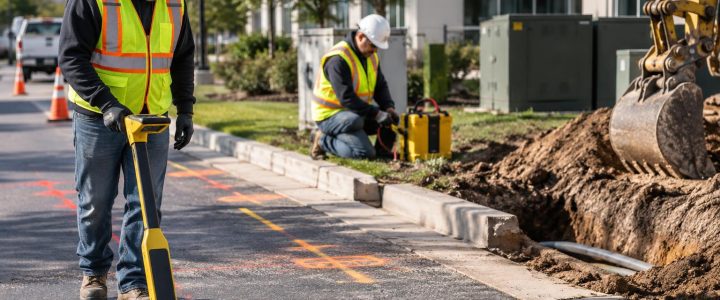
- Use the project’s approved methods to verify the location and depth of critical utilities before mechanical excavation reaches the tolerance area.
- Keep equipment, booms, materials, and suspended loads clear of overhead electrical hazards in accordance with applicable requirements and the utility owner’s guidance.
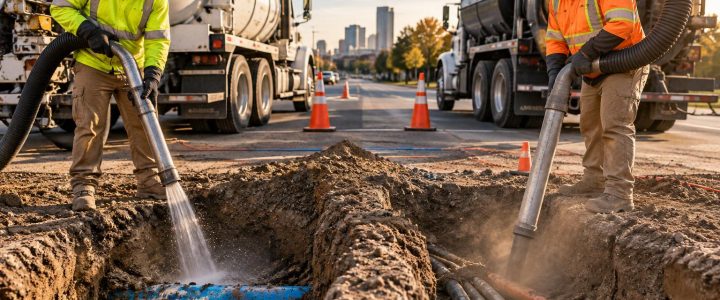
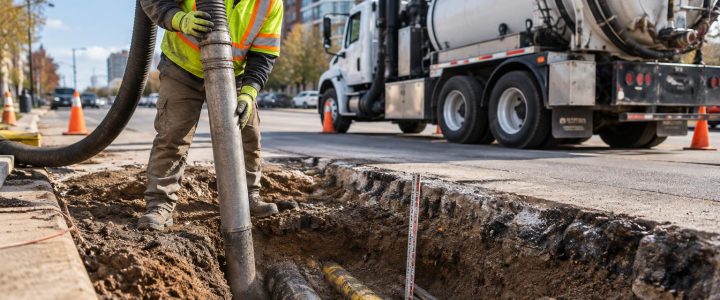
Marks and records are valuable planning tools, but they do not prove exact depth or remove the need for careful excavation. On complex sites, Subsurface Utility Engineering & QL-B can help teams develop a more reliable picture of documented and detected underground utility corridors before excavation. Where a critical utility must be physically verified, controlled vacuum excavation and QL-A test holes may be appropriate.
3. Have the competent person classify conditions and select protection
The protective system should match the actual excavation and soil conditions. OSHA recognizes sloping or benching, shoring, and shielding as primary protective approaches. The right choice depends on soil type, trench geometry, nearby loads, water, adjacent structures, and the system manufacturer’s instructions.
- Sloping and benching: Cut the sides back at an angle or in steps allowed by the soil classification and site conditions. Do not assume a slope is safe because it looks gradual.
- Shoring: Use hydraulic, timber, or other shoring designed and installed to support trench walls. Follow the approved tabulated data or engineered design.
- Shielding: Use a trench box or shield to protect workers inside its limits. A box does not prevent a cave-in; it provides a protected work area when properly selected, placed, and used.
Never alter, move, stack, or use a protective system outside its intended configuration. Follow the manufacturer’s tabulated data and instructions. If a trench is 20 feet deep or more, or if the site conditions fall outside available tabulated data, obtain the required engineered design.
4. Control spoil piles, materials, and equipment loads
Material near the top edge can fall into the trench or add pressure that contributes to a wall failure. OSHA generally requires excavated material and other equipment or materials to be kept at least 2 feet from the edge, or restrained by a retaining device. That is a minimum distance, not a complete evaluation of surcharge loads.
- Place spoil, pipe, trench boxes, barriers, and other materials where they cannot roll or slide into the excavation.
- Keep excavators, trucks, forklifts, and cranes away from the edge unless the excavation has been evaluated for the added load and the work is planned accordingly.
- Set swing areas and truck travel paths so workers are not exposed to rotating counterweights or backing equipment.
- Use barricades, stop blocks, or other controls where vehicles could approach the excavation.
5. Provide safe access and a clear exit
Workers need a dependable way to get in and out without climbing loose soil or shoring components. OSHA requires a ladder, ramp, stairway, or other safe means of egress in trenches 4 feet or deeper so that workers do not have to travel more than 25 feet laterally to reach it.
- Use ladders that extend above the landing surface and are secured against movement where required.
- Keep access routes free of mud, hoses, materials, and sharp edges.
- Place egress within the protected work area when practical.
- Do not use cross braces, trench box spreaders, buckets, or unstable materials as access equipment.
6. Check water, weather, and atmospheric hazards
Water changes soil behavior and can quickly create a serious cave-in hazard. Keep workers out of an excavation where water has accumulated or is accumulating unless adequate precautions are in place. Those precautions may include dewatering equipment, diversion of surface runoff, special support or shielding, and ongoing monitoring by a competent person.
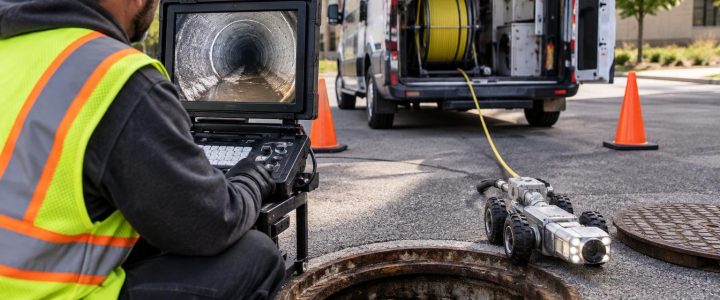
Also consider atmospheric hazards. Excavations can collect low-lying gases or have reduced oxygen, especially near sewers, landfills, fuel systems, industrial processes, or areas with decaying organic material. OSHA requires atmospheric testing before entry where oxygen deficiency or a hazardous atmosphere could reasonably be expected. If a hazardous atmosphere is present or could develop, use the required controls and follow the applicable confined-space and respiratory-protection procedures.
What the competent person should inspect during the shift
A trench inspection is not a one-time paperwork item. OSHA requires inspections by a competent person before the start of work and as needed throughout the shift. Inspections are also required after a rainstorm or other hazard-increasing occurrence. The goal is to identify conditions that could lead to a cave-in, protective-system failure, hazardous atmosphere, or another unsafe condition before workers are exposed.
Warning signs that require immediate attention
- Cracks, fissures, sloughing, bulging, or spalling on a trench wall
- Water seepage, pooling, erosion, or soft ground near the edge
- Changes in soil layers, fill material, or previously disturbed ground
- Movement, damage, or incorrect installation of shoring or shielding
- New equipment loads, traffic, stockpiles, or vibration near the excavation
- Falling soil or material entering the protected area
- Strong odors, unusual worker symptoms, or a reason to suspect an atmospheric hazard
If a hazardous condition is found, remove exposed workers from the excavation. Correct the condition and have the excavation reevaluated before re-entry. Do not let production pressure turn a known concern into a “watch it closely” decision.
Common trenching safety mistakes to avoid
“It is only a shallow or quick repair”
Time in the trench does not control the risk. A short task can still expose a worker to a cave-in, utility strike, or falling material. Plan the task at the same level of care as longer work.
“The trench box is on site, so we are protected”
A shield must be the correct type and size, positioned correctly, and used within the manufacturer’s instructions. Workers should not work outside the protected area or enter a box that has been damaged, improperly installed, or undermined.
“The soil held yesterday”
Yesterday’s conditions do not establish today’s soil classification or safety. Rain, thawing, vibration, new spoil piles, and nearby equipment can change the risk.
“PPE will protect us from a collapse”
Hard hats, boots, high-visibility clothing, gloves, and eye protection are important construction PPE. They do not replace sloping, shoring, shielding, safe access, or other controls that prevent a cave-in.
Questions for a trenching toolbox talk
- What protective system is being used today, and what are its limits?
- Who is the competent person, and how do we reach them?
- Where are the access and egress points?
- Where will spoil, pipe, and equipment be staged?
- What utilities may be present, and what is the approved digging method near them?
- What conditions require us to stop work and leave the trench?
- How will rain, runoff, traffic, or equipment vibration be managed?
- Who has authority to stop the work if conditions are unsafe?
Frequently asked questions about trench safety
Does every trench need a trench box?
No. A trench box is one type of shielding. Depending on the site and soil conditions, sloping, benching, shoring, shielding, or a combination may be appropriate. The competent person must evaluate the excavation, and the selected system must meet applicable requirements and manufacturer or engineering guidance.
Can a worker enter a trench less than 5 feet deep?
OSHA’s protective-system threshold does not mean every trench under 5 feet is automatically safe. A competent person still needs to evaluate hazards such as unstable soil, water, utilities, falling materials, equipment loads, and access. Protective measures may be necessary at shallower depths when conditions warrant them.
Is a utility locate enough to make excavation safe?
No. Utility information helps plan excavation, but trench safety also requires protective systems, competent-person inspections, safe access, spoil and equipment controls, and attention to water and atmospheric hazards. The locate method, available records, site conditions, and utility verification needs should all be considered.
Make trench safety part of the daily work plan
Safe trenching begins before the bucket breaks ground and continues until the excavation is backfilled. Define the task, identify underground hazards, select protective measures, control loads near the edge, provide egress, and inspect whenever conditions change. Review OSHA’s trenching and excavation guidance and NIOSH’s excavation safety resources when building or updating a trenching safety plan.
Every site has different soil, utility, access, and operational constraints. Base field decisions on current site conditions, applicable requirements, training, equipment instructions, and qualified professional judgment. If your project needs help reducing uncertainty around subsurface utilities before excavation, contact Visionary Subsurface Solutions to discuss the project and available investigation options.