Excavators are essential on construction sites, but they create serious struck-by and caught-between hazards when people work too close to the machine. The risk is not limited to digging. Loading trucks, grading, lifting, traveling, trench work, cleanup, and utility daylighting can all put ground crews near a moving counterweight, boom, bucket, tracks, or attachment.
A strong excavator safety plan does not depend on a worker simply “being careful.” It creates separation between people and equipment, sets clear communication rules, and gives the operator reliable information about who is in the work zone. This is especially important on busy sites where conditions change throughout the day.
Federal safety guidance consistently emphasizes keeping workers out of equipment swing areas and blind spots, using effective communication, and controlling vehicle and equipment movement. For additional guidance, review resources from OSHA’s construction safety program and the CPWR struck-by hazard resources. Site-specific conditions, employer procedures, equipment manuals, and applicable requirements may call for additional measures.
Why excavator work creates struck-by hazards
An excavator operator may have restricted visibility around the tracks, behind the machine, and on the far side of the house and boom. Mirrors, cameras, alarms, and proximity systems can improve awareness, but they do not eliminate blind areas. Mud, glare, dust, low light, vibration, damaged lenses, and a crowded work area can reduce their usefulness.
The excavator’s upper structure also rotates independently of the undercarriage. The counterweight can sweep through a large area quickly. A worker may think they are clear of the bucket but still be exposed to the rear swing path. Workers can also become caught between the machine and a truck, spoil pile, structure, trench box, stockpile, or another piece of equipment.
Common conditions that increase risk include:
- Ground workers entering the work area to check grade, guide a load, take measurements, or retrieve tools.
- Operators backing, turning, or repositioning between short work cycles.
- Multiple machines working in a limited area.
- Truck drivers leaving the cab during loading or waiting near the excavator.
- Workers assuming the operator can see them because the machine is stopped.
- Unplanned changes, such as a delivery arriving, a subcontractor starting nearby, or a utility conflict shifting the dig area.
- Poor lighting, noise, uneven ground, rain, dust, or congested material storage.
The primary control: keep people and equipment separated
The most reliable way to reduce excavator-related injuries is to keep pedestrians outside the equipment operating zone whenever the machine is moving or able to move. This is a higher-level control than relying on eye contact, hand signals, high-visibility clothing, or a backup alarm alone.
Before work begins, define an equipment work zone that accounts for the machine’s travel path, boom and bucket movement, tail swing, material placement, truck access, and any nearby excavation edge. Marking the area with cones, barricades, fencing, caution tape, or a physical barrier can help, but the method needs to match the site. A few cones may not adequately control access along a busy haul route.
Plan the work zone around the task
The work zone should not be copied from one task to another. A compact excavator trimming a curb line has different movement and visibility concerns than a large excavator loading dump trucks or handling pipe.
Discuss these questions during pre-task planning:
- Where will the excavator travel, park, swing, dig, and place spoil?
- Where will trucks enter, wait, position, and exit?
- Which workers have a legitimate reason to enter the work zone?
- Where can a worker stand without being in the swing radius, travel path, or pinch point?
- What physical features block the operator’s view?
- How will workers communicate with the operator?
- Who has authority to stop the operation if someone enters the area or conditions change?
Establish a controlled entry point where practical. If a grade checker, laborer, inspector, or foreman needs access, they should not walk in unexpectedly from the side or rear of the excavator.
Before you start: excavator safety checklist
A short, task-specific discussion can prevent confusion once the machine begins moving. Supervisors, operators, and affected workers should cover the following before the first bucket is moved.
- Inspect the machine and work area. Check mirrors, cameras, alarms, lights, attachments, tracks or tires, windows, and visibility aids. Walk the travel route and look for soft ground, obstructions, drop-offs, overhead hazards, and pedestrians.
- Identify the swing radius and pinch points. Consider the rear counterweight, bucket, attachment, nearby trucks, walls, trench protection, materials, and equipment.
- Set the exclusion zone. Decide how the area will be marked and how workers will be kept outside it. Adjust the zone as the work progresses.
- Assign a spotter only when needed. A spotter should have one clear role, a safe position, a reliable communication method, and the operator’s full attention. Do not use a spotter as a substitute for controlling unnecessary foot traffic.
- Agree on signals and stop-work communication. Confirm the hand signals, radio channel, or other method to be used. Everyone should understand that a stop signal means stop immediately.
- Coordinate with other trades. Tell nearby crews when the excavator will begin work, where they must stay clear, and who to contact if access is needed.
- Address underground and overhead hazards. If excavation is planned, confirm that the utility investigation and excavation plan are appropriate for the scope. Also identify overhead lines and any required clearance or work restrictions.
How to use a spotter effectively
A spotter can help when visibility is limited, equipment must work close to people or structures, or an operator needs help navigating a constrained route. But spotter use often fails when the assignment is informal. A worker may be told to “watch the back” while also handling traffic, checking grade, talking on a phone, or completing another task.
A designated spotter should not stand in a blind spot or between the excavator and an object. The operator must be able to see the spotter at all times. If visual contact is lost, the operator should stop movement until contact is restored or the situation is otherwise controlled under the site procedure.
Spotter practices that reduce confusion
- Use one designated spotter for the movement whenever possible.
- Position the spotter where they can see the travel path and remain visible to the operator.
- Keep the spotter outside the swing radius, track path, and crush zones.
- Use standardized hand signals or a tested radio procedure.
- Make the stop signal simple and understood by everyone involved.
- Do not allow several people to give competing directions to the operator.
- Stop work if the spotter must relocate, answer a call, assist another worker, or loses a safe view.
High-visibility apparel is useful, particularly in low-light conditions or around traffic, but it does not make a person visible through a machine blind spot. The work plan still needs positive separation and communication.
Safe practices for ground crews
Ground workers often need to work near excavators, especially during pipe installation, trench work, layout, grade checking, and utility exposure. That does not mean they should remain near the machine during every phase of the operation.
A good rule is to stay out of the operating area unless there is a clear task, the operator knows you are there, and the equipment is stationary or controlled for the interaction. Never assume the operator has seen you because you waved, made eye contact earlier, or have worked with that operator before.
Ground crew do this, not that
- Do: Wait in the designated safe area until the operator signals that entry is appropriate.
- Do: Approach from a location where the operator can clearly see you, following the site communication plan.
- Do: Keep an escape path in mind when working near an excavation, wall, truck, or other fixed object.
- Do: Tell the operator before moving from one side of the machine to the other.
- Do not: Walk behind an excavator to save a few steps.
- Do not: Stand under a raised bucket, boom, attachment, or suspended load.
- Do not: Work between the excavator and a truck, structure, trench edge, or stockpile unless the task has been specifically planned and equipment movement is controlled.
- Do not: Enter a trench or excavation while equipment is operating overhead or placing material nearby unless the work sequence and protective measures have been evaluated by competent personnel.
Loading trucks without creating a crowded danger zone
Truck loading is a common point of conflict between equipment operators, drivers, and ground crews. Drivers may exit the cab to check the load, secure a tarp, speak with another worker, or wait for instructions. At the same time, the excavator may be swinging continuously over the truck bed.
Set a clear procedure for driver location during loading. The procedure should account for the type of truck, the loading method, the site layout, visibility, traffic control, and company policies. Keep all nonessential personnel out of the loading area. If a driver must leave the cab or approach the truck, pause the loading operation and communicate directly before anyone enters the area.
Also plan truck routes so drivers do not have to back through pedestrian work areas whenever a safer layout is feasible. Separate haul roads and walkways, use clear signs, and manage arrival times when space is limited.
Excavation work adds another layer of risk
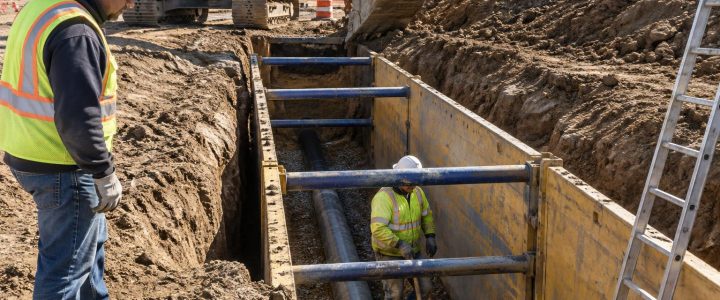
Excavator operations near trenches and open excavations require additional planning. The machine’s weight, vibration, spoil placement, and travel path can affect ground conditions near an excavation. Workers also face the risk of falling into the excavation, being struck by the bucket, or becoming trapped between the machine and the edge.
Keep spoil, materials, and equipment positioned so they do not create an avoidable hazard at the edge. The competent person responsible for excavation safety should evaluate changing conditions, including weather, water, soil disturbance, nearby traffic, and equipment activity. The exact controls depend on the excavation configuration and site conditions.
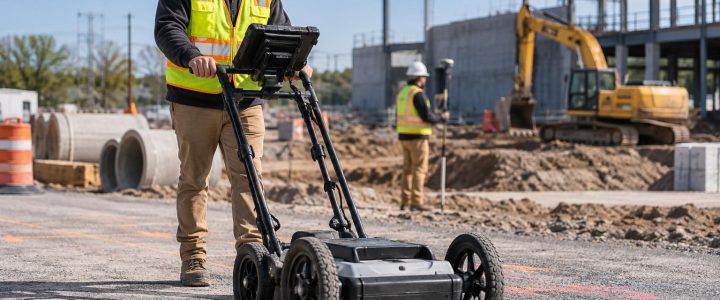
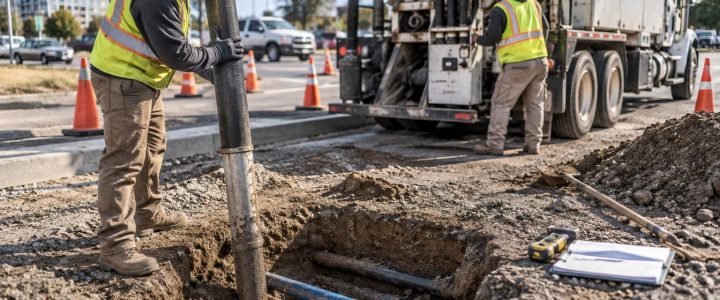
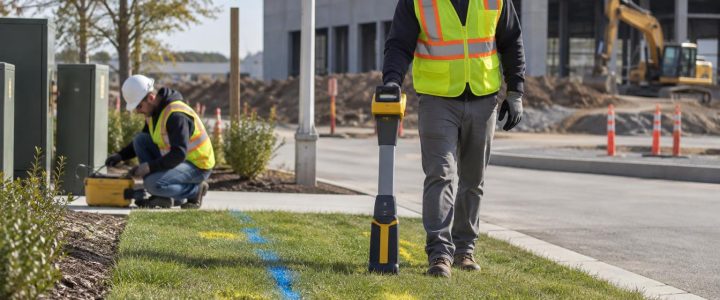
Unknown underground utilities can complicate both the excavation plan and equipment movement. Before intrusive work, project teams may benefit from appropriate records review, utility investigation, and non-destructive exposure methods. Where utility risk is part of the scope, vacuum excavation and QL-A test holes can help verify the horizontal and vertical position of a utility at a planned exposure point without relying on mechanical excavation alone.
Common mistakes that undermine excavator safety
Most excavator incidents do not come from one dramatic error. They often develop from routine shortcuts, poor coordination, and a work zone that was never clearly defined.
- Starting work before discussing pedestrian routes and equipment movement.
- Allowing workers to enter the swing radius for convenience.
- Using a spotter without defining the spotter’s position or authority.
- Assuming alarms, cameras, or mirrors solve blind-spot problems.
- Letting multiple trades work beside active equipment without coordination.
- Failing to update the plan after the excavator changes location, a truck route changes, or visibility worsens.
- Continuing through a communication breakdown instead of stopping and resetting the task.
A practical supervisor check before each shift
Before active equipment work begins, supervisors can ask a few direct questions:
- Can every worker identify the excavator exclusion zone?
- Where will ground crews wait when they are not needed near the machine?
- Who is authorized to signal the operator?
- What will the operator do if they lose sight of a spotter or pedestrian?
- Where are trucks, deliveries, and other equipment expected to move?
- Have weather, lighting, ground conditions, or site congestion changed since yesterday?
- Are there utility, excavation, overhead, or public-access issues that affect the work plan?
If the answers are unclear, the job is not ready to proceed at full speed. A brief reset is usually far less disruptive than an injury, equipment strike, utility damage, or emergency response.
Make safe equipment movement part of the daily plan
Excavator safety is a team responsibility. Operators need controlled work areas and clear signals. Ground crews need permission to stop work and a reliable way to enter the area safely when their task requires it. Supervisors need to coordinate people, trucks, equipment, and changing site conditions rather than treating equipment movement as background activity.
Build the plan around separation first, then support it with communication, trained personnel, equipment inspections, and appropriate PPE. Revisit the plan whenever the work sequence, machine location, crew, or conditions change.
For projects where excavation will occur around uncertain subsurface conditions, contact Visionary Subsurface Solutions to discuss a practical investigation and utility-risk reduction approach for your project.