Good construction pre-task planning is not a paperwork exercise. It is a short, focused conversation that helps the crew identify what can hurt someone today, what has changed since yesterday, and how the work will be controlled before tools start up or equipment starts moving.
A job hazard analysis (JHA), sometimes called a job safety analysis (JSA), is one useful way to organize that conversation. The best plans are specific to the task, crew, location, equipment, materials, and conditions on the site. A generic form copied from a prior job may check a box, but it may not prepare workers for the hazards in front of them.
This guide explains how contractors, foremen, superintendents, and workers can make construction pre-task planning practical and useful in the field.
What is construction pre-task planning?
Construction pre-task planning is a review completed before a crew begins a defined activity. It breaks the work into basic steps, identifies hazards associated with each step, and assigns controls that reduce the risk.
For example, “install storm pipe” is too broad to be a useful task description. A better plan separates the work into steps such as:
- Mobilize excavator, trench box, pipe, and rigging.
- Establish the work zone and equipment travel paths.
- Excavate and manage spoil placement.
- Enter the excavation, if entry is planned and permitted by site conditions.
- Lower and connect pipe.
- Backfill and compact.
- Demobilize equipment and restore the area.
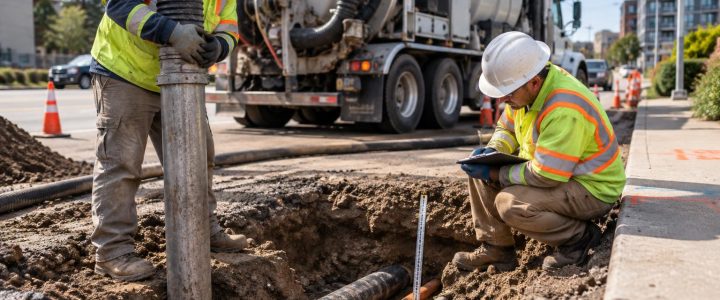
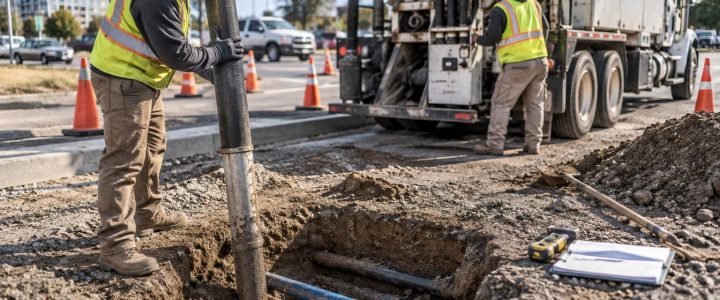
Each step brings different hazards. The excavation crew may face changing ground conditions, mobile equipment, suspended loads, access and egress concerns, underground utilities, water accumulation, and nearby traffic. Discussing all of those hazards in one vague sentence is less helpful than addressing them as the work progresses.
Why a JHA should happen before the work changes
Crews often recognize hazards after a close call: a delivery truck backs into a congested area, an excavator works too close to a laborer, a lift is set up on soft ground, or rain turns an access route into mud. Pre-task planning creates time to address those conditions before workers are exposed.
It is especially important when the work is new, complex, infrequent, or changing. A routine activity can also become a high-risk activity when the site changes.
Triggers for a fresh pre-task review
Stop and update the plan when any of the following occurs:
- A new crew member, subcontractor, operator, or delivery driver arrives.
- The crew moves to a different area of the project.
- Equipment, attachments, tools, rigging, or materials change.
- The scope changes or work sequencing shifts.
- Weather, visibility, wind, heat, cold, or ground conditions change.
- Work begins near traffic, overhead lines, excavations, existing structures, or underground utilities.
- A near miss, equipment contact, damaged material, or unexpected condition occurs.
- The crew returns after a shutdown, weekend, or long break.
A signed form from the morning meeting does not control a hazard that develops at 2:00 p.m. The plan needs to follow the work.
Start with the work, not the form
A strong JHA begins with a clear description of what the crew will actually do. Supervisors should walk the work area when possible, look at access routes and adjacent operations, and involve the people performing the work.
Workers often see field-level details that are easy to miss from a schedule or site map: a blind corner, a soft shoulder, a damaged cord, a poorly stored bundle of material, a conflicting trade, or a delivery route that cuts through the crew’s work zone.
Questions to ask before work begins
- What is the exact task, and where will it happen?
- Who is performing the work, operating equipment, spotting, signaling, or supervising?
- What equipment, tools, vehicles, chemicals, materials, and energy sources are involved?
- What work is happening above, below, beside, or through this area?
- Where will workers walk, stand, enter, exit, and stage materials?
- What could strike, crush, pinch, cut, burn, shock, bury, or expose a worker?
- What must be isolated, barricaded, supported, shut down, or moved before work starts?
- What conditions would require the crew to stop and reassess?
- How will the crew communicate if visibility or noise is poor?
- What is the emergency plan for this location?
Identify hazards by task step
Listing “PPE,” “be careful,” or “watch surroundings” is not hazard identification. A useful construction safety plan identifies the source of harm and the situation that could expose a worker to it.
For every task step, consider common construction hazard categories:
- Struck-by hazards: moving equipment, backing trucks, swinging loads, flying debris, pressurized lines, or falling materials.
- Caught-between hazards: equipment and structures, pinch points, trench walls, moving machine parts, or shifting loads.
- Falls: open edges, floor openings, ladders, scaffolds, leading edges, wet surfaces, and uneven ground.
- Electrical hazards: overhead and underground lines, damaged cords, temporary power, energized equipment, and wet conditions.
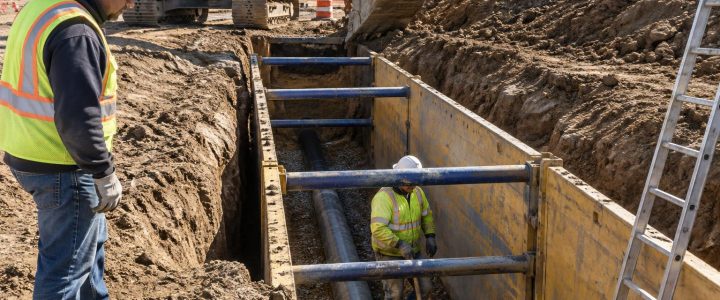
- Excavation hazards: cave-ins, falling spoil, water, unstable access, nearby vibration, and changing soil conditions.
- Health hazards: silica dust, welding fumes, noise, heat, cold, chemical exposure, and poor ventilation.
- Environmental and public hazards: vehicle traffic, pedestrians, adjacent tenants, public access, and stormwater conditions.
Be specific about the exposure. “Heavy equipment” is not the hazard by itself. “Laborer working inside the excavator swing area while the operator loads trucks” identifies a situation the crew can change.
Choose controls in the right order
Personal protective equipment matters, but it should not be the first or only control. Stronger controls reduce exposure before a worker must rely on attention, behavior, or PPE alone.
Use the hierarchy of controls
- Eliminate the hazard. Remove the need for the exposure. For example, stage materials outside a backing area instead of asking workers to work around reversing trucks.
- Substitute a safer method or material. Use a less hazardous process where the project allows it.
- Use engineering controls. Add physical protections such as barriers, trench protective systems, machine guards, ventilation, traffic separation, edge protection, or remote handling methods.
- Use administrative controls. Establish a spotter plan, exclusion zone, sequence of operations, qualified operator assignment, communication method, or work schedule.
- Use PPE. Select, inspect, and wear task-appropriate PPE as the final layer of protection.
For example, if an excavator must work near ground personnel, the plan should first consider whether workers can stay out of the machine’s travel and swing area. Barricades, designated walkways, a controlled loading zone, and a clear communication plan are more dependable than telling everyone to “stay alert.”
Make communication part of the control
Many jobsite incidents involve a communication gap: an operator does not know someone has entered an area, two trades assume the other has secured a hazard, or a worker mistakes a hand signal. Pre-task planning should identify who has authority, who communicates with whom, and what method will be used.
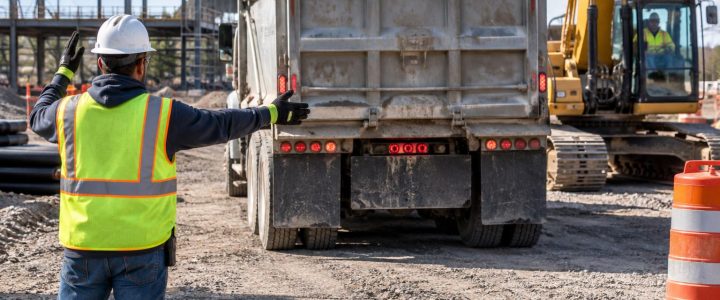
Set clear rules for mobile equipment
- Define the equipment operating area, swing radius, travel route, and loading zone.
- Keep pedestrians out of those areas unless their presence is necessary and controlled.
- Identify the designated spotter when one is needed. The operator and spotter should agree on signals before movement begins.
- Require the operator to stop if visual contact with the spotter is lost or the path is unclear.
- Control delivery vehicle movements with a planned route and safe staging area.
- Do not place a worker between mobile equipment and a fixed object unless the equipment is secured and the exposure has been eliminated.
Radios can help, but they do not replace controlled work zones, line of sight, and agreed-upon signals. Noise, dead batteries, competing radio traffic, and misunderstanding can all reduce their value.
Plan for underground and overhead hazards
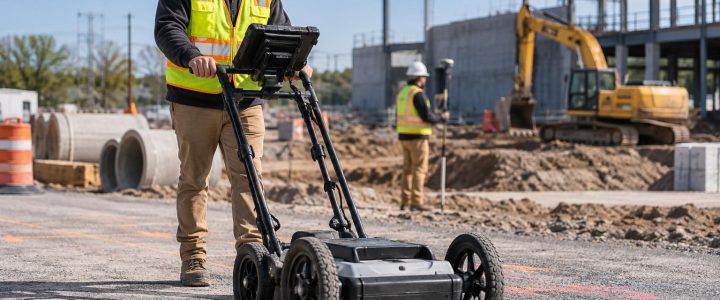
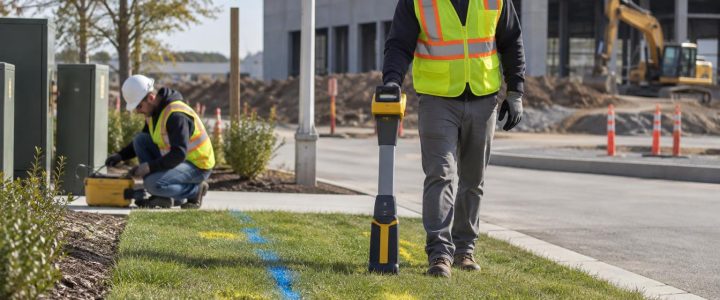
Excavation, drilling, saw cutting, fence installation, utility work, and grading can expose crews to buried facilities. Before ground disturbance, the project team should confirm the site’s utility investigation process, available records, markings, limits of those markings, and the method for resolving uncertain locations or depths.
One-call marks generally address utilities within the one-call system and may not identify every privately owned line on a property. Conditions also change as excavation progresses. If markings conflict with plans or field conditions, or if an unexpected line is encountered, pause the work and follow the project’s escalation process rather than assuming the line is inactive or abandoned.
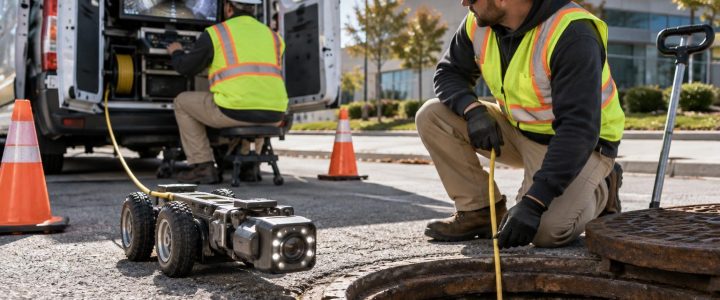
Where a project needs better information on private underground facilities before excavation, professional private utility locating and, when needed, vacuum excavation and test holes can help the team reduce uncertainty. The appropriate method depends on site conditions, utility type, access, and the level of confidence needed for the work.
Overhead hazards need the same attention. Identify power lines, communication lines, structures, trees, and other obstructions before raising booms, setting cranes, operating lifts, or moving tall loads. Equipment manufacturers, utility owners, site rules, and applicable requirements may establish specific operating limits and precautions. Do not rely on a casual visual estimate of clearance.
Before You Start: a practical jobsite safety checklist
Use this short checklist at the work face. It is not a substitute for the project safety plan or site-specific requirements, but it can keep the conversation focused.
- Confirm today’s scope, location, sequence, and responsible supervisor.
- Walk the work area and identify changed conditions.
- Review nearby trades, public access, deliveries, and equipment movements.
- Inspect equipment, tools, guards, cords, rigging, and required safety devices.
- Set pedestrian routes, exclusion zones, barricades, and material staging areas.
- Confirm the communication plan, spotter duties, and stop-work signals.
- Identify overhead and underground hazards before work begins.
- Review fall protection, excavation protection, lockout/tagout, or confined-space controls when applicable.
- Confirm the correct PPE is available, fits, and is in usable condition.
- Discuss weather, lighting, heat, cold, mud, wind, and visibility.
- Identify emergency access, first-aid resources, and how to report an incident or near miss.
- Make sure every worker understands they can stop work when conditions are unsafe or unclear.
Common pre-task planning mistakes
Using generic hazards and generic controls
“Wear PPE” and “use caution” do not tell a worker what to do differently. Replace general language with actions: “Install rigid barriers along the open edge,” “keep spoil and materials out of the designated setback area,” or “stage pipe outside the equipment travel lane.”
Leaving out the people doing the work
Supervisors should lead the planning process, but workers need a real opportunity to raise concerns. A worker who has to carry material across an unprotected opening or work beside a blind backing route may identify a problem that is not visible in a trailer meeting.
Assuming yesterday’s plan still fits today
Construction conditions change quickly. New work, rain, a relocated stockpile, a different operator, or a new subcontractor can change the risk. Update the plan instead of treating the original JHA as permanent.
Writing the plan after the work starts
If the crew is already committed to a setup, it is harder to choose safer options. Review the task before workers are exposed and before equipment, material, and production pressure make changes difficult.
How supervisors can make the meeting useful
A productive pre-task meeting does not need to be long. For a straightforward task, a focused discussion may take only a few minutes. Higher-risk or changing work deserves more time, a more detailed JHA, and involvement from the appropriate competent or qualified personnel.
Keep the meeting at the work area when practical. Ask workers to point out hazards, not just listen. Confirm understanding by asking direct questions: “Where is the no-entry zone?” “Who is spotting the truck?” “What do you do if the operator loses sight of you?” “What changed after the rain?”
Document the discussion according to company policy, but do not let documentation replace supervision. Follow up during the shift to confirm the controls were actually put in place.
FAQ: construction pre-task planning
Is a JHA required for every construction task?
Project requirements, employer policies, contract documents, and applicable regulations determine what documentation is required. As a recommended safety practice, crews should review hazards before beginning work and whenever conditions change, even when a formal written JHA is not required for every activity.
Who should lead a pre-task safety meeting?
The foreman or supervisor closest to the work is often best positioned to lead it. For specialized work, the meeting may also need input from the equipment operator, subcontractor supervisor, competent person, safety professional, engineer, or other qualified personnel.
What should a worker do if the field conditions do not match the plan?
Stop the affected work, protect the area from exposure, notify the supervisor, and reassess the task. The crew should not improvise around an unexpected hazard simply to maintain production.
Make planning a working part of the job
Construction pre-task planning works when it is treated as part of the operation, not as a signature at the bottom of a form. Define the task, involve the crew, identify changing hazards, choose stronger controls first, and revisit the plan whenever the work changes.
For projects involving uncertain underground conditions, Visionary Subsurface Solutions can help teams discuss appropriate investigation options before excavation begins. Contact Visionary Subsurface Solutions to discuss your project and the subsurface information your team may need to plan work more safely.